BUYING GUIDES
How American hardwood is kiln dried for cutting boards: A practical guide
Learn how american hardwood is kiln dried for cutting boards, from stacking and schedules to moisture checks.
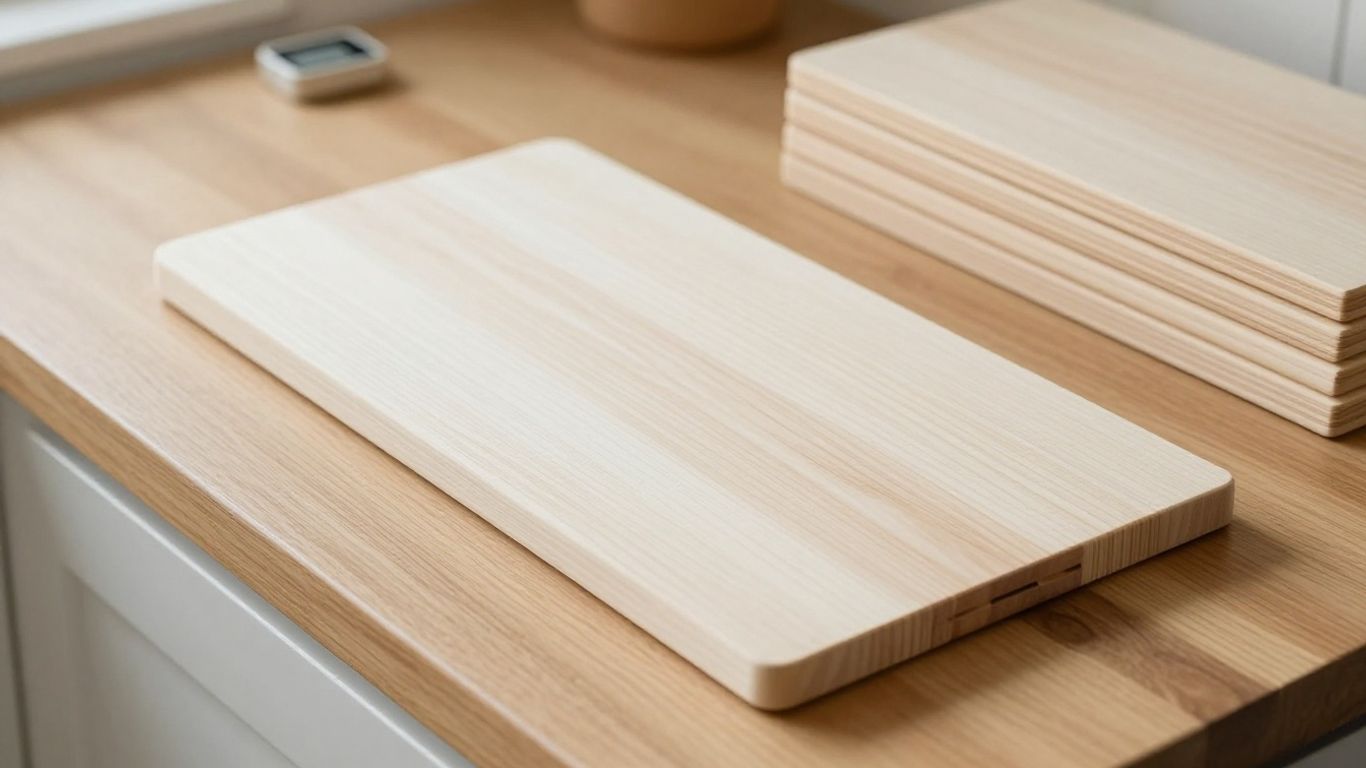
The short answer
Kiln drying brings lumber toward a moisture level suited to indoor use, but it cannot stop wood from responding to changes in humidity. Careful stacking, gradual drying, moisture checks, and a final inspection all help you start a cutting board with stable stock.
- Kiln drying reduces excess moisture; it does not make wood immune to movement.
- Species, board thickness, and initial moisture affect the drying schedule.
- Stickers between boards let air move through a properly stacked load.
- Moisture readings and visual checks both matter before milling and glue-up.
- Good drying helps, but construction and everyday care still count.
Why does kiln drying matter for cutting-board hardwood?
Kiln drying brings green hardwood closer to the moisture level it will reach indoors. For anyone learning how american hardwood is kiln dried for cutting boards, the key is controlled moisture reduction, not a promise that wood will never move. The trade-off is that a carefully dried board still responds to the room around it.
How moisture affects shrinkage, movement, and stability
Wood gains or loses moisture as the surrounding air changes, and its dimensions shift as a result. Most shrinkage happens after moisture drops below the fiber saturation point, often roughly 28 to 30 percent, though the exact point varies by species. Because wood shrinks more across the grain than along its length, changing moisture can make a board cup, bow, or open a joint.
Why indoor-use lumber needs a controlled moisture level
Lumber that is much wetter than the kitchen environment will continue drying after it is made into a board. That movement can put stress on glue joints or leave a once-flat surface less flat. A suitable starting moisture level helps limit that adjustment, but the right target depends on the climate where the board will live.
What kiln drying can, and cannot, do for food safety
Kiln drying is a lumber-drying process, not a food-safety certification or a guarantee that every pathogen has been eliminated. USDA food-safety advice focuses on clean preparation surfaces and avoiding cross-contamination, so you should wash a board after use and keep raw foods separate from ready-to-eat foods. For more context on the material itself, see this guide to hard maple’s suitability for cutting boards.
How is hardwood prepared before it enters the kiln?
Before heat is applied, lumber is sorted and stacked to dry as evenly as practical. Species, thickness, grain, and existing defects all shape what a kiln operator can reasonably expect. The preparation takes time, but it can reduce trouble later.
Selecting sound lumber and accounting for species differences
A kiln cannot turn a badly checked or decayed board into sound stock. The operator sorts for visible defects, separates lumber by species and thickness where practical, and chooses a schedule suited to the load. Hard maple, walnut, and cherry do not necessarily dry at the same pace, so a single recipe is not ideal for every pile. A species overview can help you understand wood choices for cutting boards, though kiln schedules require more detail than a simple species ranking.
Why boards are stacked with spacers for airflow
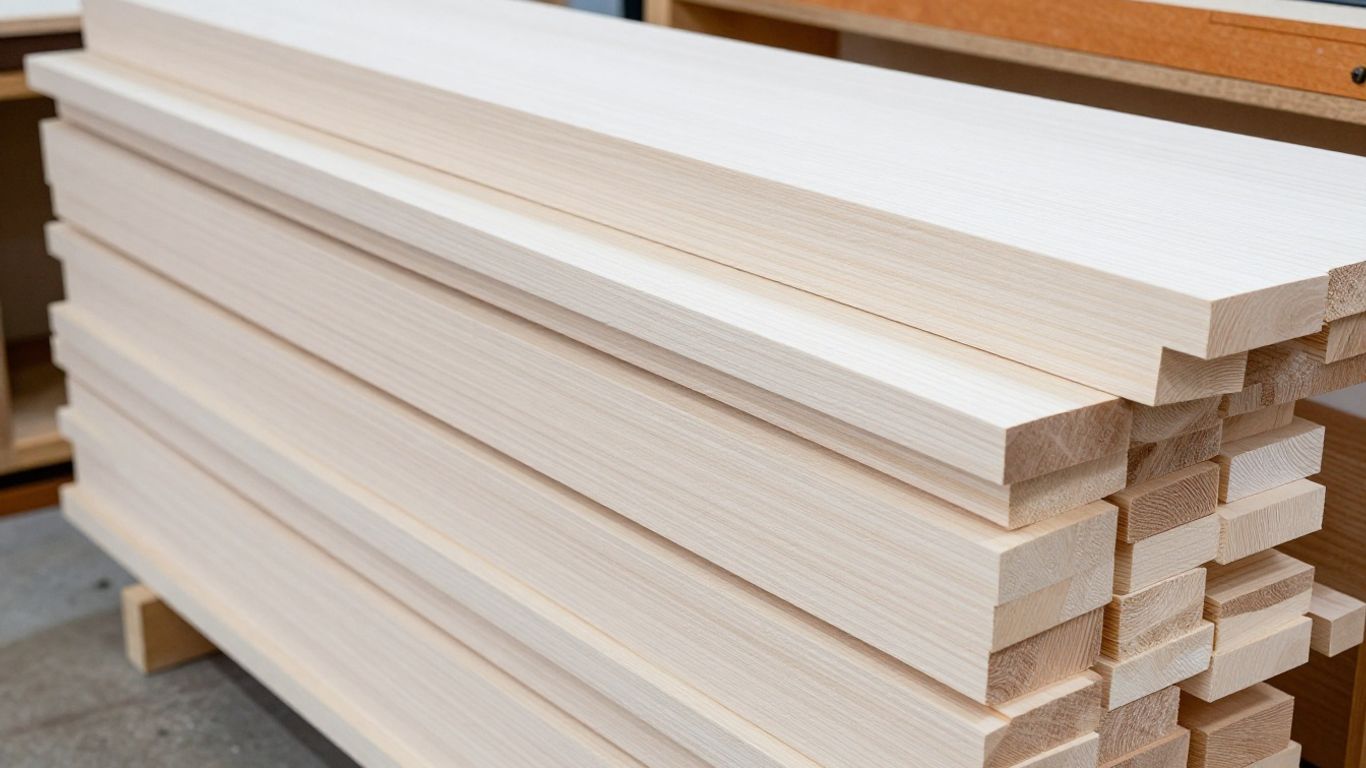
Thin, aligned spacers, commonly called stickers, separate each layer so air can pass across the faces of the boards. They are placed at regular intervals and lined up vertically through the stack, which helps support the lumber rather than leaving unsupported gaps. The sequence below shows why stacking is part of the drying process, not just a way to fit wood in the kiln.
- Lay the first course on a level foundation with support beneath it.
- Place stickers consistently across the width of the stack.
- Keep each new layer aligned so the load stays supported.
- Leave space for the kiln’s airflow pattern rather than blocking it.
After stacking, the operator still needs to manage air circulation and kiln conditions. A neat stack makes airflow more predictable, but it does not guarantee that every board dries at precisely the same rate.
When air drying can reduce the kiln-drying workload
Air drying can remove some moisture before lumber enters the kiln, which may shorten the time spent removing water under controlled heat. It is slower and depends on local weather, airflow, and protection from rain and ground moisture. It also does not usually bring lumber to a reliably low indoor-use moisture level on its own, so the kiln often completes the job.
How does the kiln-drying schedule work?
A kiln schedule sets how temperature and humidity change as wood dries. The operator adjusts those conditions over time, rather than simply turning up the heat and waiting. Faster drying may save time, but too much stress can damage the lumber.
Adjusting temperature and humidity gradually
The schedule begins with conditions chosen for the species, thickness, and starting moisture. As drying progresses, temperature and humidity are adjusted to keep moisture moving out without making the surface dry far ahead of the interior. The kiln’s fans circulate air, while vents and moisture controls help regulate the conditions around the load.
Why thickness and species affect drying time
Water has farther to travel out of a thick board than out of a thin one. Species matter too: wood structure and permeability influence how readily moisture moves through it. There is no dependable universal number of days for every load, so a schedule should be based on the actual stock rather than a calendar guess.
| Lumber factor | Why it matters | What to account for |
|---|---|---|
| Thickness | Moisture travels farther through thicker stock | Allow more drying time |
| Species | Wood structure affects moisture movement | Use a species-appropriate schedule |
| Starting moisture | Wetter lumber has more water to release | Track progress instead of assuming a fixed duration |
| Stack airflow | Uneven circulation can cause uneven drying | Keep spacing and airflow paths consistent |
These factors overlap, which is why an operator reads the load as it dries instead of treating the table as a formula. The actual schedule depends on the lumber and the kiln conditions.
Balancing a faster schedule against the risk of defects
Heat and airflow can be increased only as far as the wood can tolerate. If the outside dries much faster than the center, stresses can build and defects may appear. A more conservative schedule takes longer, but pushing a load for speed can cost usable material.
How is moisture monitored as the wood dries?
A kiln’s displayed settings describe its controls, not necessarily the moisture content of every board. Operators use measurements and observations to judge whether drying is progressing as intended. This distinction matters: a programmed schedule is a plan, while the lumber itself supplies the evidence.
Using moisture meters and checking representative boards
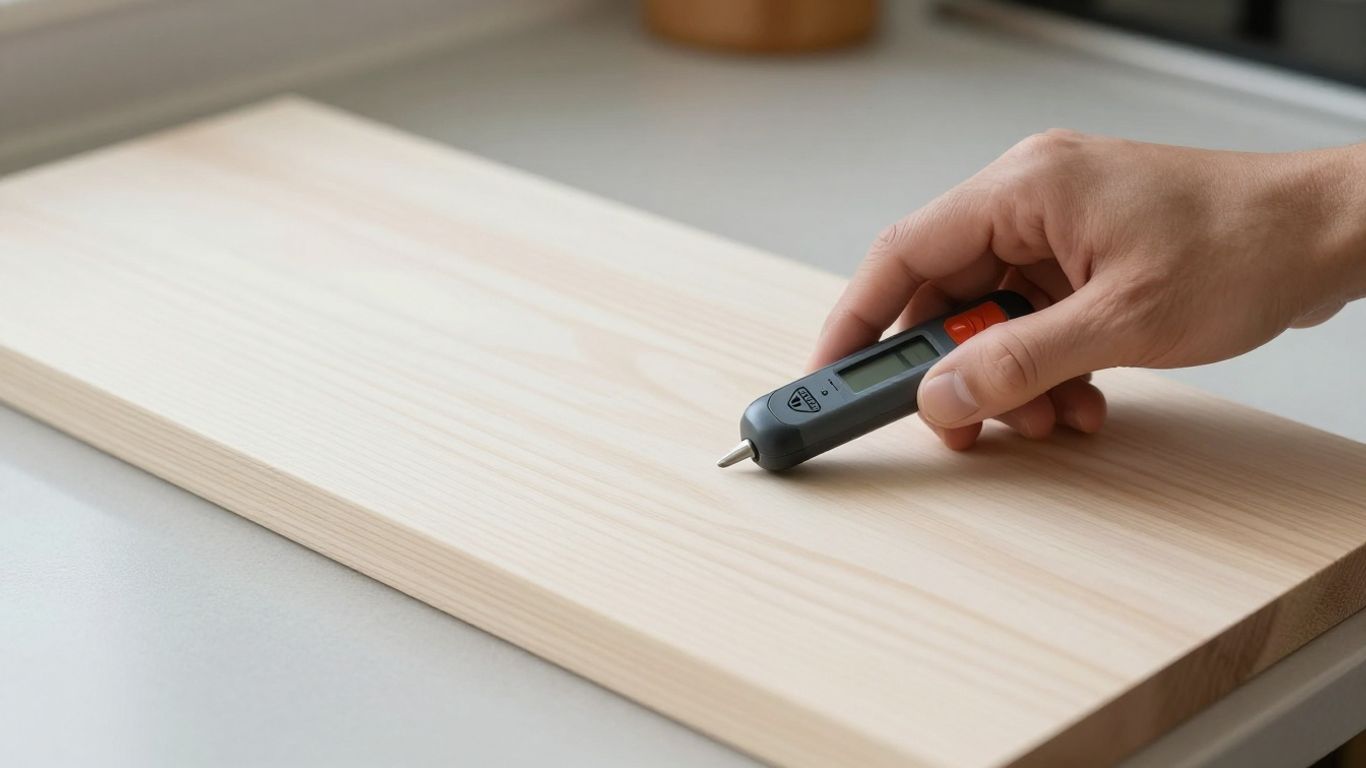
A moisture meter offers a practical reading, but the result depends on using it correctly and accounting for species and temperature. Operators check representative boards in more than one location, and they may use sample boards to track changes through the load. A single reading from one convenient piece should not be treated as a certificate for an entire stack.
Tracking conditions inside the kiln, not just at the controls
Temperature and humidity sensors help the operator see what is happening in the kiln, but their location and calibration matter. Conditions can vary across a load, especially if airflow is uneven. Comparing sensor readings with wood-moisture checks gives a more useful picture than relying on the control panel alone.
Aiming for a suitable moisture range for indoor use
For many indoor settings in the United States, kiln-dried furniture lumber is commonly brought to about 6 to 8 percent moisture content. That range is a practical reference, not a universal rule: regional humidity and a kitchen’s heating or air-conditioning can shift the best target. Once the stock arrives, give it time to acclimate to the shop before final milling.
What do equalizing and conditioning do for the lumber?
Drying does not end the moment a meter shows a promising number. Equalizing and conditioning are finishing stages that address differences among boards and stresses left by drying. They take additional time, but help prepare lumber for machining and assembly.
How equalizing helps reduce moisture differences between boards
During equalizing, the kiln conditions help bring wetter boards closer to the target moisture level while the drier boards remain near it. The aim is to reduce variation within the load, not to make every board identical. That consistency makes it easier to mill stock to a shared thickness and fit parts together cleanly.
How conditioning can relieve drying stresses
Some boards can hold stresses that are not obvious from the surface. Conditioning uses a controlled period of warmer, humid conditions to help relieve those stresses. It is a specific kiln stage, not a substitute for inspecting boards afterward; hidden defects can still be present.
Letting lumber cool and stabilize before milling
After the kiln, lumber needs time to cool and settle before it is milled. If you machine wood while its temperature and moisture are still shifting, dimensions can change during the work. A calm acclimation period in the shop gives you a better chance of milling stock close to the conditions it will meet during glue-up.
How do you check kiln-dried lumber before making a cutting board?
Kiln-dried lumber still deserves a close inspection before you cut it into parts. Look for defects, check moisture in multiple places, and consider how the board will be assembled and cared for. Good drying improves your starting point; it does not eliminate the need for sound woodworking.
Spotting checks, splits, warping, and honeycomb damage
Look at the ends and faces for checks, splits, cupping, bowing, and twist. Honeycomb is internal checking that may not be visible until the wood is cut, so milling can reveal problems that were hidden inside. Reject or work around damaged sections rather than assuming glue or surface finish will make them sound.
Verifying moisture readings before cutting and glue-up
Check several areas and, when possible, more than one board. If the readings vary sharply or the stock has just arrived from a different climate, let it acclimate and check again. A product’s listed dimensions tell you its finished size, not the moisture content of the wood, so ask for clear material information when buying a board.
The Bevel & Bond End-Grain Maple Cutting Board is listed as North American hard maple and measures 17 by 13 by 1.75 inches. Those details identify its species and dimensions, but they do not replace a moisture reading on raw lumber. For a finished board such as the End-Grain Maple Board, construction quality and the condition of the wood still matter.
Why stable lumber still needs careful construction and finishing
Wood can move with seasonal humidity even after careful kiln drying, so construction should accommodate ordinary change rather than assume it cannot happen. Sound glue joints, appropriate grain orientation, and a flat, smooth finish all matter. The Bevel & Bond End-Grain Maple Cutting Board is also listed as made in the USA and covered by a five-year warranty on manufacturing defects; neither fact changes the basic point that wood care and sensible use remain part of ownership.
What does kiln drying mean for your board?
Kiln drying is a careful process of preparing, stacking, gradually drying, measuring, and checking hardwood. It helps bring lumber toward indoor-use moisture, but it cannot make wood immune to humidity or excuse poor construction. When you assess a cutting board, look for sound stock and clear information, then keep it clean and dry it properly after use.
Frequently Asked Questions
How dry should hardwood be for a cutting board?
Many indoor-use projects start with lumber around 6 to 8 percent moisture content, but the suitable target varies with the local climate and the kitchen environment.
How long does kiln drying take?
There is no single reliable duration. Drying time depends on species, thickness, starting moisture, airflow, and the schedule used.
Can air-dried hardwood be used for a cutting board?
It can be suitable if it is properly dried and acclimated, but air drying alone may not bring lumber to a stable indoor-use moisture level.
Does kiln drying prevent a cutting board from warping?
No. It reduces excess moisture, but wood continues to respond to changes in humidity and can move over time.
What are stickers in a lumber stack?
Stickers are narrow spacers placed between layers of lumber to create paths for airflow through the stack.
Does kiln drying make wood food-safe?
Kiln drying is intended to dry lumber, not certify it for food contact or guarantee that pathogens have been eliminated. Clean handling and proper washing remain important.
Can you tell whether lumber is dry by looking at it?
Not reliably. Visual inspection can reveal some defects, but moisture meters and representative checks provide better information about moisture content.
What should you do next?
- Ask your supplier what moisture information is available for the lumber you plan to use.
- Take your own moisture readings and look each board over before milling and glue-up.
- Set aside boards with cracks, checks, or distortion that would land inside a finished piece.
- Build with sound glue joints, then keep the finished board clean and dry it properly after use.
- Read about hardwood lumber grades for cutting boards and where hard maple for American-made boards comes from.
SEE AN EXAMPLE