BUYING GUIDES
Where does hard maple for American-made cutting boards come from?
Where does hard maple for american made cutting boards come from? Learn the species, regions, and sourcing checks.
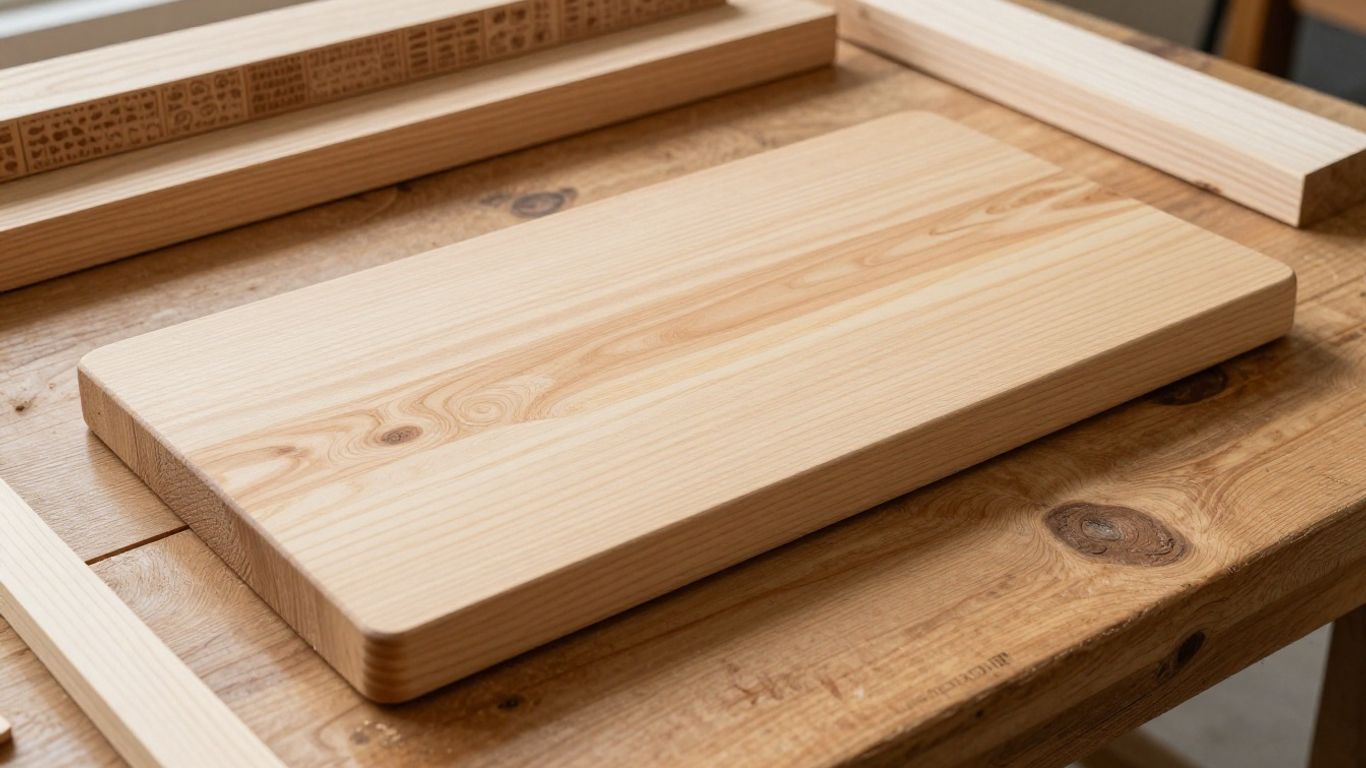
The short answer
Hard maple in a cutting board generally means sugar maple, but the tree’s growing region and the lumber’s origin are separate details worth checking.
- Hard maple is the common name used for sugar maple, or Acer saccharum.
- The species grows across parts of the eastern United States and Canada, including the Great Lakes and Northeast.
- Lumber is harvested, milled, and dried before it is ready for board making.
- “American-made” describes where a board is made; it does not, by itself, identify where its wood grew. Under the FTC’s Made in USA rule, though, a board built from Canadian or other imported wood needs a qualified claim, such as “Made in USA from Canadian maple.”
- Look for a named species, a stated growing region, and clear answers about lumber sourcing.
What does “hard maple” mean?
Hard maple for cutting boards most often means sugar maple, a North American tree known by its scientific name, Acer saccharum. So, where does hard maple for American-made cutting boards come from? It comes from trees grown in eastern North America, but a “made in America” label alone does not tell you where a particular board’s lumber was harvested. The useful distinction is between the tree species, the wood’s origin, and the place where the board is built.
Hard maple is the common name for sugar maple
When a seller names hard maple, the clearest identification is sugar maple, Acer saccharum. Common names can be used loosely, so a species name gives you a more precise answer than “maple” alone. For one example, the hard maple cutting board from Bevel & Bond is described as North American hard maple, Acer saccharum.
How hard maple differs from soft maple
“Soft maple” is a trade grouping for other maple species, not simply a different grade of sugar maple. Hard maple is denser and harder than many woods sold under the soft-maple label; its Janka hardness is 1,450 lbf. The terms are useful when shopping, but they are not a substitute for checking which species the maker actually used. A hard-versus-soft maple guide explains why naming the species helps avoid guesswork.
Why the species name matters when buying a board
A species name lets you compare a board’s stated material with what you meant to buy. It still does not prove where the tree grew: sugar maple is a species, while a growing region is a separate sourcing claim. The species is the useful detail when you want to distinguish hard maple from a vague “maple” description, and the region tells you more about origin.
Where does hard maple grow?
Sugar maple is native to eastern North America, with a range that includes parts of both the United States and Canada. The wood in an American-made cutting board could come from domestic forests, but the phrase “American-made” does not establish that on its own. Ask for the wood’s growing region as well as the board’s manufacturing location.
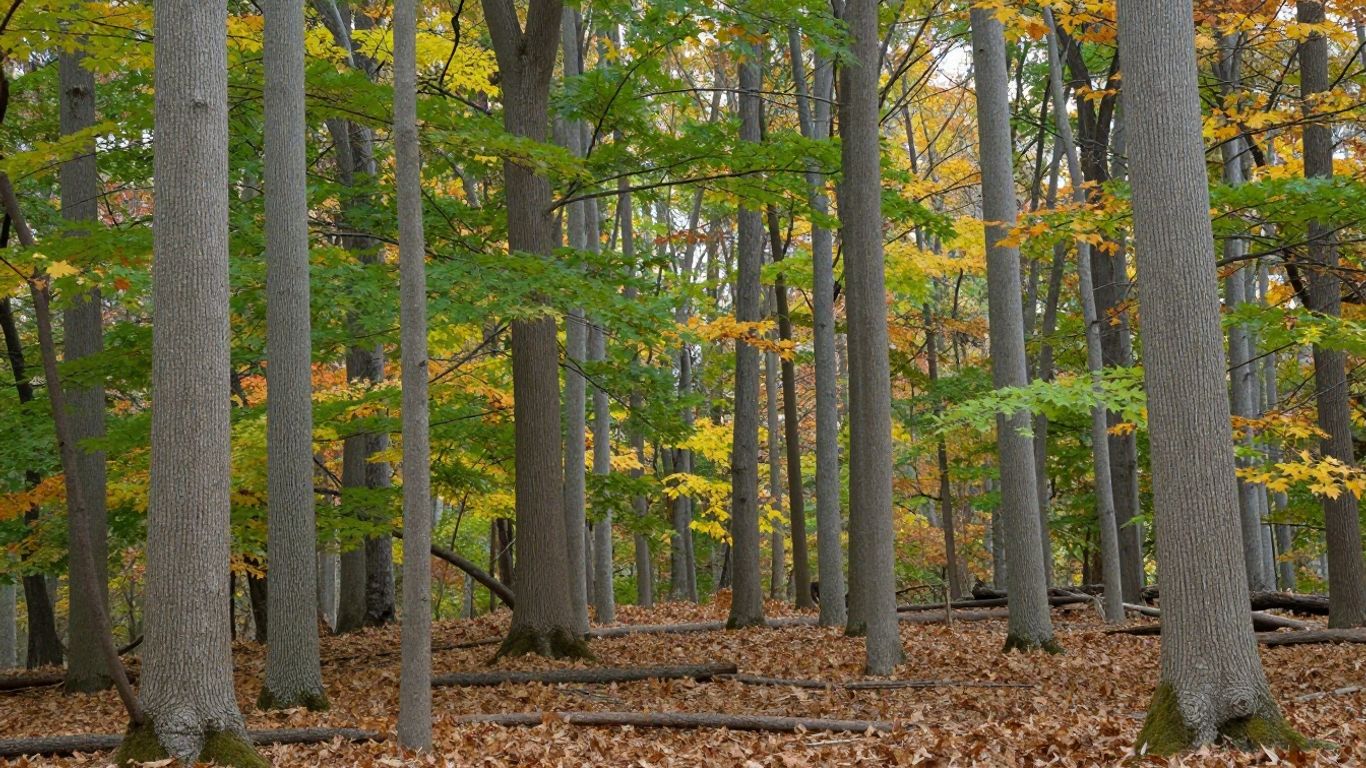
The tree’s range across the eastern United States and Canada
Sugar maple grows broadly through the eastern part of the continent, from the northeastern United States into southeastern Canada and west toward the Great Lakes. Its range crosses the international border, so “North American maple” is broader than “U.S.-grown maple.” If domestic harvest matters to you, ask the maker to be more specific than a continent-wide description.
Major growing regions around the Great Lakes and Northeast
The Great Lakes region and the Northeast are among the familiar parts of sugar maple’s range. A general regional description can orient you, but it may not identify the forest or mill that supplied one batch of lumber. These broad examples help separate a plausible growing area from verified, batch-specific traceability.
| Broad region | What a buyer can infer | What still needs checking |
|---|---|---|
| Great Lakes | A region within the tree’s broad range | State or province and supplier details |
| Northeastern United States | A plausible domestic growing region | Whether the lumber for this board came from there |
| Southeastern Canada | A major part of sugar maple’s range | Whether the board’s wood crossed a border |
The table is a starting point, not a map of a board’s supply chain. For a more general look at the characteristics of North American hard maple, compare those material details with the maker’s own sourcing statement.
How local climate and growing conditions affect the wood
Growing conditions can influence a tree’s growth and the appearance of its lumber, including color and grain variation. Individual boards can differ even when the species is the same, because each piece comes from a particular tree and cut. Those visual differences may help you understand what you are seeing, but they cannot reliably identify a wood’s geographic origin by themselves.
How does maple go from forest to lumber?
Before a maple board reaches a kitchen, the tree is harvested and processed into usable lumber. The basic sequence is selection, sawing, drying, and grading; the details can vary by supplier and mill. Knowing those steps helps you ask practical sourcing questions without assuming that every maker controls the entire chain.
How trees are selected and harvested
Trees are selected and harvested as part of forest management and timber supply, then transported for processing. A finished board rarely gives you enough information to identify the individual tree or harvest site. If exact provenance matters, ask whether the maker can name the supplier, mill, or growing region rather than relying on appearance.
What happens at the sawmill
At a sawmill, logs are sawn into boards, which can then be sorted and prepared for drying. The way lumber is cut affects its grain appearance and the dimensions available to a board maker. The mill is also a useful link in the paper trail: a supplier or mill name can make a sourcing claim more specific than a broad “North American wood” statement.
Why lumber must be dried before board making
Freshly sawn wood contains moisture that needs to be reduced before it is made into a cutting board. Drying prepares the lumber for indoor use and for the joinery involved in board construction. A maker may buy already-dried lumber rather than dry it in-house, so it is reasonable to ask how the lumber is prepared and who supplies it.
How does hard maple become a cutting board?
Once dry lumber reaches a maker, it is selected, cut, joined, and finished. The species tells you what the wood is; construction tells you how the pieces are arranged and connected. A board’s appearance can be part of the appeal, but close joints, a smooth surface, and clear care instructions matter too.
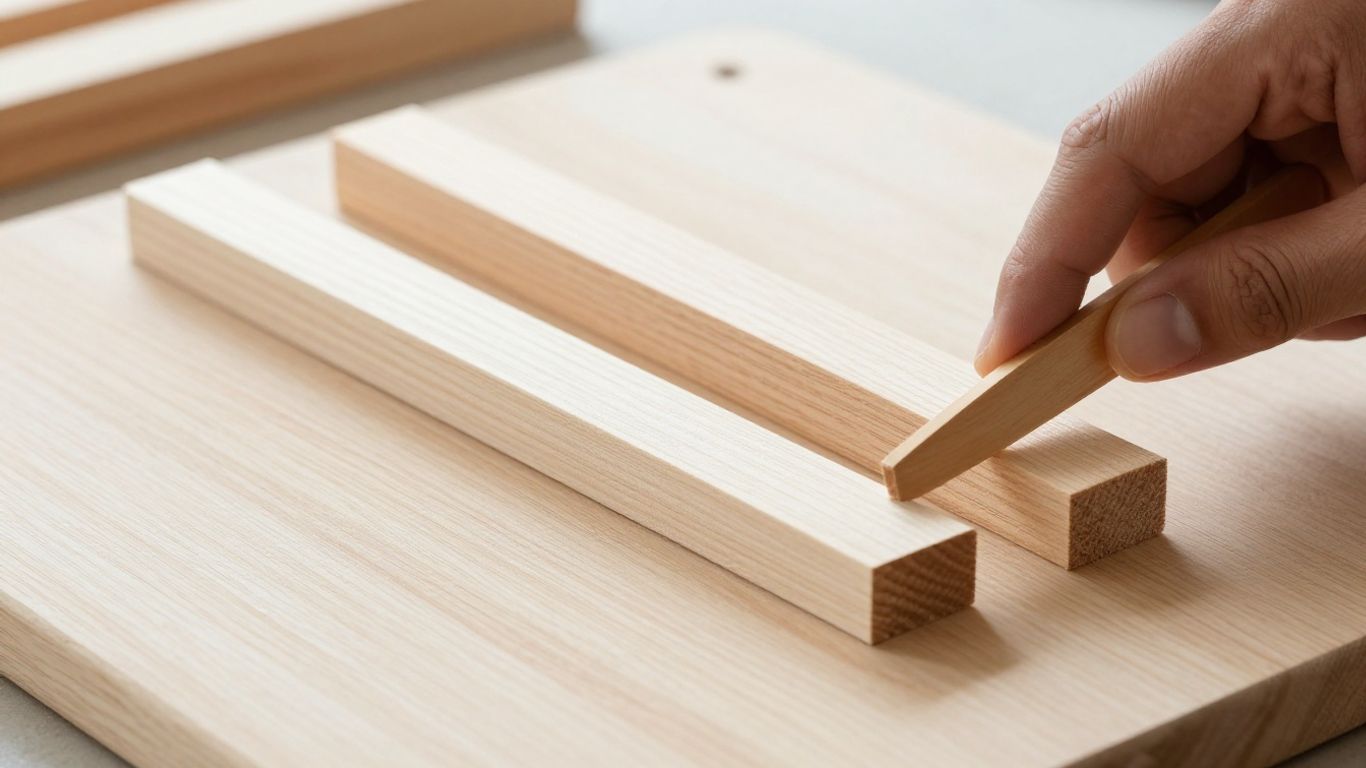
Choosing boards for grain, color, and structural quality
A maker sorts lumber for usable dimensions, grain, color, and visible flaws that could affect the finished board. Hard maple is usually light in color, though the grain and shade vary from piece to piece. You can assess the finished board’s surface and joinery, but those qualities do not establish where its lumber originated.
Cutting and joining lumber for different board constructions
Board makers cut lumber into pieces and join them to form a larger surface. In an edge-grain board, the long edges of strips form the work surface; in an end-grain board, the ends of the pieces face upward. The edge-grain and end-grain construction guide can help you understand that difference before comparing boards.
How finishing prepares the surface for kitchen use
Sanding creates a smooth surface, and a suitable finish helps condition the wood for kitchen use. Ask what finish is applied and what care the maker recommends; those are practical construction details, separate from origin. Bevel & Bond’s End-Grain Maple Cutting Board is described as made in the USA and made from North American hard maple, so those two claims identify different parts of its story.
What does “American-made” tell you about the wood?
“American-made” tells you something about where the board is made, but it does not automatically tell you where its lumber grew. A board can be assembled domestically from wood sourced elsewhere, so the two claims should be checked separately. Under the FTC’s Made in USA Labeling Rule, lumber is the main material in a cutting board, so a board built in the U.S. from Canadian maple should carry a qualified claim, such as “Made in USA from Canadian maple,” rather than a plain “Made in USA.” Not every seller follows the rule, so check both details anyway. Bevel & Bond describes its End-Grain Maple Cutting Board as made in the USA and as using North American hard maple; the latter phrase does not, by itself, name a specific state or province.
Where the board is made and where its lumber comes from
Manufacturing location and lumber origin are distinct parts of a product’s supply chain. A maker may mill, join, and finish a board in the United States while sourcing lumber from a broader region. If both domestic manufacturing and domestic wood are priorities, look for separate statements about each rather than treating one as proof of the other.
Why domestic manufacturing does not automatically prove domestic wood sourcing
A product label can identify where work took place without giving the origin of every material. The phrase “made in USA” is not a substitute for a lumber description, just as a species name does not say where the board was made. For a closer look at the wording and evidence behind origin claims, read how to tell if a cutting board is made in the USA.
What to ask a maker about lumber origin and traceability
A direct question often gets you a more useful answer than a broad label. Ask who supplied the lumber, whether the supplier or mill can be named, and how specific the stated region is. A maker may not be able to trace each board to an individual forest, but should be able to clarify what its sourcing language means.
How do you check a board’s sourcing claims?
You can evaluate a sourcing claim by separating three things: species, wood origin, and manufacturing location. A clear product description should make it possible to tell which of those details are known and which are not. The guide to evaluating American-made cutting boards offers further criteria for considering sourcing alongside construction.
Look for the maple species and stated growing region
Start with the species name, ideally sugar maple or Acer saccharum, then look for a stated growing region. “Maple” alone is less precise, while “North American hard maple” narrows the geography but still spans more than one country. Don’t read a specific state or province into language that does not provide one.
Ask whether the maker can trace lumber to a supplier or mill
If the listing leaves origin unclear, ask the maker directly. These questions keep the conversation focused on verifiable details:
- Which maple species is used?
- What country or region did the lumber come from?
- Can you identify the lumber supplier or mill?
- Where is the board cut, joined, and finished?
A maker’s answer may be broad rather than lot-specific, and that is still useful information. Bevel & Bond names North American hard maple for its End-Grain Maple Cutting Board; buyers seeking a more precise origin can ask whether a narrower region is available.
Weigh sourcing details alongside construction and workmanship
Origin matters, but it is one part of a buying decision. Check that the description names the wood, explains the construction, and gives you enough information to judge the finished surface and care needs. A sourcing claim is strongest when it is specific and supported by details you can verify, not when it is dressed up with a flag and a confident adjective.
What does maple origin mean for your board?
Hard maple for American-made cutting boards generally comes from sugar maple trees growing across eastern North America, including the Great Lakes and Northeast. To learn where a particular board’s wood came from, check for a named species and growing region, then ask about the supplier or mill; the place of manufacture is a separate fact worth verifying.
Frequently Asked Questions
Is hard maple the same as sugar maple?
Hard maple commonly refers to sugar maple, Acer saccharum. Check the product description for the species name if you want to avoid relying on a broad common name.
Does “American-made” mean the maple was grown in the United States?
Not on its own, since sellers use the phrase loosely. Under the FTC’s Made in USA rule, though, a board built in the U.S. from Canadian maple needs a qualified claim, such as “Made in USA from Canadian maple,” so an unqualified “Made in USA” label should mean U.S.-grown wood too.
Does North American hard maple mean the wood came from the United States?
No. North America includes both the United States and Canada. Ask for a country or more specific region if that distinction matters to you.
What is the scientific name for sugar maple?
Sugar maple’s scientific name is Acer saccharum. Seeing it alongside “hard maple” makes the species identification more precise.
How can I tell hard maple from soft maple on a product listing?
Look for “hard maple” and, where available, the species name rather than simply “maple.” If the listing is unclear, ask the maker which maple species is used.
Can the color or grain tell me where the wood grew?
Color and grain can vary among boards, but they do not reliably establish geographic origin. A sourcing statement from the maker or supplier is more useful.
What should I ask a maker about maple sourcing?
Ask for the species, the country or region where the lumber grew, and whether the supplier or mill can be identified. Also ask where the board is manufactured, since that is a separate part of the supply chain.
What should you do next?
- Look for a named species, such as hard maple or Acer saccharum.
- Ask the maker for the country or region where the lumber grew.
- Ask where the board was made, and treat that as a separate fact.
- Check that an unqualified "Made in USA" claim covers the wood too, using how to tell if a cutting board is made in the USA.
- Use these questions to ask a USA cutting board maker before you buy.