BUYING GUIDES
Commercial kitchen end grain maple cutting board: A practical buying guide
Commercial kitchen end grain maple cutting board: compare construction, care, sizing, and long-term value.
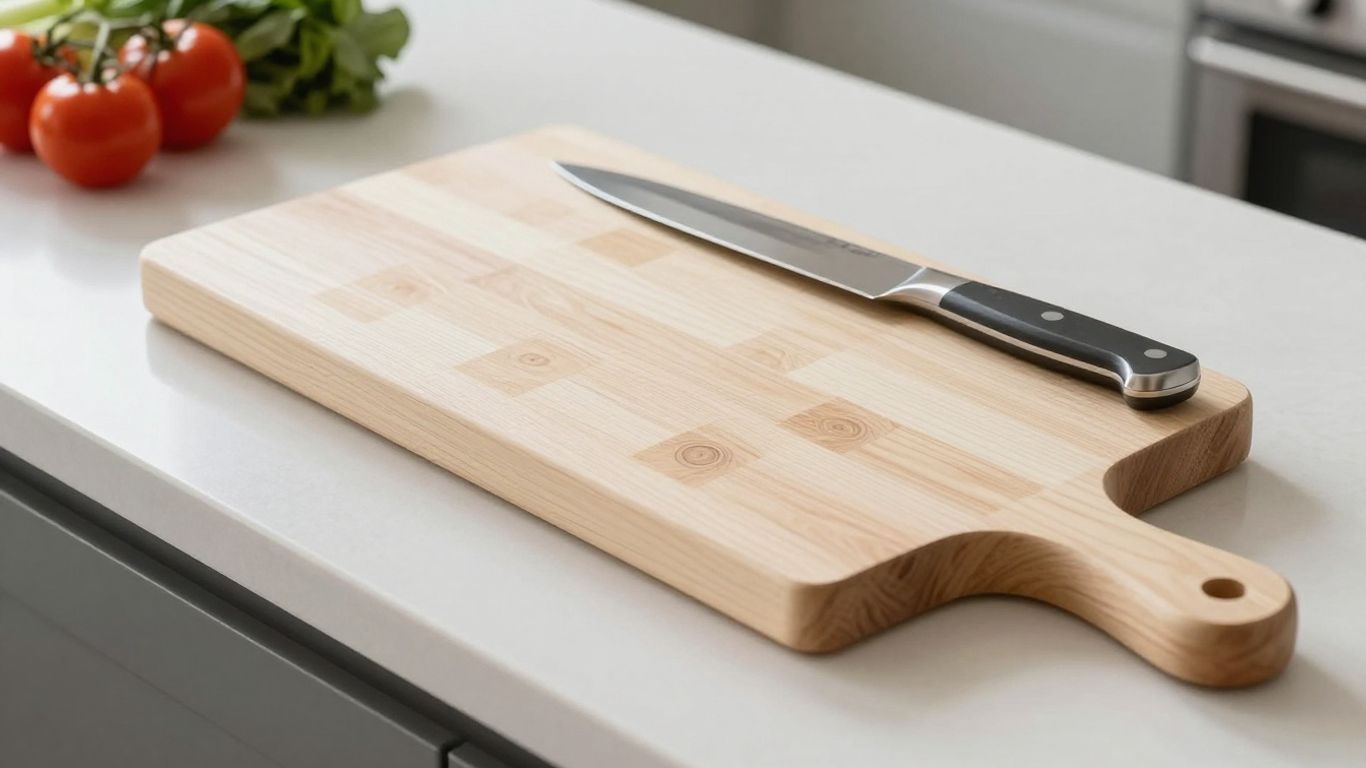
The short answer
A commercial kitchen end grain maple cutting board can suit steady knife work when its weight, care routine, and sanitation procedures fit your operation. Check the construction and local requirements before buying; a wood board is not the right tool for every station.
- End-grain construction puts the wood’s cut ends at the surface and is designed for repeated knife work.
- Confirm the species, joint quality, finish, flatness, and stability rather than relying on appearance alone.
- Choose a size that fits the prep station and can be lifted, stored, and cleaned comfortably.
- Wash, sanitize according to approved procedures, and dry the board fully after use.
- Include regular conditioning and possible resurfacing in the cost calculation.
Is end-grain maple right for a commercial kitchen?
It can be a sensible choice for a station doing repeated chopping and slicing, provided your sanitation procedures allow wood and staff can manage its weight and care. The trade-off is straightforward: the knife-friendly working surface comes with more upkeep than a board you can put through a commercial dishwasher.
How end-grain construction handles repeated knife work
An end-grain board is assembled so the exposed ends of the wood fibers face upward. That gives the knife a different feel than a board made with long grain running across the surface, and the cut marks may be less visually prominent. It is still wood: expect marks from use, and do not mistake the grain layout for a maintenance-free surface. For a closer look at how construction changes board feel and care, see this end-grain maple cutting board guide.
Why hard maple is a common choice for food-prep surfaces
Hard maple is a practical hardwood for a working surface: its grain is relatively fine, and its pale color makes debris and staining easier to notice than on many darker woods. The species matters, so ask for hard maple by name rather than accepting a vague description such as “maple.” The commercial kitchens’ maple cutting-board guide offers another useful perspective on matching board material and construction to the station.
Where a wood board fits into a commercial kitchen’s workflow
A wood board may fit a dedicated prep station where staff can hand-wash, sanitize, and dry it according to the kitchen’s approved procedures. Think about the full shift, not only the first few minutes of chopping: where will the board sit between tasks, and who is responsible for cleaning it? The product page for the end grain maple cutting board lists one example with a 17-by-13-inch surface and non-slip feet, details that can help you compare a board’s footprint with your station.
When plastic or another surface may be a better fit
A kitchen’s written food-safety procedures and local requirements come first. If a station depends on fast rotation through a commercial dishwasher, or its approved process calls for a different surface, choose a board that fits that system rather than trying to make wood work. Compare the trade-offs in plastic and wood board choices before deciding which material suits the job.
What should you check in the board’s construction?
Look past the checkerboard appearance and inspect the parts that determine whether a board feels steady and is practical to maintain. Clear answers about species, joinery, finish, and construction are more useful than broad claims about durability. A quick visual inspection cannot guarantee how a board will behave, but it can help you rule out obvious problems.
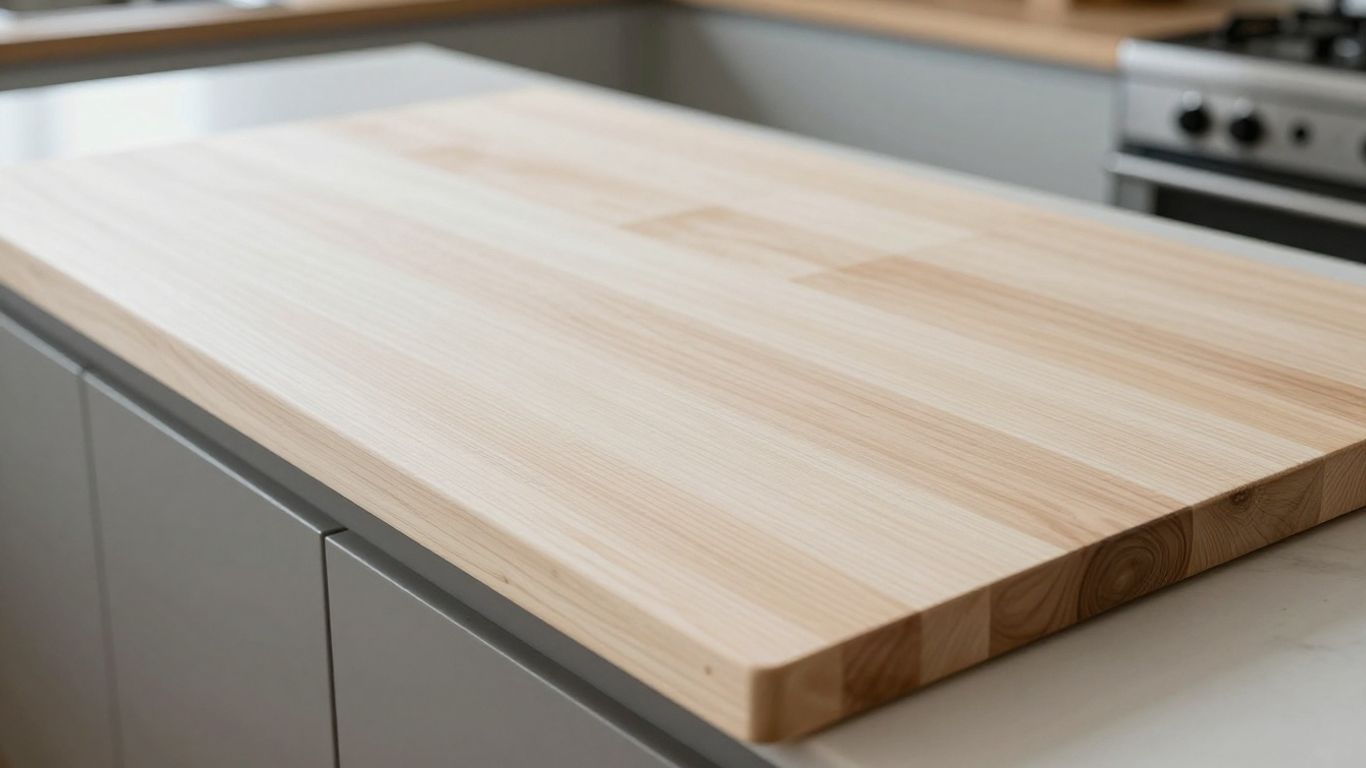
Confirm the wood species and end-grain layout
Ask whether the board is made from hard maple, not just a mix described as maple. On an end-grain surface, you should see the ends of the blocks, often with growth rings visible; long strips running across the board indicate a different grain orientation. A product described as end grain should have that structure across the working face, not just a decorative pattern.
Look for tight joints and a flat, stable surface
Inspect the glue lines for gaps, open seams, or sections that look misaligned. Set the board on a level counter and check whether it sits evenly; if it rocks when you press opposite corners, that is a poor start for a busy station. A maple board quality checklist can help you make a more systematic inspection before purchase.
Check the finish and adhesive for food-safe use
Ask the maker what finish is used and whether the adhesive is intended for a cutting board that contacts food. Avoid relying on “natural” or “non-toxic” as the only explanation; those words do not tell you the product or its intended use. Get the care instructions in writing, too, so staff are not guessing which cleaners or oils the maker permits.
Assess thickness, weight, and resistance to movement
Thickness and weight affect stability, but they also affect how easily staff can move and store the board. Use a simple comparison to keep the purchasing conversation focused on the actual work surface and the demands of the station.
| Check | What to ask | Why it matters |
|---|---|---|
| Thickness | What is the board’s actual thickness? | Affects heft, storage, and potential resurfacing. |
| Weight | Can one staff member lift it safely? | Heavy boards can be awkward during cleaning. |
| Feet or grip | Does it stay put on your counter? | Movement can interrupt controlled knife work. |
| Flatness | Does it sit evenly on a level surface? | Rocking makes prep less comfortable. |
A documented example, the Bevel & Bond End-Grain Maple Cutting Board, is listed as 1.75 inches thick and about 10 pounds, with non-slip feet. Those specifications are a comparison point, not a universal target; the right balance depends on your staff, counter, and storage space.
How do you choose a size and design for daily service?
Choose a board that gives the cook room to work without crowding the station or making routine cleaning awkward. A larger, heavier board may feel reassuring during chopping, but you still need to lift it, wash it, dry it, and put it away. Measure the counter and storage location before choosing dimensions.
Match board dimensions to the prep station
Measure the usable counter area, leaving space for containers, tools, and finished ingredients. The board should provide enough room to keep chopped food from sliding into the knife path, but it should not overhang the work surface or obstruct nearby equipment. For another sizing framework, see this cutting board size guide.
Balance a sturdy build with manageable lifting and storage
A board that is stable in use still has to be manageable when wet and soapy. Check the route from station to sink, the available drying space, and whether staff can safely lift the board without twisting or gripping an awkward edge. Bevel & Bond lists its board at about 10 pounds, a detail worth comparing with your crew’s daily handling needs rather than treating weight as an automatic advantage.
Decide whether a juice groove or handles suit the task
A juice groove can help contain liquid during carving, but it takes up some of the flat working area and adds a channel to clean. Handles or finger grips may make a board easier to move, though cutouts can also change how it fits in storage. Bevel & Bond lists a juice groove and finger grips on its 17-by-13-inch board; compare those features with the specific prep jobs you expect it to handle.
Consider how many boards the kitchen needs for its workflow
One board may be enough for a tightly defined task, while a busy kitchen may need separate boards to keep jobs organized and avoid tying up a station during cleaning. Follow your kitchen’s separation and color-coding procedures, if it has them. Decide the number by mapping the tasks and cleaning cycle, not by assuming one board can cover every kind of prep.
How do you clean and sanitize a maple board?
A wood board needs a clear wash, sanitize, and dry routine, and your local rules and approved kitchen procedures take priority. Do not assume that washing alone is the same as sanitizing, or that a procedure approved for one surface automatically applies to another. Have the manager or food-safety lead confirm the method for the specific board.
Remove food debris and wash promptly after use
Scrape away scraps, then hand-wash the board promptly with mild soap and warm water, following the kitchen’s normal sequence for the task. Pay attention to the whole surface, including edges and any groove. Avoid leaving the board dirty between jobs; dried residue is harder to remove and slows the next person down.
Follow an approved sanitizing process for wood surfaces
Use only the sanitizing process approved for your kitchen and the surface in question, following the product label and local requirements. If your written procedure does not address wood boards, ask the person responsible for food safety before putting one into service. A wood-board sanitation overview can add background, but it does not replace your local rules or approved procedures.
Dry the board fully and store it with airflow
Dry the board upright or in another position that lets air reach both faces. Do not stack a damp board against another surface or tuck it into a closed space before it has dried. The point is a repeatable routine, not a complicated ritual: clean it, use the approved sanitizing step, then let it dry completely.
Keep raw-protein prep separate according to kitchen procedures
Follow your kitchen’s rules for separating raw protein from ready-to-eat foods, including which board is assigned to each task and when it must be cleaned and sanitized. A useful station routine is easier to maintain when the sequence is explicit:
- Assign the board to a defined prep task or category.
- Clear and wash it promptly after that task.
- Apply the approved sanitizer according to its label and procedure.
- Dry it fully before storage or reuse.
Keep the routine visible to staff and consistent across shifts. If the board’s material is not covered by the written procedure, resolve that before using it for raw-protein prep.
How do you maintain the board through heavy use?
Regular care helps a wood board stay in usable condition, but it takes time and does not cancel out wear. Plan for hand-washing, thorough drying, and periodic oiling as part of ownership. Staff should also know when a board needs inspection or should be taken out of service.
Reapply food-safe mineral oil as the surface dries
When the wood begins to look dry, apply food-grade mineral oil according to the board maker’s instructions; monthly oiling is a practical starting point for routine care. Frequency can vary with use and washing, so look at the surface rather than treating the calendar as a guarantee. Avoid olive or vegetable oil for board care.
Use conditioner to help protect the wood between oilings
A conditioner can be used between oilings if the maker’s instructions allow it. Bevel & Bond describes its Board Balm as a mineral oil and beeswax conditioner; that ingredient description does not by itself establish a certification, so check the product information and follow its directions. Keep care products out of the kitchen’s food-prep workflow until they have been applied as directed and the board is ready for use.
Watch for deep cuts, cracks, loose joints, or persistent odors
Inspect the board routinely, especially after heavy use or a drop. Deep cuts, cracks, loose joints, or persistent odors call for a closer assessment; follow your kitchen’s criteria for removing equipment from service. If the board has become uneven, ask the maker whether it can be resurfaced and who is qualified to do the work.
Avoid soaking, high heat, and commercial dishwashers
Hand-wash the board and never leave it soaking in a sink. Keep it away from high heat and do not put it through a commercial dishwasher, where heat and prolonged water exposure can damage wood construction. Dry it upright after washing, and make sure both sides can air out.
How should you evaluate cost and long-term value?
The purchase price is only one part of the cost: you also need to account for care time, storage, and what happens when a heavily used surface needs attention. A well-built board may be worth its higher upfront cost if it suits the work and can be maintained, but no board is a bargain if it does not meet your kitchen’s rules. Compare specifications and terms in writing.
Compare board thickness, workmanship, and warranty terms
Compare boards on construction, material, usable area, and warranty coverage rather than appearance alone. Bevel & Bond lists its 17-by-13-by-1.75-inch board at $139.99 and states a five-year warranty on manufacturing defects. That is a specific product example, not a general commercial-board price or a promise about how long any board will last.
Ask how the board can be resurfaced if it becomes uneven
Before buying, ask whether resurfacing is possible, what condition the board must be in, and whether the maker provides guidance. Resurfacing may affect thickness and features, so it is worth asking about grooves and feet as well as the flat cutting face. A clear answer gives you a more realistic idea of future options.
Factor in care time and replacement expectations
Estimate who will wash, sanitize, dry, and oil the board, and where it can sit while drying. Add those tasks to the working routine rather than treating them as occasional extras. The board’s expected service life depends on how it is built, used, and maintained, so avoid buying on a lifetime promise.
Verify that the board meets local health-code requirements
Confirm with your local health authority or inspector that the material and intended use are allowed in your operation. Requirements can depend on the jurisdiction and the task, so a product description is not a substitute for approval. Make that check before ordering, especially if you plan to use wood at a station with specific sanitation requirements.
Choosing a commercial kitchen end-grain maple cutting board
An end-grain hard maple board can be a practical choice for repeated knife work when its construction, size, and care routine fit your kitchen. Inspect the build, confirm that wood is acceptable for the intended station, and include cleaning and maintenance in the real cost of ownership.
Best for
- End-grain hard maple board: stations with steady knife work, where staff can lift, wash, sanitize, and fully dry the board.
- Plastic or another approved surface: stations that rotate boards through a commercial dishwasher, or whose approved process calls for a different surface.
- Board with a juice groove: carving and other jobs that release liquid.
- Flat board without a groove: general prep where you want the full working area.
- Several boards: busy kitchens that need to keep jobs separate and avoid tying up a station during cleaning.
Frequently Asked Questions
Is an end-grain maple board suitable for daily prep?
It can be, if the board is well constructed, the station allows wood, and staff can follow the required cleaning and care routine. Match its size and weight to the work rather than choosing by appearance alone.
Is hard maple different from soft maple?
Yes. They are different species groups, so ask a maker to identify the wood specifically as hard maple if that is what you want. A general “maple” label does not always answer the question.
Does an end-grain board hide knife marks?
Its grain orientation can make marks less visually prominent than on some other constructions, but marks still accumulate with use. Inspect the working surface over time and follow the maker’s maintenance guidance.
Can a wood cutting board go in a commercial dishwasher?
No. Hand-wash it with mild soap and warm water, and do not soak it or put it in a commercial dishwasher. Follow the approved sanitizing procedure for your kitchen and the board’s material.
How often should a maple board be oiled?
About once a month is a practical starting point for routine care, using food-grade mineral oil and following the maker’s directions. Oil more or less often depending on use and how dry the surface looks.
Does a juice groove make a board better for every task?
No. It can help contain liquids during carving, but it reduces the flat area available for prep and takes extra attention during cleaning. Choose it only if it suits the work you do.
What should you check before using a wood board in a restaurant?
Check local health-code requirements and your kitchen’s written food-safety procedures first. Then confirm the board’s construction, finish, cleaning directions, stability, and condition.
What should you do next?
- Confirm with your kitchen's written procedures and local health requirements that a wood board is acceptable for the station.
- Measure the prep station and decide who will lift, wash, and store the board.
- Check the species, joints, flatness, and finish before you buy.
- Set a routine for washing, sanitizing, drying, and oiling, and ask whether the board can be resurfaced.
- Compare surfaces in rubber vs wood cutting boards, and use these questions to ask a cutting board maker before you order.