BUYING GUIDES
How to trim a pork loin: A practical step-by-step guide
Learn how to trim a pork loin, remove silver skin, preserve a thin fat layer, and portion or store it safely.
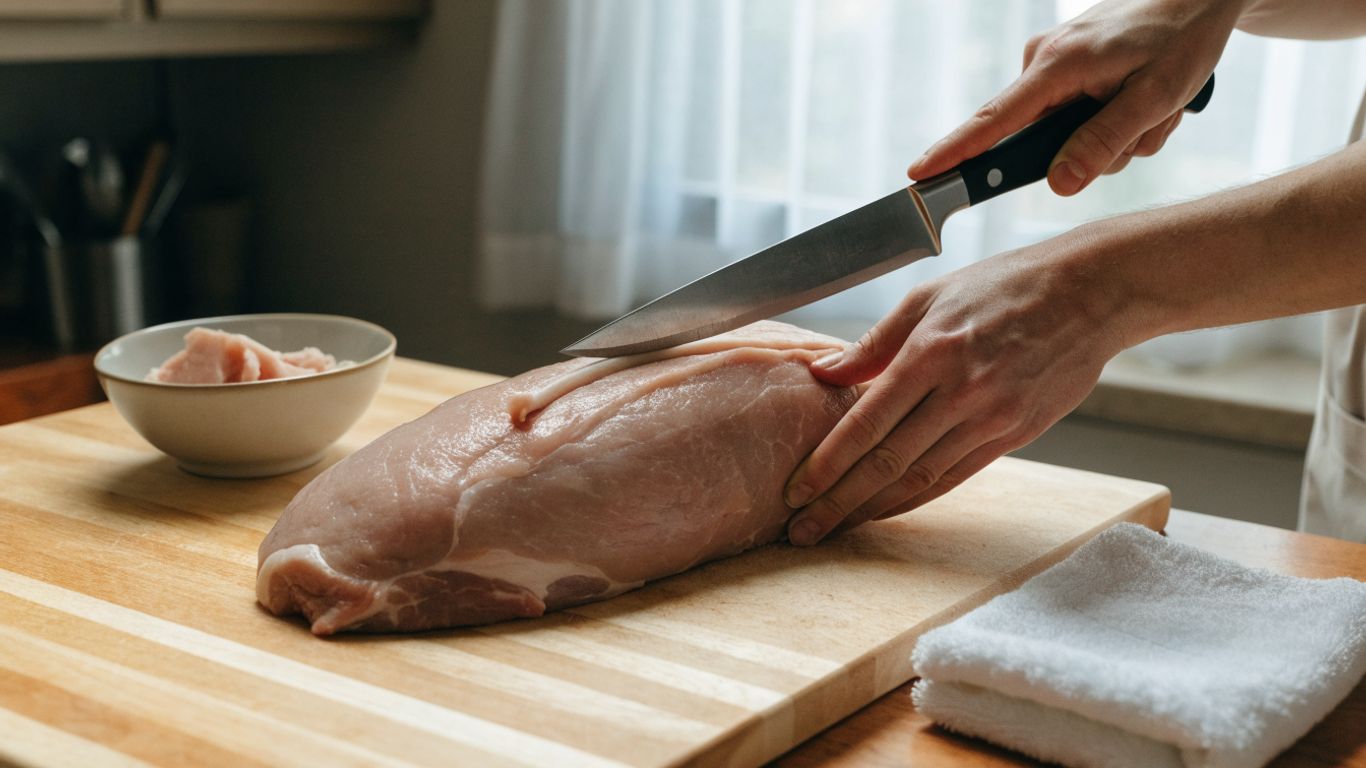
The short answer
To trim a pork loin, remove the silver skin and loose, thick fat while leaving a thin fat layer to help protect the meat as it cooks. Keep the pork cold, use a sharp knife, and shape or portion the loin according to how you plan to serve it.
- Check that you have a pork loin, not the smaller tenderloin.
- Remove silver skin in short, controlled strips.
- Trim thick fat, but leave a thin, even layer.
- Portion the loin only after deciding how you will cook it.
- Refrigerate or freeze the trimmed pork promptly, then clean your tools and work surface.
What exactly are you trimming?
A pork loin is a broad, substantial cut, and trimming it means removing tough membrane and unwanted excess rather than stripping it bare. First identify the cut and whether it has bones; those details affect where you can safely make each cut. Your intended recipe should determine whether you leave it whole or portion it now.
Pork loin and pork tenderloin are different cuts
A pork loin is wide and fairly uniform in shape, while a pork tenderloin is a smaller, narrow muscle. They are not interchangeable in size or trimming approach, even though both can have a shiny membrane that you may want to remove. If you have a tenderloin, follow a pork tenderloin trimming guide for its specific preparation rather than treating it like a roast loin.
Check whether the loin is bone-in or boneless
A boneless loin has a broad, uninterrupted surface, so you can rotate it as you trim. A bone-in loin has ribs along one side; keep the blade away from the bone unless your plan specifically calls for separating it. If you are cutting a boneless loin into several portions, this guide to cutting a whole pork loin can help you think through chops, roasts, and storage.
Decide how you plan to cook or portion it
Choose the final shape before trimming deeply. A whole roast needs an even outline, while chops need a clean crosswise cut and portions intended for freezing need to fit your packages. This quick comparison helps you avoid making cuts you will have to undo.
| Your plan | Trim for | Leave alone |
|---|---|---|
| Whole roast | A tidy, even shape | A thin fat layer |
| Chops | Clean, square ends before slicing | Meat you can portion later |
| Smaller roasts | Even-sized sections | Fat that is already thin and attached |
| Freezer portions | Practical package sizes | Trimmings you may want to save for another use |
The table is a starting point, not a recipe: the loin’s shape and your cooking method still matter. Make only the cuts that support your plan, and keep the untouched portions cold while you work.
Which tools do you need, and how do you set up safely?
You need a sharp knife, a stable board, and enough room to control the meat without crowding your hands. Set out a tray for the trimmed pork and a separate place for scraps before you begin. Raw pork also needs to stay apart from ready-to-eat foods, as the USDA advises for preventing cross-contamination.
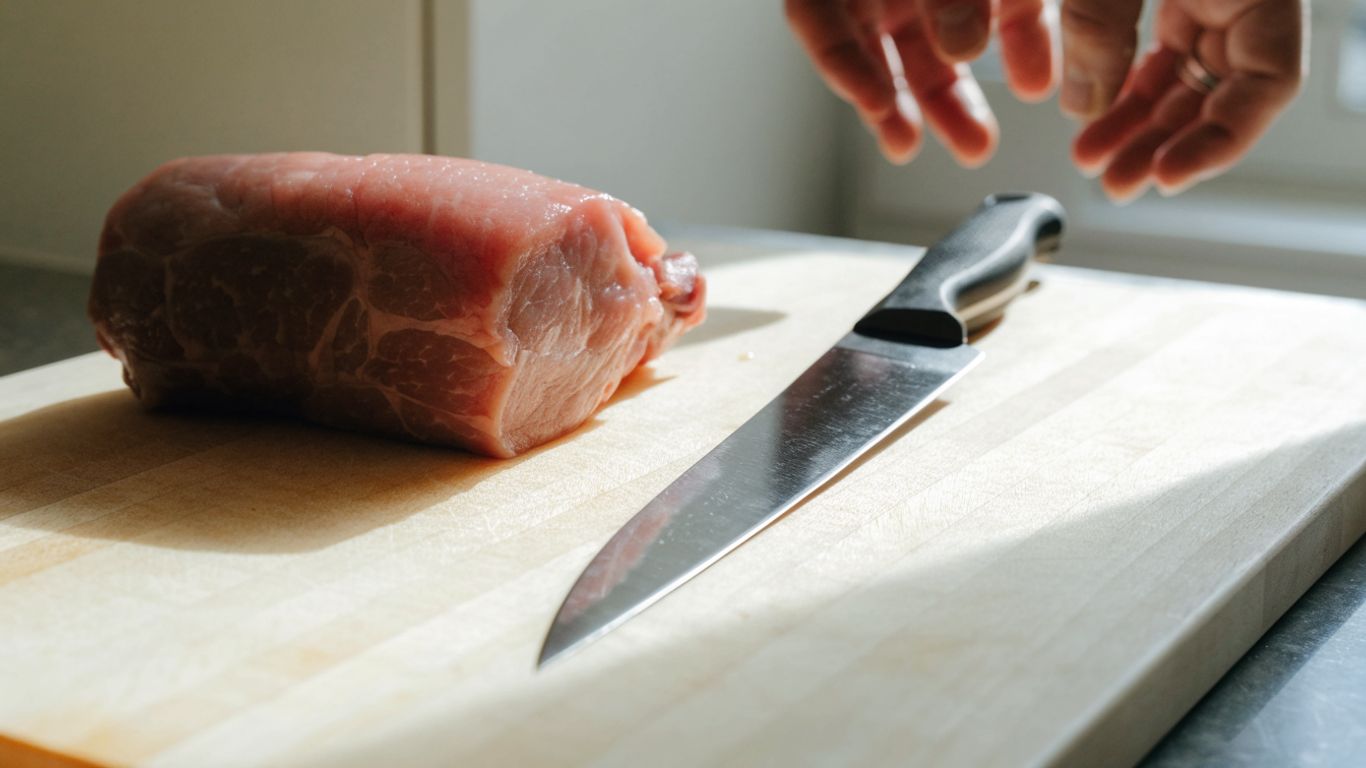
Choose a sharp boning or chef’s knife
A boning knife gives you a narrow blade for following the surface beneath silver skin; a chef’s knife can work for larger, straightforward cuts. Either way, use a sharp edge and keep your free hand out of the blade’s path. A dull knife is not a useful safety feature, despite what the junk drawer may suggest.
Use a stable cutting board with enough room
The loin should sit flat with space to turn it, and the board should stay steady under light pressure. A rim or groove can help contain juices, but a clean, stable surface and sensible handling matter more than decorative features. For more on choosing a surface for raw-meat prep, see this maple cutting board guidance for meat.
Keep the pork cold and separate from ready-to-eat foods
Take the loin out of the refrigerator when your station is ready, rather than letting it sit while you gather tools. Keep it on its own work surface or use a separate board from foods that will not be cooked. If the meat must wait, return it to the refrigerator; USDA FSIS recommends keeping perishable food at 40°F or below.
How do you remove the silver skin?
Silver skin is a thin, tough membrane that does not soften like ordinary fat during cooking. You can remove it without losing much meat by working patiently and keeping the blade angled away from the flesh. There is no prize for taking off the largest strip in one pass.
Find the thin, shiny membrane on the surface
Look for a silvery, slightly reflective layer on the outside of the loin. It may cover only part of the surface, and it can be easier to spot when you rotate the meat under good light. Do not mistake a soft layer of fat for membrane; fat is opaque and has a different texture.
Slide the knife under it and angle the blade upward
Lift a loose edge with your fingertips or the knife tip, then slide the blade just beneath the membrane. Angle the edge slightly upward so it cuts against the silver skin, not down into the meat. Once you have a small flap to hold, pull it gently taut as you advance the knife.
Work in short strips to avoid cutting away good meat
Short strokes give you more control than trying to peel off a broad sheet. Use this sequence, pausing whenever the membrane slips or the blade starts to dig into the loin:
- Lift a corner of the membrane.
- Insert the knife shallowly beneath it.
- Hold the flap taut and cut in short strokes.
- Rotate the loin and repeat only where membrane remains.
Check the surface with your fingertips when you finish. A few small patches are better than carving away a groove of good meat to chase a stubborn edge.
How do you trim excess fat without drying out the loin?
Remove fat that is loose, unusually thick, or hard, but do not try to make the loin completely lean. A modest fat layer helps shield the surface during cooking and contributes flavor. The trade-off is that a very uneven cap can brown unevenly, so trim the thick spots rather than removing everything.
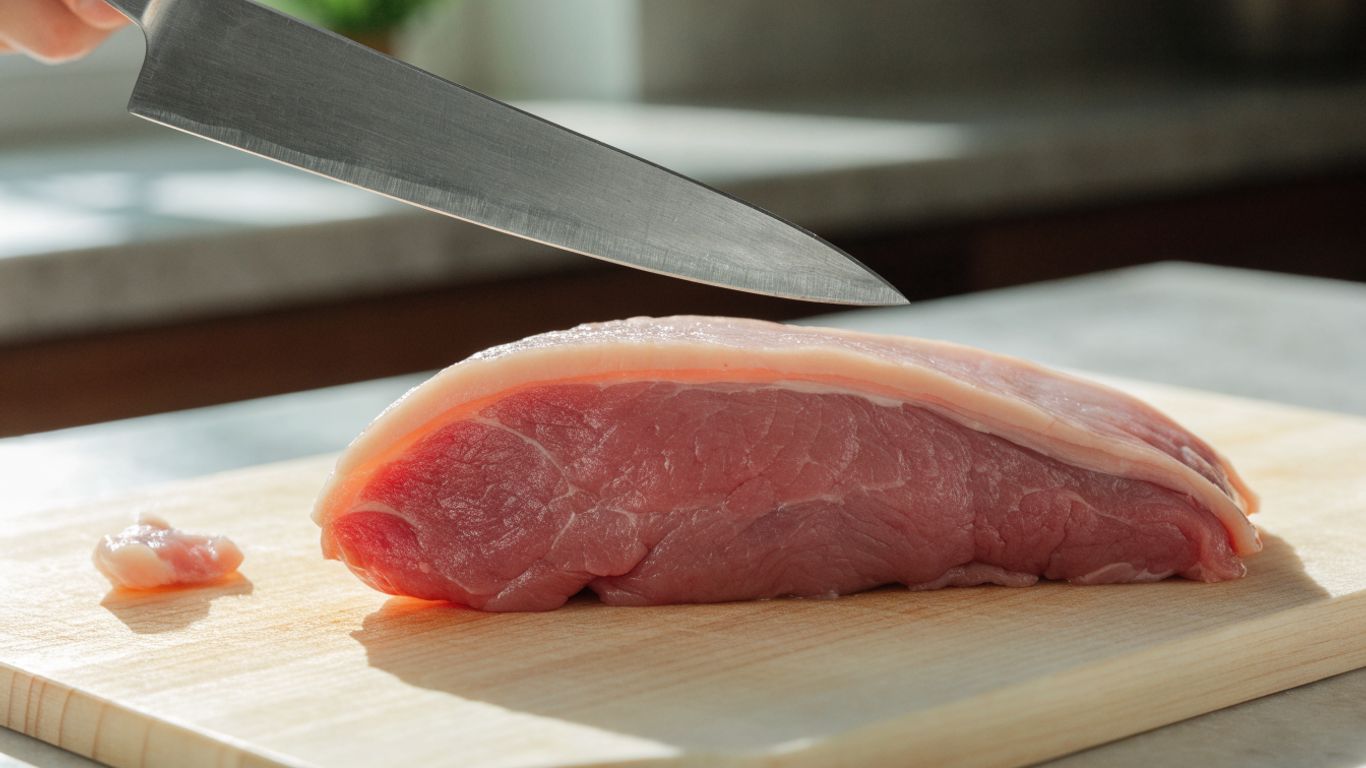
Identify the fat cap and any thick, uneven areas
The fat cap is the outer layer along one side of the loin. Look for spots that jut out far beyond the rest, as well as loose flaps that could curl or cook differently from the main piece. Take a moment to distinguish attached fat from silver skin; they need different cuts.
Leave a thin layer to help protect the meat as it cooks
Trim the fat cap toward an even layer, leaving roughly ¼ inch where it is practical to do so. The exact thickness need not be ruler-perfect, and the loin may not have an even cap from end to end. The goal is restraint: remove bulky excess without exposing broad patches of lean meat.
Remove loose flaps and hard pieces of fat
Use the knife tip to lift a loose flap, then slice it away with the blade nearly parallel to the meat. Cut off firm, hard pieces that will not render pleasantly, but leave soft, attached fat that is already thin. Turn the loin as you go so you can see what remains instead of trimming from one angle.
How should you shape and portion the pork loin?
Once membrane and excess fat are handled, make the loin suit the meal. Keep it whole for a roast, or cut it across its length into chops and manageable portions. A few deliberate cuts now make cooking and packaging easier later.
Square off ragged ends if an even roast is your goal
If one end is thin or ragged, trim only enough to create a neater shape. Save clean trimmings for another use rather than discarding them automatically. Do not cut away a large amount simply to make the roast look perfectly symmetrical.
Cut steaks or chops across the loin as needed
For chops, cut across the width of the loin and aim for consistent thickness so the pieces cook at a similar pace. A simple way to keep portions even is to mark the cut points before slicing. If the loin is bone-in, work around the bones rather than forcing the knife through them.
Tie the roast when its shape or thickness is uneven
Tying can help hold a roast together if one end is much thinner or a flap needs to stay tucked in. Use kitchen twine at intervals that secure the shape without squeezing the meat tightly. If the roast is already uniform and stable, tying is optional.
How do you store the trimmed pork and clean up?
Once trimming is done, package any portions you will not cook soon and put them away promptly. Keep raw pork contained so its juices cannot reach other food, and clean the tools and work area before returning to other kitchen tasks. USDA FSIS guidance gives fresh pork roasts and chops a refrigerated storage window of 3 to 5 days at 40°F or below; freeze portions if you will keep them longer.
Refrigerate or freeze the meat promptly
Place the pork in the refrigerator or freezer as soon as you finish trimming. If you are preparing a meal later, keep the meat chilled rather than leaving it on the counter. Separate portions before freezing if you expect to thaw and cook them on different days.
Wrap and label portions for storage
Wrap each portion snugly, press out excess air from freezer packaging, and label it with the cut and date. Clear labels save guesswork when several similar packages end up in the freezer. Keep trimmings in their own package if you plan to use them later.
Wash and sanitize tools and work surfaces after trimming
Wash your knife, board, hands, and any surface touched by raw pork with hot, soapy water, then sanitize food-contact surfaces as appropriate. Do not use the same unwashed board for salad or other ready-to-eat ingredients. This maple board-cleaning guide offers more detail on cleaning and sanitizing after raw meat.
What to remember when you trim a pork loin
A clean trim is a controlled one: remove silver skin and excess fat, keep a thin layer where it helps, and shape the loin for the meal ahead. Work with a sharp knife, keep the pork cold, and package leftovers promptly so the useful work continues after the cutting board is clear.
Frequently Asked Questions
Do you need to remove silver skin from pork loin?
Remove it when you find a tough, shiny membrane on the surface. Slip the knife beneath it and trim carefully so you do not remove unnecessary meat.
Should you remove all the fat from a pork loin?
No. Trim thick, loose, or hard pieces, but leave a thin layer of attached fat where possible to help protect the meat as it cooks.
Can you trim a pork loin while it is still cold?
Yes. Keeping it cold makes it easier to handle safely and helps the meat stay firm while you work. Take it out only when your tools and work area are ready.
What is the difference between pork loin and pork tenderloin?
Pork loin is a larger, wider cut; pork tenderloin is narrower and smaller. Their size and shape affect how you trim and portion them.
Can you cut a pork loin into chops before freezing?
Yes. Portion it into chops or other meal-sized pieces, wrap them well, and label each package with the cut and date before freezing.
How long can trimmed pork loin stay in the refrigerator?
USDA FSIS guidance recommends keeping fresh pork roasts and chops refrigerated at 40°F or below for 3 to 5 days. Freeze the pork if you plan to store it longer.
Do you have to tie a pork loin roast?
No. Tying is useful when the roast is uneven or has a loose flap that needs to stay in place. A uniform roast can be left untied.
What should you do next?
- Check that you have a pork loin, not the smaller tenderloin.
- Keep the pork cold and use a sharp knife.
- Remove the silver skin in short strips, then trim thick fat but leave a thin, even layer.
- Decide how you will cook the loin before you portion it.
- Refrigerate or freeze the pork promptly, then clean your tools and board. For more meat prep, see how to carve a leg of lamb and cutting boards for processing venison and wild game.
SEE AN EXAMPLE