BUYING GUIDES
How to Carve a Leg of Lamb: A Step-by-Step Guide
Learn how to carve a leg of lamb with simple steps for bone-in and boneless roasts, plus resting and serving tips.
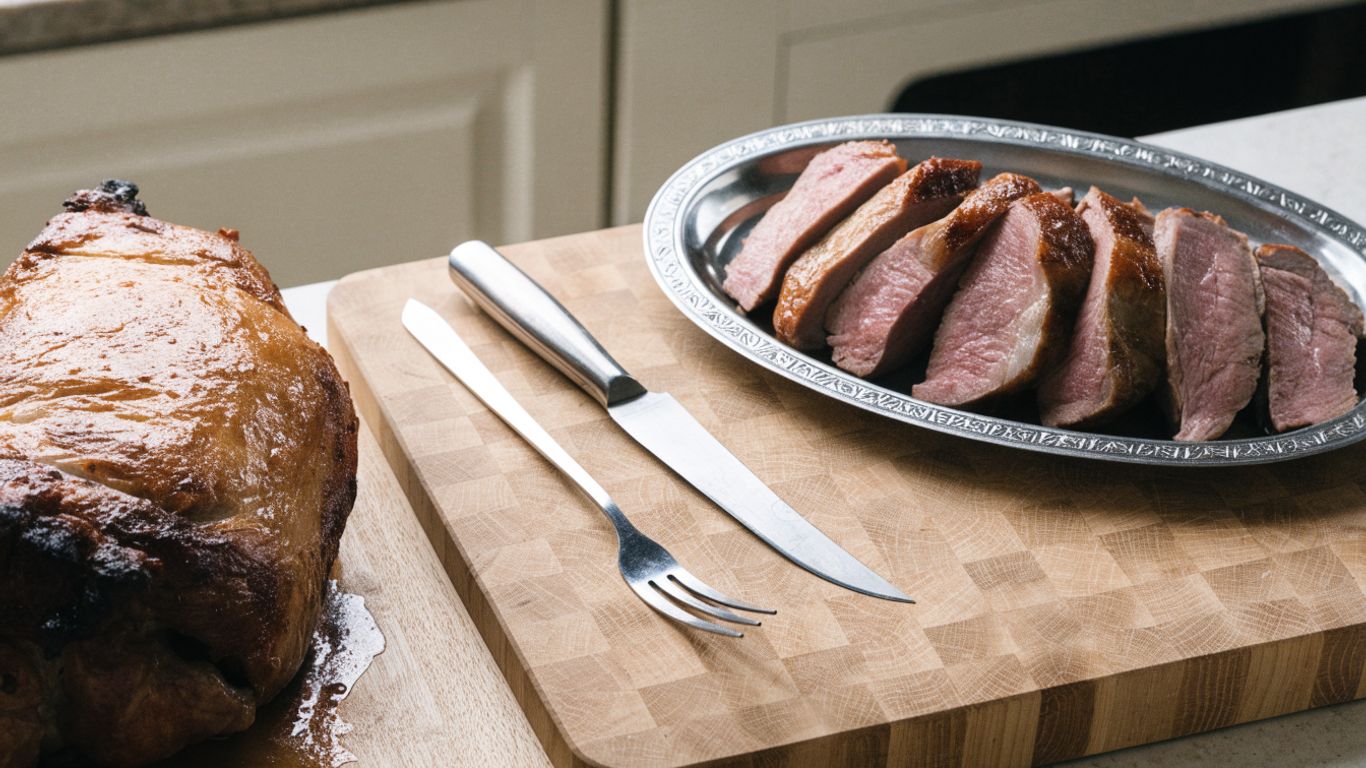
The short answer
To learn how to carve a leg of lamb, let the roast rest, find the bone or seams, and use long, controlled cuts. A sharp knife and steady board make the work easier, though the bone means you will need to turn the roast as you go.
- Rest the lamb for about 15 to 20 minutes before carving.
- Set out a sharp knife, carving fork, and stable board with room for the roast.
- Check the bone and muscle fibers before choosing where to cut.
- Slice bone-in lamb down to the bone; open boneless lamb at its seams.
- Cut across the grain, serve promptly, and refrigerate leftovers within two hours.
How long should the lamb rest before carving?
Give the roast time to rest before you slice it; 15 to 20 minutes is a useful range for a typical leg of lamb. Resting lets the temperature settle and gives you a less hurried carving job. The trade-off is that you need to plan for that pause while the rest of the meal comes together.
How long to rest the roast
Set the cooked lamb on a warm platter or board and loosely tent it with foil. A whole leg is substantial, so allow roughly 15 to 20 minutes before carving; a particularly large roast may need a little longer. Keep the foil loose rather than wrapping the meat tightly, which can soften the exterior.
Why resting helps retain juices
As meat cooks, its juices move toward the hotter outer parts. Slicing immediately can send more of that liquid across the board instead of leaving it in the meat. A short rest gives the roast a chance to settle, so you can make cleaner cuts and keep more of the juices available for serving.
What to do while the lamb rests
Use the pause to get your serving platter, carving fork, and sauce ready. If you have pan juices, skim or strain them now, then taste before seasoning. Keep the hot lamb away from raw-meat prep, and clear enough counter space to handle the roast without juggling dishes.
What tools do you need, and how should you set up?
You can carve a leg of lamb with a sharp chef’s knife or carving knife, a fork, and a board that stays put. A large board gives you room to turn the roast and catch the juices, but it also takes up counter space. Aim for a simple, uncluttered setup rather than a pile of specialty tools.
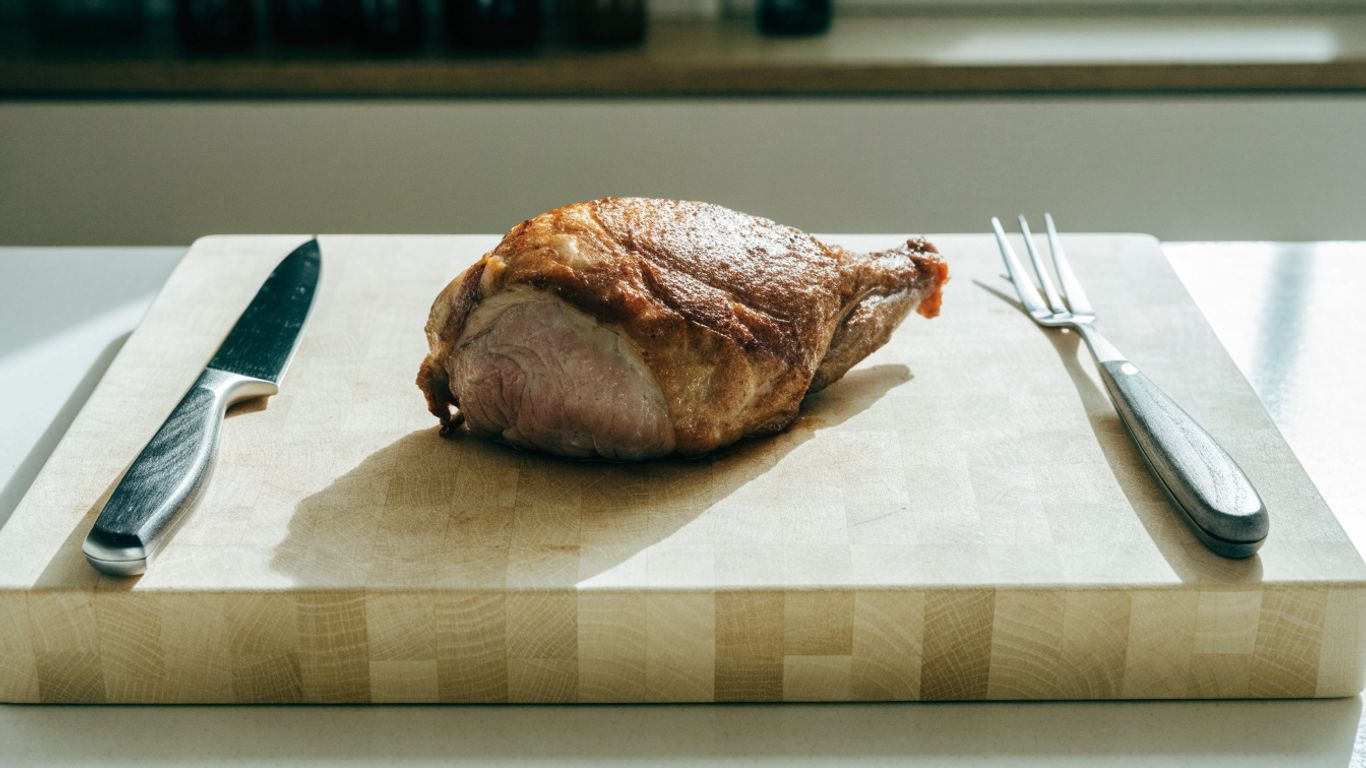
Choose a sharp carving knife
A sharp, relatively long knife helps you draw smooth slices instead of sawing back and forth. A carving fork can steady the roast while your knife hand works; keep its tines away from the path of the blade. Before you begin, check the knife and set up a safe place to put it down between cuts.
A few small checks make carving more controlled:
- Use a knife that is sharp enough to cut without force.
- Keep your guiding hand on the carving fork, not in front of the blade.
- Wipe the blade if juices or bits of meat make it slippery.
- Set the knife down flat and out of the way when you pause.
These are simple precautions, but they help keep a busy serving moment from getting messy. Keep children and extra hands clear of the cutting area, too.
Use a stable board with room for the roast
Choose a board with enough space for the whole leg and a little room around it for turning and collecting juices. A groove can help hold liquid, though you still want a platter nearby for the finished slices. For more on useful features and sizes, see this guide to carving maple boards.
The Bevel & Bond End-Grain Maple Cutting Board is listed as 17 by 13 by 1.75 inches, with a juice groove and non-slip feet. That gives you a specific example of the kind of board features to check against your available counter space. This site is published by the team behind Bevel & Bond.
Position the lamb to keep it from slipping
Place a damp kitchen towel beneath the board if it shifts on the counter, and set the lamb with its broad side down. Bevel & Bond lists non-slip feet on its End-Grain Maple Cutting Board; whatever board you use, make sure the board itself is secure before you start cutting. Hold the roast with a carving fork and adjust your stance so you can guide the knife away from your body.
How do you find the bone and the direction of the grain?
Before making the first cut, take a moment to inspect the roast. On a bone-in leg, the hip bone runs through at an angle; on a boneless roast, seams between muscles give you natural places to open it. The grain matters too, because slicing across the muscle fibers makes each piece easier to chew.
Identify the hip bone and the natural seams
Feel gently along the outside of a bone-in leg to locate the firm ridge of the bone. The meat sits on either side, and the bone’s angle affects how you approach each section. For boneless lamb, look for the lines where separate muscles meet rather than cutting straight through every fold.
These landmarks suggest a practical first move for each style of roast:
| Roast feature | What you may notice | Useful approach |
|---|---|---|
| Bone-in leg | A firm ridge beneath the meat | Slice toward the bone, then release each piece |
| Boneless leg | Seams between folded muscles | Open the roast along a seam |
| Outer surface | A browned, firmer layer | Start with even slices from the outside |
| Muscle grain | Fine parallel fibers | Cut across the fibers for serving |
The table is a guide, not a map of every roast; the shape can vary. Use the actual bone and seams in front of you, and turn the meat if your knife angle becomes awkward.
Look for the muscle fibers before slicing
Muscle fibers appear as fine lines running through the meat, often easiest to see on a cut face. Your goal is to slice across those lines rather than follow their length. This across-the-grain cut shortens the fibers and helps keep the slices tender.
Adjust the roast so you can work comfortably
Set the shank end where you can hold it securely and keep the thickest part of the leg within easy reach. If you have to lean over the board or twist your wrist, reposition the roast before cutting. The best angle is the one that lets the knife travel in a smooth line while your other hand remains safely on the fork.
How do you carve a bone-in leg of lamb?
For a bone-in leg, work from the outside toward the bone, releasing slices as you reach it. The bone makes the cuts less uniform than they would be on a boneless roast, so turn the leg as needed rather than forcing the knife through. A bone-in carving guide also illustrates the basic approach around the angled bone.
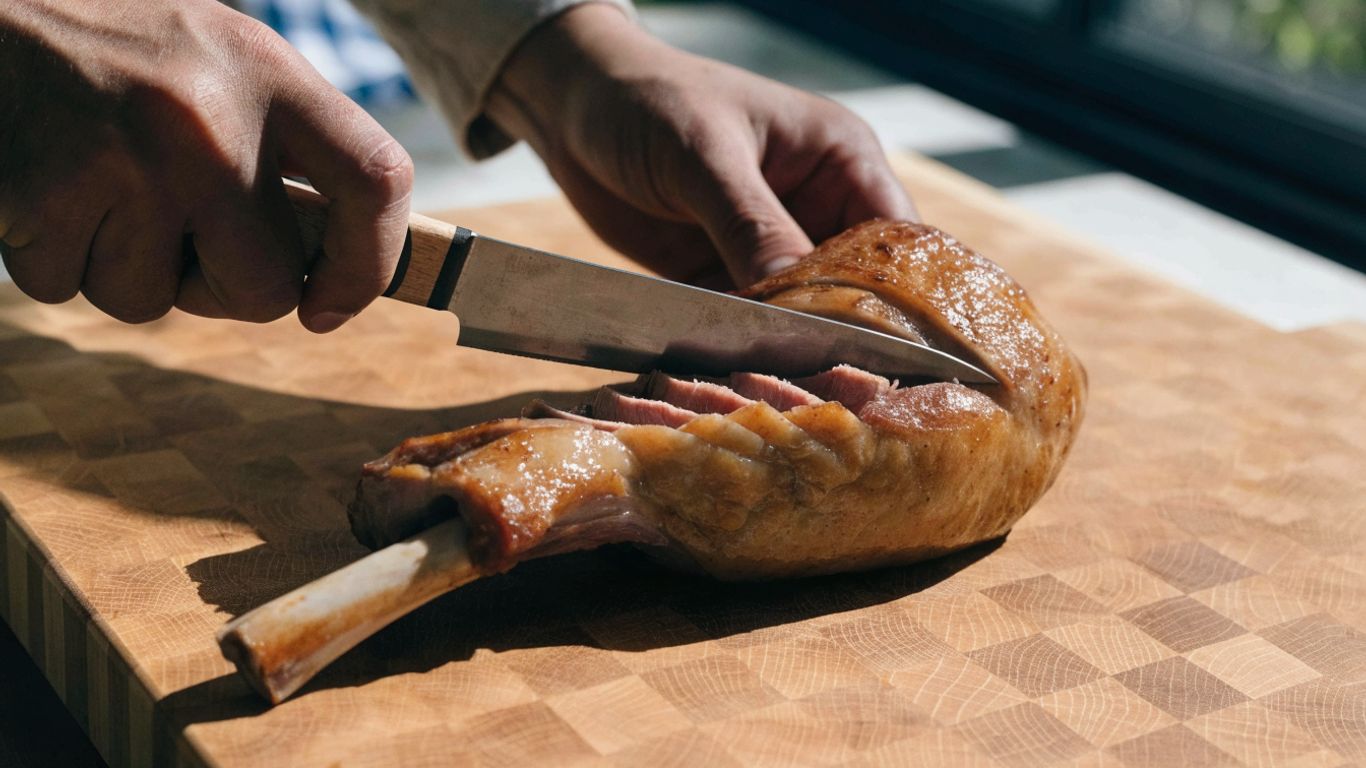
Make the first slices along the outer side
Set the leg so its broad outer side rests securely on the board. Hold the shank or steady the meat with a fork, then cut a few even slices from the surface toward the bone. Keep each stroke long and smooth; short sawing motions tend to tear the meat and make the slices ragged.
Cut down to the bone and release each slice
Continue cutting until the blade meets the bone, then angle it gently along the bone to free the slice. Do not press hard or try to cut through bone. If the meat resists, follow the bone’s contour with the knife tip and release the piece with a careful pass.
For how to carve a leg of lamb, the key is to let the bone guide the blade rather than treating it as an obstacle. Place each released slice on the platter, then return to the roast for another cut.
Turn the leg to reach the remaining meat
Once you have cleared one side, rotate the leg so the remaining meat is easier to reach. Repeat the same controlled cuts, working from the outside inward and keeping your fingers behind the fork. Small pieces close to the bone may be less tidy; save them for a later meal rather than trying to make every cut look identical.
How do you slice a boneless leg of lamb?
A boneless leg is easier to portion, but the rolled shape and seams can make it look less obvious where to begin. Remove the ties, open the roast where its muscles naturally separate, and then slice each section across the grain. The roast may loosen or flatten as you work, so steady it with the fork and reposition it when needed.
Remove the netting or twine
Transfer the rested roast to the board and cut away netting or twine carefully, keeping the blade pointed away from your fingers. If the roast is tied, remove one piece at a time rather than pulling against the knife. Let the meat settle before slicing; the ties may have held it in a compact shape.
Open the roast along its natural seams
Look for a visible fold or seam and ease the muscles apart with the knife tip. You do not have to separate every section completely. Opening the roast enough to reveal the direction of the fibers makes it easier to keep your slices consistent.
Slice across the grain for tender pieces
Turn each section so the muscle fibers run across the face of the slice, then cut perpendicular to them. Aim for slices of similar thickness, adjusting as the roast changes shape. If you lose sight of the grain, pause and inspect a cut face instead of guessing.
How do you serve the lamb and use the remaining meat?
Move the slices to a warm platter and spoon over a little of the reserved juice just before serving. Leave some liquid in the pan or a small bowl for the table rather than soaking every piece. When carving is finished, pick useful meat from the bone and chill leftovers promptly.
Arrange slices and spoon over the juices
Overlap the slices lightly on a warm platter so they are easy to lift without breaking. Spoon a little juice over the meat, but keep extra on the side for guests who want more. Bevel & Bond lists a juice groove on its End-Grain Maple Cutting Board, a feature that can collect some liquid while you carve; transfer the juices carefully when you are ready to serve.
Separate useful meat from the bone
After the neat slices are served, use a small knife to remove remaining meat from around the bone. Keep those pieces separate from any scraps you do not plan to use. Shredded or chopped lamb works well in sandwiches, soups, or a quick hash, and the bone can be saved for stock if you have a plan to use it.
Refrigerate leftovers safely for later meals
USDA guidance is to refrigerate perishable food within two hours, or within one hour when the temperature is above 90°F. Store lamb in shallow, covered containers so it cools promptly; cooked leftovers generally keep three to four days in the refrigerator. Reheat leftovers to 165°F, and discard anything left out beyond the recommended window.
What to remember when you carve a leg of lamb
Rest the roast, secure your board, and let the bone or natural seams show you where to cut. A sharp knife and slices across the grain are the useful basics; take your time, turn the meat when needed, and save the smaller pieces for another meal.
Frequently Asked Questions
How long should a leg of lamb rest before carving?
Let a typical leg rest for about 15 to 20 minutes, loosely covered with foil. A larger roast may need a little longer before you slice it.
Should you carve lamb with or against the grain?
Cut across the grain, perpendicular to the visible muscle fibers. This shortens the fibers and makes the slices easier to chew.
How do you carve a bone-in leg of lamb?
Slice from the outer side toward the bone, then guide the knife along the bone to release each piece. Turn the leg to reach the remaining meat.
Is a carving fork necessary?
No, but it helps steady the roast while you cut. If you do not have one, use a stable position and keep your guiding hand well away from the blade.
How thick should lamb slices be?
There is no single required thickness. Cut slices that are easy to lift and suit the way you plan to serve them, keeping them reasonably consistent across the platter.
Can you carve lamb before it has rested?
You can, but the roast may release more juice onto the board and be harder to slice neatly. A short rest makes carving more manageable.
How long can cooked lamb leftovers stay in the refrigerator?
Refrigerate cooked lamb within two hours and use it within three to four days. Reheat leftovers to 165°F, following USDA food-safety guidance.
What should you do next?
- Let the lamb rest for about 15 to 20 minutes while you set up.
- Set out a sharp knife, a carving fork, and a stable board with room for the roast.
- Find the bone or the seams, and check the direction of the grain before the first cut.
- Slice across the grain, serve promptly, and refrigerate leftovers within two hours.
- For other roasts, see how to carve a spiral ham and how to trim a pork loin.