BUYING GUIDES
Roasting Pan for Turkey: Size and Material Guide
Choose a roasting pan for turkey by size, material, rack style, oven fit, and cleanup needs.
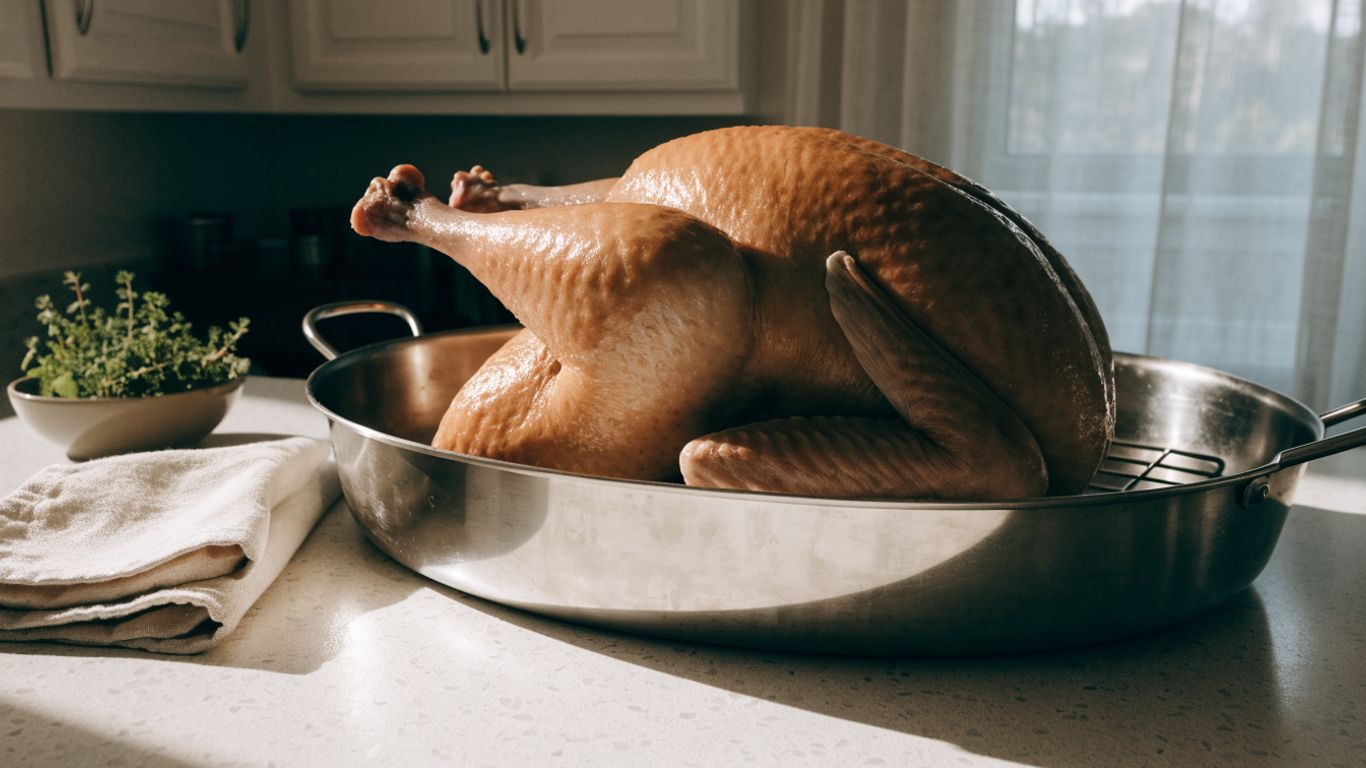
Choose the right roasting pan size for your turkey
For a whole turkey, choose a roasting pan that supports the bird without crowding it, while still fitting in your oven with room to spare. A roasting pan for turkey should be wide enough for the bird and deep enough to catch drippings, but not so oversized that it is awkward to lift or store. Start with the turkey’s weight and shape, then confirm the pan’s interior dimensions and your oven clearance before you buy.
Match pan dimensions to turkey weight and shape
Use the pan’s usable interior dimensions as your guide, since flared sides and handles can make the outside measurements misleading. These ranges are practical starting points, not guarantees: the bird’s shape, the pan’s sides, and the space needed around it all matter.
| Turkey weight | Approximate interior pan size | What to check |
|---|---|---|
| Up to 12 lb | 14 × 10 in | The bird sits without pressing against the sides |
| 12–18 lb | 16 × 12 in | There is room for the legs and any rack |
| 18–24 lb | 17 × 13 in or larger | The bird fits with clearance at the ends |
Treat inside dimensions as the deciding measurement and check the maker’s stated capacity where available. A broad or spatchcocked turkey may need more floor space than a compact whole bird of the same weight, so measure the bird if you can.
Leave room for airflow and browning
A snug fit is useful, but the turkey should not be wedged against the pan walls. A little clearance makes it easier for heat to circulate and for you to maneuver the bird, while also leaving room for vegetables or a rack if you plan to use them. Don’t choose a much larger pan simply for the sake of extra space: drippings spread thinly across an oversized base and may be harder to manage.
Check oven dimensions and rack clearance
Measure the oven’s usable width and depth with the rack in the position you expect to use. Remember that the pan’s handles add to its overall width, and that the turkey’s height matters too if it will sit on a rack or beneath a low oven element. Before settling on a model, run through these checks:
- Measure the oven interior between its walls, not just the rack.
- Include the handles when checking the pan’s outside width.
- Confirm the oven rack can slide out while supporting the loaded pan.
- Allow enough height for the turkey and any rack above it.
That extra check can prevent a pan that fits on paper but is difficult to load or remove. A similar emphasis on matching cookware to your kitchen’s space and habits appears in this guide to American-made kitchen tools.
Compare roasting pan materials
The pan material affects weight, heat response, browning, and care, so there is no single right choice for every cook. Stainless steel is a durable all-purpose option, aluminum heats quickly and keeps the load lighter, and coated pans can simplify cleanup if you follow their care limits. Compare the construction as well as the material name, since thickness and layers change how a pan performs.
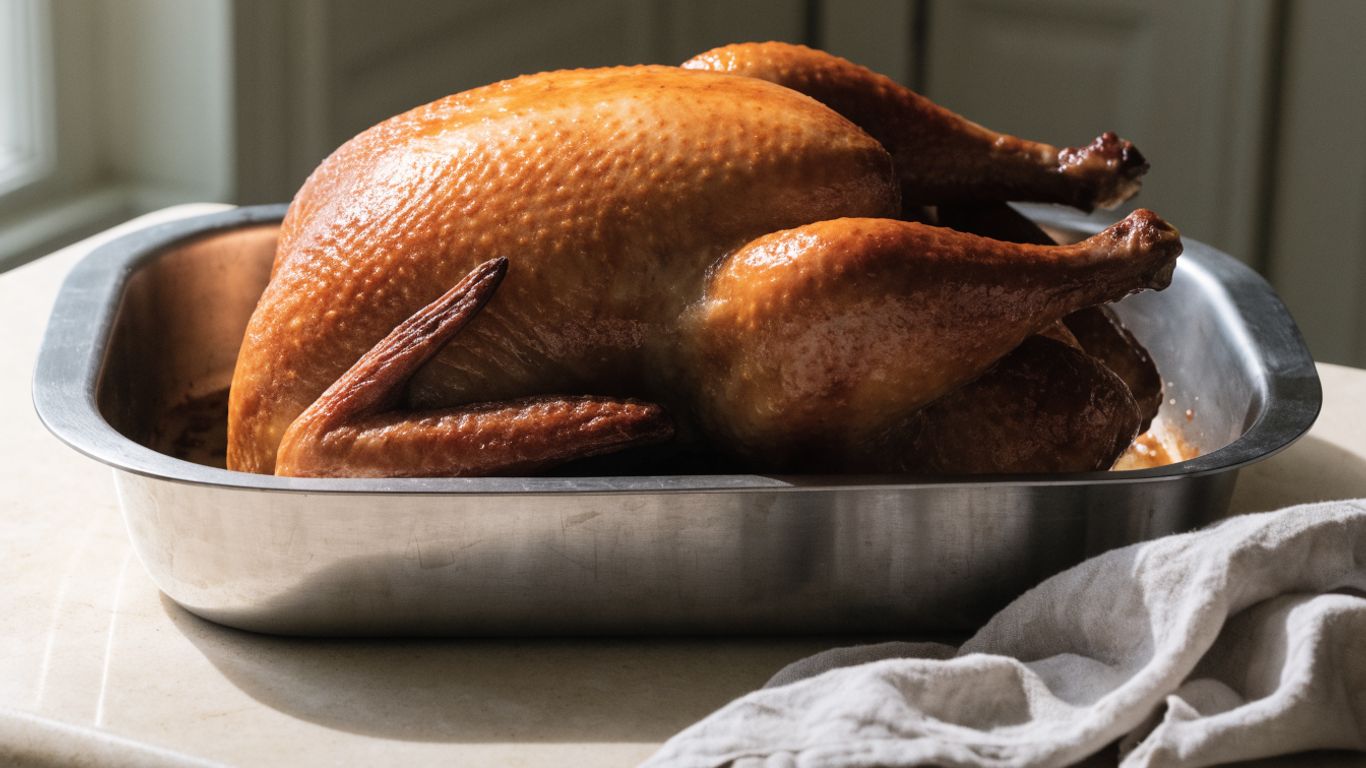
Stainless steel for durability and even browning
Stainless steel is a practical pick if you want a pan that can handle repeated use and browned bits for gravy. A thin stainless pan may heat less evenly than a heavier or layered one, so look at construction details rather than assuming every stainless model behaves alike. Its trade-off is weight: a large pan holding a turkey and hot drippings can be a substantial lift.
Aluminum for lighter weight and faster heating
Aluminum is light and responds quickly to heat, which can make handling a large roaster easier. The specific design matters: a thin pan may feel less sturdy when loaded, while heavier construction adds weight and cost. Check the maker’s guidance on food compatibility and use, especially if you expect to cook acidic ingredients in the pan.
Enameled steel and nonstick for easier cleanup
Enameled steel and nonstick coatings can make stuck-on residue easier to release, but they call for more care than bare metal. Enamel can chip if knocked or handled roughly, and nonstick surfaces have cleaning and heat limits that vary by product. Choose one only after checking the instructions for oven temperature, utensils, and washing.
A coated surface may reduce scrubbing, but it does not remove the need to follow the pan’s care directions. If you want to use the roaster for high-heat browning or stovetop gravy, verify that the specific model is designed for those jobs.
Decide whether you need a rack
A rack raises the turkey above the pan so hot air can reach more of its surface and drippings can collect below. It is useful, but not essential: you can roast directly in the pan or set the bird on a bed of vegetables. Decide based on the results you want and whether you will use the rack beyond Thanksgiving.
Lift the turkey for more even roasting
Raising the bird keeps it from sitting directly in its juices and leaves drippings available for gravy. A rack can also help expose more of the turkey’s sides to hot air, though it does not guarantee even cooking on its own. Make sure the rack sits securely inside the pan and can support the bird without tipping.
Choose between flat, V-shaped, and adjustable racks
A flat rack offers a broad, stable surface and can be convenient for other roasts. A V-shaped rack cradles a whole bird, but may be less suited to flatter foods or smaller cuts. Adjustable designs can accommodate different shapes, though they add parts to clean and store; check that the rack dimensions match the pan rather than relying on a general label.
Roast without a rack using vegetables or aromatics
You can skip a separate rack by arranging sturdy vegetables or aromatics beneath the turkey. This raises the bird slightly and lets the vegetables cook in the drippings, though they may soften more than vegetables roasted separately. Keep the layer stable and avoid piling it so high that it crowds the bird or blocks pan space needed for juices.
Check pan depth, shape, and construction
A useful roasting pan contains drippings without enclosing the turkey in tall walls. Look for a shape that gives the bird enough room, handles that remain easy to grip with oven mitts, and a base suited to your plans for gravy. These details matter most when the pan is hot, full, and harder to maneuver than it looks empty.
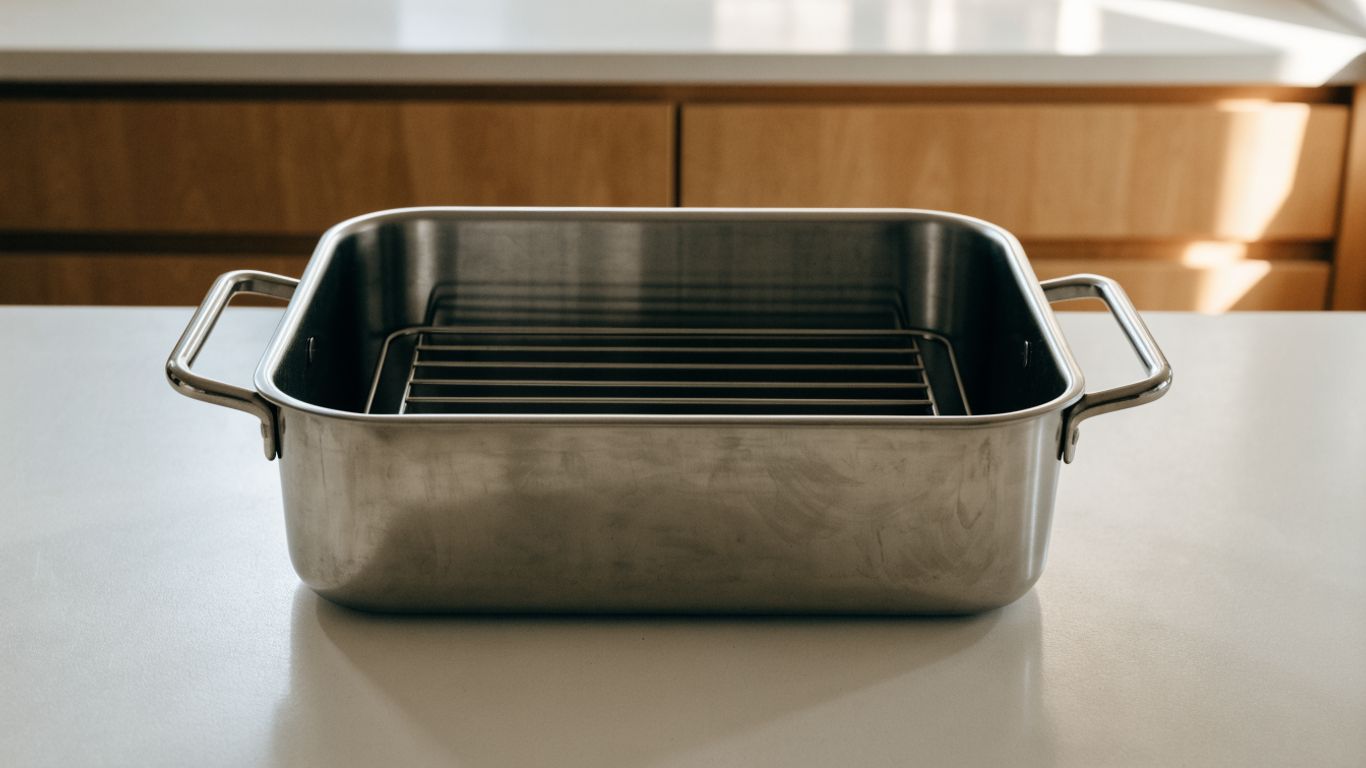
Pick a depth that contains drippings without steaming the bird
A moderate side height helps catch splashes and juices while leaving the turkey exposed to oven heat. Very deep sides can shield more of the bird, while shallow sides may be less forgiving when you lift or baste the pan. Consider how much liquid your recipe adds, and avoid filling the pan so high that the drippings threaten to spill.
Use sturdy handles for safer lifting
Broad, securely attached handles are easier to grasp through oven mitts than small or recessed ones. Check that there is enough room to hold both handles without brushing the oven walls, and think about the pan’s loaded weight, not just its empty weight. If you expect to move a large turkey, plan for a second person to help rather than relying on a long reach or an awkward grip.
Look for a flat base that works on the stovetop
A flat, stable base is helpful if you plan to set the pan over burners after roasting to make gravy. Not every roasting pan is suitable for stovetop use, and compatibility depends on the material and construction. Confirm the manufacturer’s instructions before placing a hot pan on a burner, and check that its base sits securely over the burners you intend to use.
Match the pan to how you plan to cook
The right pan depends on whether you roast a whole holiday turkey once a year or want a piece of cookware for regular meals. A large, heavy roaster can be useful for big birds but cumbersome for a small dinner and awkward to store. Think through your usual cooking, serving, and cleanup routine before paying for capacity you may rarely need.
Roast a whole turkey or cook a smaller bird
If you usually cook a whole turkey, prioritize capacity, stable handles, and a rack that fits the pan. For a smaller bird, a compact roaster may be easier to lift and may keep juices from spreading over an unnecessarily broad surface. If you roast different sizes, check whether the rack can accommodate both without leaving the smaller bird unstable.
Use the pan for gravy, vegetables, and other meals
A roaster that works for more than turkey can earn its storage space. A flat base may let you make gravy in the pan if the maker approves stovetop use, while a rack that lifts out leaves room for vegetables or other roasts. Before buying, decide which of those uses you will genuinely make; extra versatility is not useful if the pan is too heavy to handle comfortably.
Consider a disposable pan for occasional use
A disposable pan can make sense if you roast a turkey rarely or do not have room to store a large metal pan. It is typically lighter, but its sides and base may flex when carrying a heavy bird and hot juices. Set it on a sturdy baking sheet or other firm support before filling, and do not assume it is suitable for stovetop gravy or repeated use.
Make the pan easier to clean and store
Cleanup and storage are worth considering before you buy, not after the first big meal. Coatings, rivets, pan weight, and cabinet space all affect how easy a roaster is to live with. Check the care directions for the exact model, since temperature limits and dishwasher guidance vary.
Understand nonstick care and heat limits
Nonstick coatings can release food more easily, but the maker’s instructions determine which utensils, cleaners, and temperatures are appropriate. Avoid assuming that all nonstick pans share the same limits, and do not use a coated pan beyond its stated oven rating. If you want to broil or use very high heat, verify that the specific pan permits it.
Remove browned drippings without damaging the surface
Let the pan cool enough to handle safely, then loosen residue using the cleaning method recommended for its material. Abrasive pads and metal tools can scratch some coatings or damage enamel, while stuck-on drippings in bare metal may need soaking before gentle scrubbing. Avoid sudden temperature changes that could stress a hot pan, and check care instructions before using a dishwasher or strong cleaner.
Check weight, storage space, and dishwasher guidance
Compare the pan’s empty weight and outside dimensions with the space where you plan to store it. Handles and racks can make a pan harder to stack or fit into a cabinet, and a heavy model may be inconvenient to wash in a small sink. Dishwasher-safe claims are product-specific, so read the care label rather than assuming the material alone gives the answer.
Frequently Asked Questions
What size roasting pan do I need for a 12-pound turkey?
A pan with an interior around 14 × 10 inches can be a starting point for a bird up to about 12 pounds. Check the turkey’s shape, the rack dimensions, and the pan maker’s capacity before choosing.
What size roasting pan fits an 18-pound turkey?
An interior around 16 × 12 inches is a reasonable starting point for a turkey in the 12-to-18-pound range. Measure the bird if its shape is unusually broad, and allow room for any rack.
Is stainless steel or aluminum better for roasting a turkey?
Stainless steel is durable, while aluminum is lighter and heats quickly. Construction and thickness matter, so compare the specific pan’s weight, care instructions, and intended use rather than choosing by material name alone.
Do you need a rack in a turkey roasting pan?
No. A rack raises the bird and leaves space for drippings, but you can also roast directly in the pan or use a bed of sturdy vegetables or aromatics.
How deep should a turkey roasting pan be?
Choose sides high enough to contain drippings but not so high that they shield much of the bird from the oven’s heat. The best depth also depends on the amount of liquid in your recipe.
Can you use a disposable pan for a turkey?
Yes, but support it with a sturdy baking sheet or similar base before adding the turkey and drippings. A disposable pan may flex under a heavy load, and it may not be suitable for stovetop use.
Can you make gravy in a turkey roasting pan?
Only if the pan’s manufacturer says it is safe for stovetop use and its base sits securely on your burners. Follow the pan’s instructions and avoid transferring it while it is full and hot unless you can lift it safely.
How this guide was put together
The American Made Cutting Boards team writes and fact-checks every guide on American Made Cutting Boards. Comparisons are based on maker specifications, published standards and food-safety guidance from sources such as the USDA, and each guide is reviewed and updated when specs or prices change. More about us.