BUYING GUIDES
American-Made Kitchen Knives: The Makers to Know
A practical guide to american made kitchen knives, maker origins, blade choices, pricing, and what to verify before buying.
What “American-made” means for kitchen knives
American-made kitchen knives are not all made to the same standard of domestic production: a maker may manufacture a blade in the United States, assemble a knife here, or source some components elsewhere. If you are choosing a knife on its origin, check the claim for the specific model rather than relying on a company’s name or a general “American” label. The distinction matters to home cooks who want to know where their kitchen tools actually come from.
Made in the USA can mean different things
A country-of-origin label tells you less when it is not specific about the work done here. “Made in USA,” “assembled in USA,” and “designed in USA” do not mean the same thing, so look for an explanation of what the maker produces domestically. For a practical overview of knife origin claims, check the wording and evidence before you buy.
Check where the blade and handle are produced
A knife can have components with different origins. Look for separate information about the blade, handle, and final manufacturing or assembly rather than assuming the entire knife comes from one place. If the maker does not explain those details, treat the origin as unverified until you can confirm it.
Look for clear origin details by model
Origin information can differ across a maker’s range, so a company-wide statement may not settle the question for the knife you have in mind. A useful check is to compare the product listing with the maker’s own information and the markings on the knife, then ask customer service if anything conflicts. Keep the checks short and specific:
- Find the origin statement on the exact model’s listing.
- Check whether it refers to the blade, the whole knife, or assembly.
- Look for a country mark on the knife or its packaging.
- Ask the maker to clarify any missing or inconsistent detail.
That small bit of research can prevent a broad brand claim from standing in for evidence about one particular knife.
Separate American ownership from American manufacturing
A company’s location or ownership does not establish where its knives are made. The reverse is also true: a business can manufacture a product in the United States without every component being domestic. Keep ownership, factory location, and component sourcing as separate questions when comparing claims.
American knife makers worth knowing
The makers below are starting points for your own model-by-model research, not a guarantee that every knife in a company’s range has the same origin or construction. Published information varies, and details worth comparing include where a model is made, its materials, and the maker’s service terms. Ask for specifics when a listing leaves those questions open.
Lamson: long-running maker of kitchen cutlery
When considering a particular knife, look beyond the maker’s history and verify the details attached to that model. Check the origin statement, blade material, available sizes, and service information in the product listing. That gives you a concrete basis for comparison without assuming every item in a range is identical.
Dexter-Russell: practical knives for home and professional kitchens
Start by identifying the kind of knife you need and comparing its dimensions and construction with alternatives for the same job. The name alone does not tell you whether a specific model suits your hand, routine, or country-of-origin preference. Confirm those points in the maker’s own information before deciding.
Cutco: American-made knives with a direct-sales model
The available company description identifies manufacturing in Olean, New York, and a direct-sales model. For an individual purchase, still check the current product details and the terms that apply to that knife. A clear understanding of the sales process and service terms matters as much as the origin claim.
Rada Cutlery: straightforward knives at accessible prices
Compare the current listing for the knife you are considering, including its materials, dimensions, and return or warranty terms. Price by itself does not tell you whether a knife will fit your daily cooking or remain a good value over time. Check the exact model’s origin rather than extending a general description to every product.
New West KnifeWorks: premium knives with distinctive designs
For a higher-priced knife, ask what the particular design and listed specifications offer you in everyday use. Confirm the country of manufacture, blade details, and support terms before treating a premium price as a reason to buy. A distinctive appearance is a preference, not a substitute for those practical checks.
How these makers differ
Makers can vary in their production methods, handle choices, and the kinds of knives they offer. Those differences matter most when they change how a knife feels, what tasks it handles, or how much attention it needs. Compare the individual knife rather than assuming a company’s overall reputation answers each question.
Compare production styles and product ranges
A maker may offer different constructions and styles across its range, so confirm the details on the model page. Compare like with like: a chef’s knife against another chef’s knife, or a paring knife against another paring knife. That keeps price and feature comparisons useful instead of mixing tools designed for different jobs.
Decide between forged and stamped blades
Forged and stamped describe different ways a blade may be formed; neither label alone tells you whether a knife will suit your cooking. The handle, balance, dimensions, and care instructions remain important, and maker terminology can vary. Use the product specifications to understand the actual knife rather than relying on the construction label alone.
Consider handle materials, balance, and grip
A handle should feel secure and comfortable in your hand, especially during repetitive prep. If you can handle a knife in person, notice whether its weight and balance feel manageable to you; if not, look for dimensions and weight in the specifications. Comfort is personal, so a recommendation based only on another cook’s preference may not transfer.
Match the maker’s lineup to your cooking habits
You do not need a large collection to prepare everyday meals. A chef’s knife, a small paring knife, and a serrated knife cover a useful range of common tasks, though the right combination depends on what you cook. If you are building a broader set of tools, a practical kitchen starter kit can help you prioritize what belongs in your kitchen.
What to look for in a kitchen knife
A good choice starts with the work you actually do, not the number of knives in a block. Consider the blade’s shape and length, how much maintenance you are willing to do, and whether the maker provides clear support information. If you can, handle a knife before buying; comfort is difficult to judge from a product photo.
Choose a blade shape for the work you do most
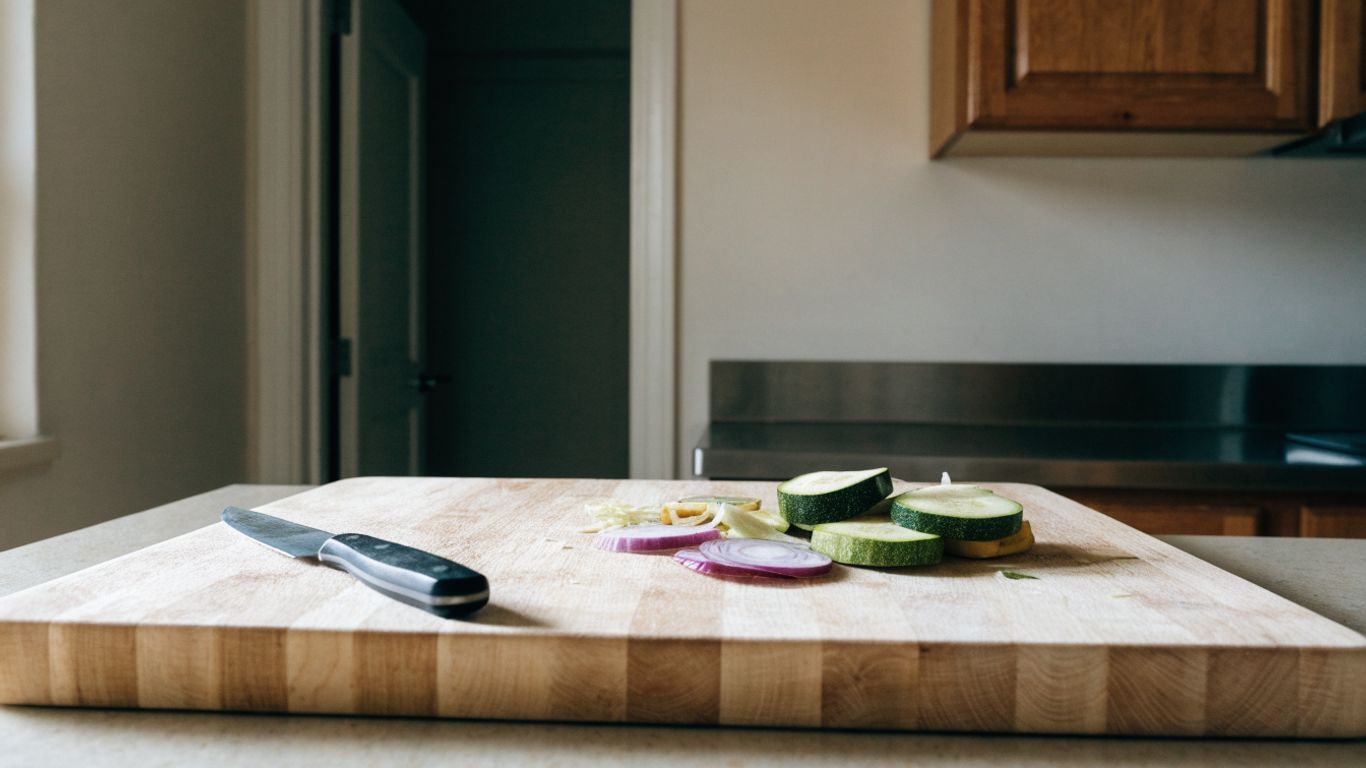
A chef’s knife is a versatile everyday option, while a serrated blade is useful for foods with a firm exterior and soft interior. A paring knife handles smaller, more controlled work. These common shapes are easier to compare when you connect each one to the jobs you regularly do.
| Knife type | Common blade length | Typical kitchen role |
|---|---|---|
| Chef’s knife | About 8 inches | General chopping and slicing |
| Paring knife | About 3–4 inches | Small, close-up prep |
| Serrated knife | About 8–10 inches | Slicing bread and delicate-skinned foods |
| Utility knife | About 5–6 inches | Smaller slicing and general prep |
These are common ranges, not a rule that every maker follows. Check the listed dimensions and pick a blade that gives you enough working space without feeling cumbersome.
Find a blade length that feels manageable
A longer blade can cover more of a large ingredient in one pass, while a shorter one may feel easier to control on a crowded counter. Your hand size, storage, and usual prep volume all play a part. If you are unsure, try a familiar mid-length option in person before buying a set built around sizes you may not use.
Weigh stainless steel against carbon steel
Steel choice involves trade-offs in care as well as performance. Stainless steel is generally chosen by cooks who want greater resistance to staining and rust, while carbon steel calls for more attention to moisture and care. Check the maker’s description for the specific steel and its care instructions rather than relying on a broad material label.
Check sharpening, warranty, and repair support
Before you buy, find out what support is actually available for that knife and what conditions apply. Warranties can differ in duration and coverage, and sharpening or repair services may have separate terms. Read the published details; do not assume that a warranty covers ordinary wear or that every service is included.
What American-made kitchen knives cost
Prices vary by maker, model, materials, and what comes in the package, so there is no single price that defines a good American-made knife. Compare the price of the individual knife with its specifications and support terms, then decide whether a set offers useful value for your kitchen. A higher price is not proof that a knife is the right fit.
Understand the difference between entry-level and premium pricing
Lower-priced knives can be a sensible starting point if the specifications meet your needs and the origin is clear. Premium models may cost more, but you should be able to identify what the particular product offers in materials, construction, or service. Without model-specific details, price tiers alone do not provide a dependable comparison.
Compare long-term service with the upfront cost
A purchase price is only one part of the decision. Check the warranty, return window, and any sharpening or repair support, then weigh those terms against how often you expect to use the knife. Clear, published conditions are more useful than a general promise of quality.
Watch for bundles that include knives you will not use
A knife set may look economical while adding tools that stay in the drawer. Before comparing bundle pricing, list the knife types you actually want and check which sizes and styles the set includes. Buying fewer knives that suit your routine can be a more straightforward way to spend your budget.
Confirm what the warranty actually covers
Read the written warranty before checkout, including exclusions, the process for making a claim, and whether the coverage applies to the specific item. A long term is not meaningful if its conditions do not fit your needs. Keep a copy of the terms and proof of purchase in case you need them later.
How to choose the right maker for your kitchen
Choose by matching your cooking routine and budget to the specifications of a particular knife, then verify its origin and support terms. You are better served by a short list of models you can compare than by choosing a company name first. A careful check helps you avoid paying for a set, feature, or origin claim that does not fit what you want.
Start with the knife types you need
Think through a typical week of cooking and identify the jobs that come up most often. A few versatile knives may cover that routine, while specialized blades make sense only if you use them regularly. This is also a useful point to consult a kitchen tool buying guide for broader purchasing questions without treating a large collection as a requirement.
Try the handle and balance if possible
A knife can look right on a screen and still feel awkward in your hand. If a shop has a sample, hold it as you would during prep and see whether the grip and weight feel comfortable. When an in-person check is not possible, review the product’s dimensions and weight, and understand the return policy before ordering.
Verify the country of origin before buying
Read the origin statement for the exact model and distinguish manufacturing from assembly or design claims. If the listing is vague, ask the maker for clarification before placing an order. A clear answer about where the knife is made is more useful than an assumption based on the company’s name or address.
Choose based on upkeep and support, not just the label
Think about how much care you are willing to give the blade and what service will be available if it needs attention. Compare those practical details with the price, comfort, and tasks the knife handles. The right choice is the one whose origin, use, and upkeep all fit your kitchen.
Frequently Asked Questions
What does “American-made” mean for a kitchen knife?
It can refer to different parts of production, so check whether the claim applies to the blade, the complete knife, or final assembly. Look for model-specific information rather than relying on a general company statement.
Are all knives from one maker made in the United States?
Not necessarily. Product origin can vary by model, so verify the country-of-origin details for the exact knife you plan to buy.
Which kitchen knives do most home cooks need?
Many home cooks can begin with a chef’s knife, a paring knife, and a serrated knife. The right selection depends on the food you prepare and the tools you already own.
Is a forged knife better than a stamped knife?
Neither description alone determines whether a knife is right for you. Compare the specific knife’s dimensions, materials, comfort, care requirements, and price.
Should you buy a knife set or individual knives?
A set can make sense if you expect to use most of its pieces. Buying knives individually helps you avoid paying for styles or sizes that do not match your routine.
What should you check before buying a kitchen knife?
Confirm its origin, blade dimensions, materials, care instructions, warranty, and return terms. If possible, handle it first to see whether the grip and balance feel comfortable.
How much should you spend on an American-made kitchen knife?
There is no universal right price. Compare the specifications and support terms of the particular models you are considering, and spend according to how often you expect to use the knife.
How this guide was put together
The American Made Cutting Boards team writes and fact-checks every guide on American Made Cutting Boards. Comparisons are based on maker specifications, published standards and food-safety guidance from sources such as the USDA, and each guide is reviewed and updated when specs or prices change. More about us.