BUYING GUIDES
How to Season Cast Iron (Oven and Stovetop)
Learn how to season cast iron in the oven or on the stovetop, plus simple upkeep and fixes for common problems.
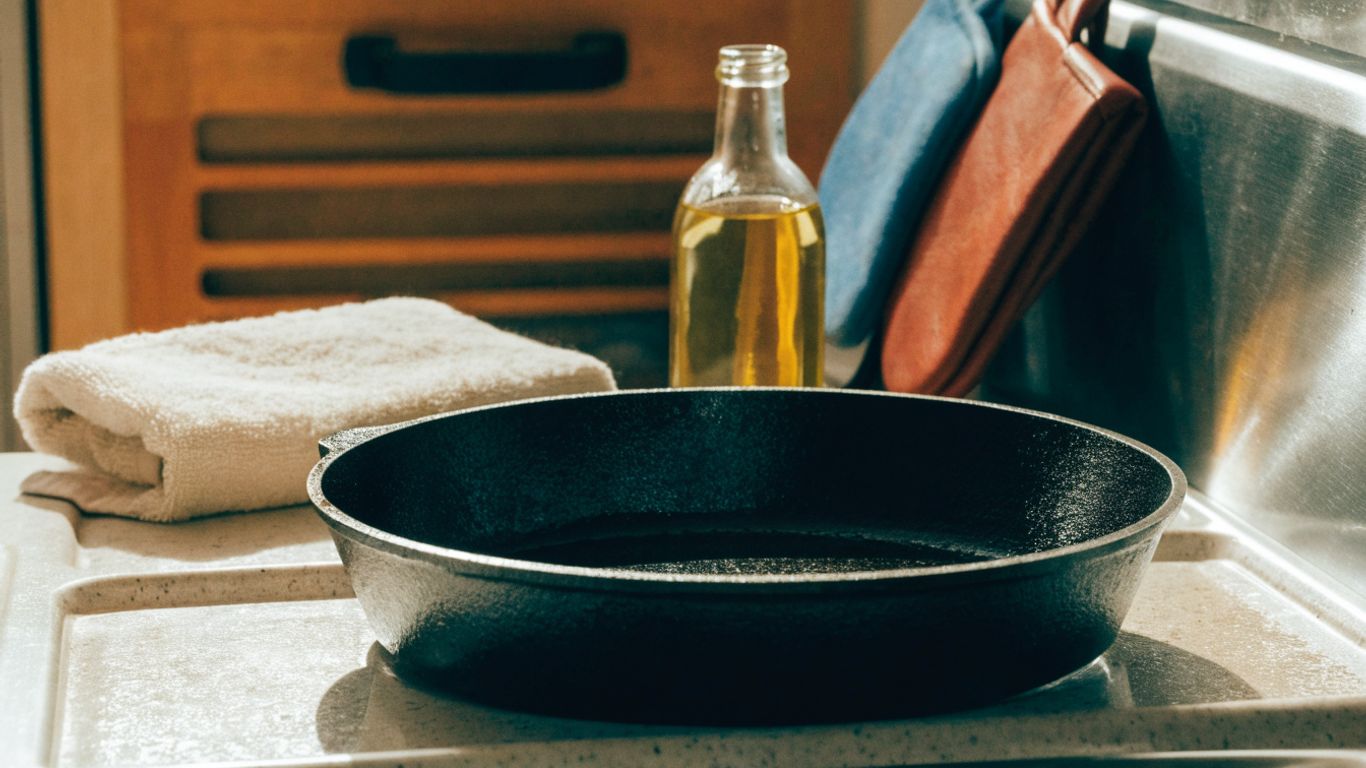
What seasoning does and when to apply it
Seasoning is a thin, hardened layer of oil that protects cast iron and helps food release from the cooking surface. If you want to know how to season cast iron, the basic process is straightforward: clean and dry the pan, apply an extremely thin coat of oil, then heat it until the oil bonds to the iron. This guide is for home cooks caring for a new pan or refreshing one that has worn spots, rust, or a sticky surface.
How oil bonds to cast iron and creates a protective layer
When heated, a thin coating of cooking oil changes and bonds to the pan’s surface, forming a dark protective layer. This process is called polymerization. Several very thin layers generally make a smoother, more durable finish than one heavy coating.
How to tell whether a pan needs seasoning
A well-seasoned pan usually looks dark and feels smooth, though its color can vary. Consider seasoning if you see bare gray patches, persistent rust after cleaning, or areas where food sticks more readily than it used to. A dull patch alone does not mean the pan is ruined; seasoning builds gradually through cooking and care.
Whether new and preseasoned cast iron needs extra seasoning
Many cast-iron pans are sold preseasoned, so you can usually wash, dry, and cook with one rather than seasoning it again before its first use. A fresh layer can still help if the cooking surface looks uneven, but it is not automatically necessary. Lodge, Smithey, and Field Company make cast-iron cookware; check the care directions for the particular pan you own, since finishes and maker recommendations can differ.
Prepare the pan for seasoning
Start with a clean, completely dry pan, then use a small amount of oil to create a nearly invisible film. You do not need special equipment, but you do need to remove loose debris and any moisture before heating the pan. Take a moment to check the handle and underside too, since seasoning can protect those surfaces as well.
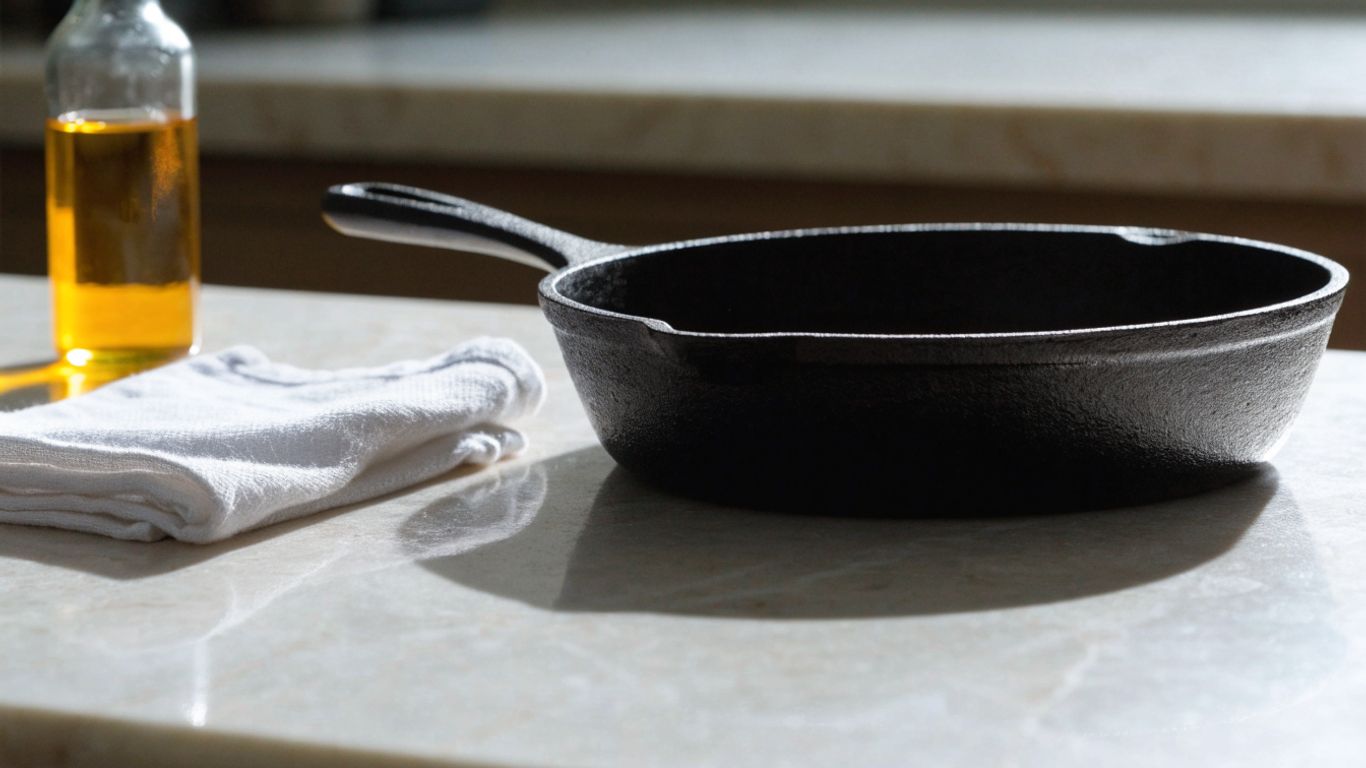
Wash away residue, rust, or old flaking seasoning
For ordinary grime, wash the pan with warm water and a little dish soap, using a brush or non-abrasive scrubber. Soap and water are useful for cleaning; the goal is not to preserve food residue as seasoning. For light rust, scrub the affected area until the loose rust is gone, then rinse and dry promptly. If seasoning is peeling in large flakes, remove the loose material before applying fresh oil.
Dry the pan fully, including the handle and underside
Wipe the pan dry with a towel, including around the handle, the rim, and the underside. Then warm it over low heat for a few minutes to drive off hidden moisture. Let the pan cool enough to handle safely before adding oil; water trapped in seams or textured areas can encourage rust.
Choose a suitable oil and apply a very thin coat
Use a cooking oil that can tolerate high heat, such as canola, grapeseed, or another suitable vegetable oil. The exact choice matters less than applying very little: rub a small amount across the cooking surface, outside, and handle, then wipe again with a clean cloth as if you are trying to remove it. The pan should look almost dry, not glossy or wet.
How to season cast iron in the oven
The oven method heats the pan evenly and is convenient when you want to season the cooking surface, sides, and bottom together. Use a thin film of oil, give the pan enough time at temperature, and allow it to cool before handling. Work with a clean oven and good ventilation, since heated oil may produce smoke.
Heat the oven and position the pan upside down
Preheat the oven to about 450°F. Place the oiled pan upside down on the center rack so excess oil does not pool on the cooking surface. Put a sheet of foil on a lower rack to catch any drips, keeping it clear of the oven floor and heating elements.
Bake the oiled pan long enough for the oil to polymerize
A common approach is to bake the pan for about one hour, then turn off the oven and let the pan cool inside. The exact temperature and timing can vary with the oil and the pan maker’s instructions, so use those directions if they differ. This quick comparison can help you choose a method and set realistic expectations:
| Method | Typical heat | Typical heating time | Useful when |
|---|---|---|---|
| Oven | About 450°F | About 1 hour | You want even heat over the whole pan |
| Stovetop | Medium to medium-high | Heat until the oil smokes lightly | You are refreshing a small area or one pan |
| Either method | Follow the pan maker’s guidance | Repeat thin layers as needed | The surface needs gradual improvement |
Both methods work by heating a very thin oil layer; the oven is more hands-off, while the stovetop lets you watch the surface closely. Keep the kitchen ventilated, and avoid leaving oil puddles that can bake into sticky spots.
Cool the pan safely and add another layer if needed
Let the pan cool gradually before moving it, using oven mitts if you need to take it out while warm. Once cool, check the surface for a dry, even finish. If bare patches remain, wipe on another very thin coat and repeat the heating process rather than applying a thick layer all at once.
How to season cast iron on the stovetop
The stovetop method is a practical way to refresh a pan without heating the whole oven. It works best when you can monitor the pan and move it carefully over the burner. Keep the oil layer thin and use ventilation, because the oil may smoke as it heats.
Warm the pan and spread a thin film of oil
Set the clean, dry pan over low heat for a few minutes, then turn off the burner or move the pan to a heat-safe surface while you apply oil. Use a folded paper towel or cloth to spread a small amount over the cooking surface and sides. Wipe away visible excess; you want a faint sheen, not droplets.
Heat until the oil begins to smoke, then let the pan cool
Return the pan to the burner and gradually raise the heat until the oil begins to smoke lightly. Keep the area ventilated and do not leave the pan unattended. When the surface has heated evenly, turn off the burner and let the pan cool completely before checking it.
Work in sections to season a large skillet or griddle evenly
A large pan may not heat evenly over one burner, so move it carefully to expose different areas to the heat. Use this simple sequence to avoid concentrating all the heat in one spot:
- Warm the center over the burner first.
- Shift the pan so each side receives heat in turn.
- Rotate the pan as needed, using mitts and a stable grip.
- Let the whole surface cool before you inspect it.
This approach helps you monitor the pan without rushing the process. If the oil smokes heavily or starts to pool, lower the heat and wipe away excess oil once the pan is safe to handle.
Maintain the seasoning with regular use
You do not need to repeat a full seasoning routine after every meal. Clean the pan after cooking, dry it thoroughly, and add a very light coat of oil if it will be stored. Regular cooking, followed by sensible cleanup, can help maintain the surface over time.
Clean and dry the pan after cooking
Wash the pan after it has cooled enough to handle, using warm water and a brush or sponge to remove food. A little dish soap is fine for routine cleaning; scrub stuck-on bits rather than leaving them to harden. Dry the pan fully with a towel, then warm it briefly over low heat if needed to remove lingering moisture.
Apply a light coat of oil before storing
If the pan will sit unused, rub a tiny amount of oil over the dry cooking surface before putting it away. Wipe until no wet-looking layer remains. Store the pan in a dry place, and avoid stacking another pan directly on the cooking surface unless you use a protective layer between them.
Use cooking habits that help build seasoning over time
A few ordinary habits make upkeep easier and help avoid needless stripping or re-seasoning. Keep these in mind as you cook:
- Preheat the pan gradually rather than setting it over high heat straight away.
- Use enough cooking fat for the food and the condition of the surface.
- Clean and dry the pan soon after cooking.
- Avoid leaving it soaking in water or storing it while damp.
These steps are simple, but consistency matters more than chasing a perfectly glossy finish. If you are choosing a pan for your household, this cast iron skillet size picker can help you compare sizes for your cooking needs.
Troubleshoot common seasoning problems
Most seasoning problems can be fixed without stripping the whole pan. Sticky patches usually point to excess oil, while rust and uneven color often respond to targeted cleaning and a fresh thin layer. Start with the least aggressive fix and repeat only if the surface still needs attention.
Remove sticky residue caused by too much oil
A tacky surface often means too much oil was left on the pan during heating. Scrub the sticky area with warm water and a brush or scrubber, dry the pan thoroughly, and apply a much thinner coat. Reheat it using the oven or stovetop method; if the surface remains sticky, clean and repeat rather than adding more oil over it.
Address dull spots, uneven seasoning, and light rust
A dull or lighter patch can be a cosmetic difference or a sign that seasoning has worn thin. Clean away food residue, dry the area completely, and rub on a minimal coat of oil before heating. For light rust, scrub until the rust is removed, rinse, dry immediately, and re-season the affected area; deeper or widespread rust may need more extensive work.
Know when to strip the pan and start again
Stripping is usually a last resort, not a response to every uneven patch. Consider it when seasoning is extensively flaking, heavily built up, or difficult to clean despite targeted scrubbing. Use a method suited to the pan and follow its maker’s care instructions, then rebuild the finish with several thin coats rather than one heavy application.
Frequently Asked Questions
How often should you season cast iron?
There is no fixed schedule. Season the pan when the cooking surface has bare or rusty areas, or when regular cleaning and cooking no longer maintain the finish.
Can you season cast iron with olive oil?
You can use different cooking oils, but choose one appropriate for high heat and follow the pan maker’s guidance. Apply it very thinly to help prevent a sticky finish.
Do you need to season a new cast-iron pan?
Many new pans arrive preseasoned and can be used after washing and drying. Check the manufacturer’s instructions before adding another layer.
What temperature should you use to season cast iron in the oven?
About 450°F is a common oven setting, with roughly an hour of heating. Follow the care instructions for your particular pan and oil if they recommend a different approach.
Why is my cast iron sticky after seasoning?
Sticky residue commonly comes from applying too much oil. Scrub the surface, dry it, wipe on a much thinner coat, and heat the pan again.
Can you season cast iron on an electric stovetop?
Yes. Heat the pan gradually and monitor it closely, moving it as needed so different areas receive heat. Use ventilation if the oil begins to smoke.
Should you season the outside of a cast-iron pan?
A thin coat on the outside, including the underside and handle, can help protect those surfaces too. Wipe away excess oil before heating so it does not pool.
How this guide was put together
The American Made Cutting Boards team writes and fact-checks every guide on American Made Cutting Boards. Comparisons are based on maker specifications, published standards and food-safety guidance from sources such as the USDA, and each guide is reviewed and updated when specs or prices change. More about us.