BUYING GUIDES
Essential Kitchen Tools: An American-Made Starter List
Build a practical set of kitchen tools, from knives and pans to utensils, with tips for choosing American-made gear.
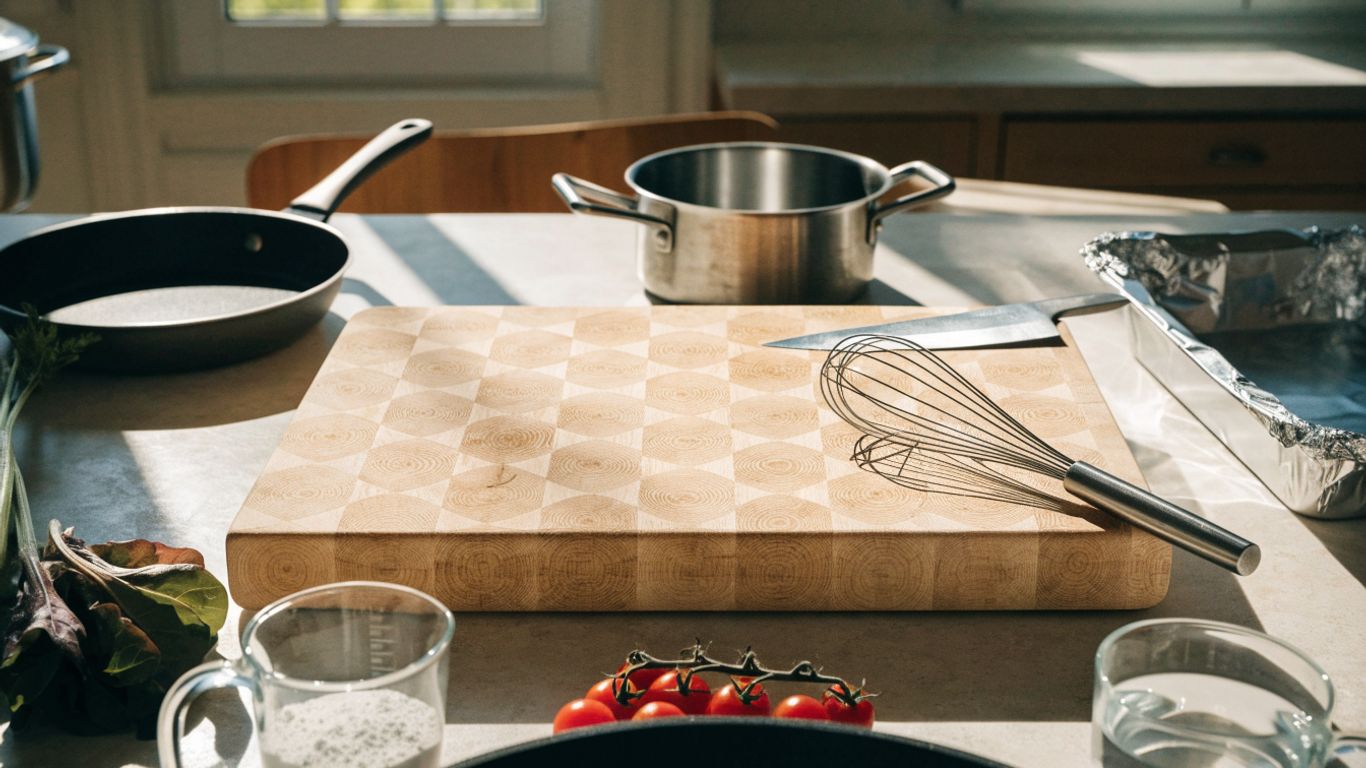
Build a starter kit around everyday cooking
A useful starter kit of kitchen tools covers the jobs you do most: chopping, stirring, cooking on the stove, and baking or roasting in the oven. If you cook at home and want gear that lasts, start with a few reliable pieces rather than a large set. Buy for your routine, then add tools when a real need appears.
Prioritize versatile tools you’ll reach for often
A chef’s knife, cutting board, skillet, saucepan, sheet pan, and a few basic utensils can handle a wide range of everyday meals. Pick pieces that work across different recipes; a skillet can sear vegetables or cook eggs, while a sheet pan can roast dinner and bake a batch of cookies.
The table below is a starting point, not a fixed shopping list. Size and material come down to your stove, storage, and the kinds of meals you make.
| Tool | Useful starting point | Advantage | Tradeoff to consider |
|---|---|---|---|
| Chef’s knife | About 8 inches | Handles many chopping and slicing tasks | Needs regular care and safe storage |
| Skillet | 10- or 12-inch | Works for eggs, vegetables, and one-pan meals | A larger or cast-iron pan can be heavy |
| Saucepan | 2- to 3-quart | Suits grains, sauces, and smaller portions | A larger pot is better for big batches |
| Sheet pan | Standard rimmed size | Roasts vegetables and bakes in one layer | Takes up cabinet space when stored flat |
Think of these sizes as practical alternatives rather than rules. A smaller skillet may suit a one-person kitchen, while a 12-inch pan gives you more room when you cook for several people.
Choose pieces that fit your kitchen and storage space
Measure the drawer, cabinet, or wall space where a tool will live before you buy it. A pan that crowds the stovetop or a board too large to lift and store can become a nuisance, even if it looked useful in a shop.
For a cutting board, consider the clear counter space you have while prepping and where the board will dry or be stored afterward. This cutting board checklist for new homeowners also covers size, stability, and useful features; the same questions help in any kitchen.
Skip oversized sets with tools you may rarely use
A set can look like a bargain, but the price only helps if you use what’s inside. Start by noting the tasks you repeat in a typical week, then buy individual pieces to fill those gaps.
For a compact starter drawer, prioritize a few basics:
- A chef’s knife and a board for prep
- A skillet and saucepan for stovetop meals
- A sheet pan for roasting or baking
- A spatula, spoon, and pair of tongs
That short list leaves room for your own habits. If you rarely bake, for instance, you can delay buying extra baking tools until you have a reason to use them.
Choose dependable tools for food prep
Good prep tools make it easier to get ingredients ready without crowding your counter. A sharp knife, a steady cutting surface, and a couple of simple hand tools are enough for many home-cooking routines. Choose items that feel manageable in your hands and fit the space you measured.
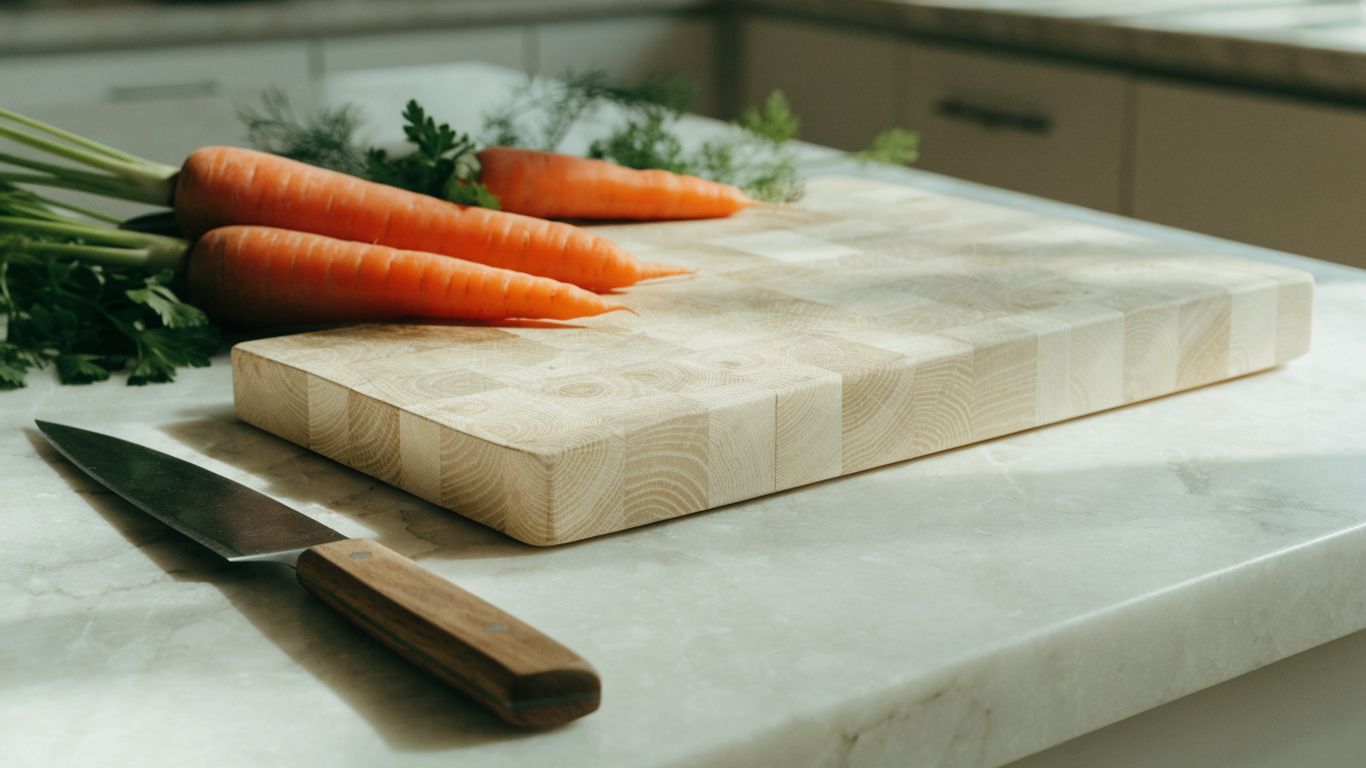
Start with a chef’s knife and a way to keep it sharp
An 8-inch chef’s knife is a useful starting size for many cooks, though a shorter blade may feel easier to control if your hands or work area are small. Look for a comfortable grip and a blade that feels balanced to you. A knife should be stored so its edge is protected and fingers are kept away from it.
Before buying, check the origin wording if a U.S.-made knife matters to you. Labels can distinguish between a product made in the United States and one assembled here with imported materials; this guide explains knife origin claims and what details to look for.
Pick a cutting board that suits your prep habits
Choose a board large enough to hold the ingredients you usually chop, but not so large that you cannot move or store it comfortably. A stable board gives you a dependable place to work; a second board can be useful if your regular routine calls for keeping different tasks separate.
If you want a U.S.-made example, the Bevel & Bond end-grain maple cutting board is listed at $139.99. Its listed terms include free US shipping, a gift box, 30-day returns, and a five-year warranty. Those details are specific to that product, so check the current listing before ordering.
Add a peeler and grater for quick, everyday tasks
A basic peeler can speed up work with potatoes, carrots, and other produce, while a hand grater can handle cheese, citrus zest, or a little fresh ginger. Choose a peeler that sits securely in your hand and a grater with a size and shape you can clean and store without hassle.
These are small purchases, so there is little reason to buy several versions at once. Start with one of each and see whether your usual recipes call for a different style or a larger grating surface.
Cover stovetop and oven basics
For a first cookware setup, choose one skillet and one saucepan that match the number of people you cook for and the meals you make. Add a sheet pan if you roast vegetables, bake, or want a simple way to cook several ingredients at once. Check each item’s care and heat guidance before use, since cookware materials and handles vary.
Select a skillet and saucepan for common meals
A 10-inch skillet can be easier to handle and store, while a 12-inch one offers more cooking area for family portions. Cast iron and stainless steel are practical alternatives with different weights and care needs, so consider how much lifting and cleanup suit your routine.
For sauce, grains, or smaller portions, a 2- to 3-quart saucepan is a reasonable place to begin. If you often cook large batches, a bigger pot may be more useful than buying a second small pan.
Use a sheet pan for roasting and baking
A rimmed sheet pan contains juices better than a flat baking sheet and can move from roasting vegetables to baking cookies. Check the inside dimensions against your oven and leave room for air to circulate around the pan while it is in use.
A single pan is enough for many households. If you regularly cook several trays at once, a second matching size can make meal preparation more convenient, provided you have a place to store it.
Check that pans and handles suit your stove and oven
Before buying cookware, confirm that it is compatible with your stovetop and note any oven-temperature limits in the maker’s instructions. A handle that remains cool on one kind of stove may not stay cool in every situation, so use a mitt when handling hot cookware.
If you are considering cast iron, also think about its weight and the size of your burners. A cast iron skillet size picker can help you compare common skillet sizes and think through how much pan you need for your household.
Add utensils and measuring tools
A small group of utensils and prep tools can take care of most stirring, turning, and mixing. You do not need a drawer full of specialized shapes to get started. Choose tools that are comfortable to grip, easy to clean, and suited to the cookware you own.
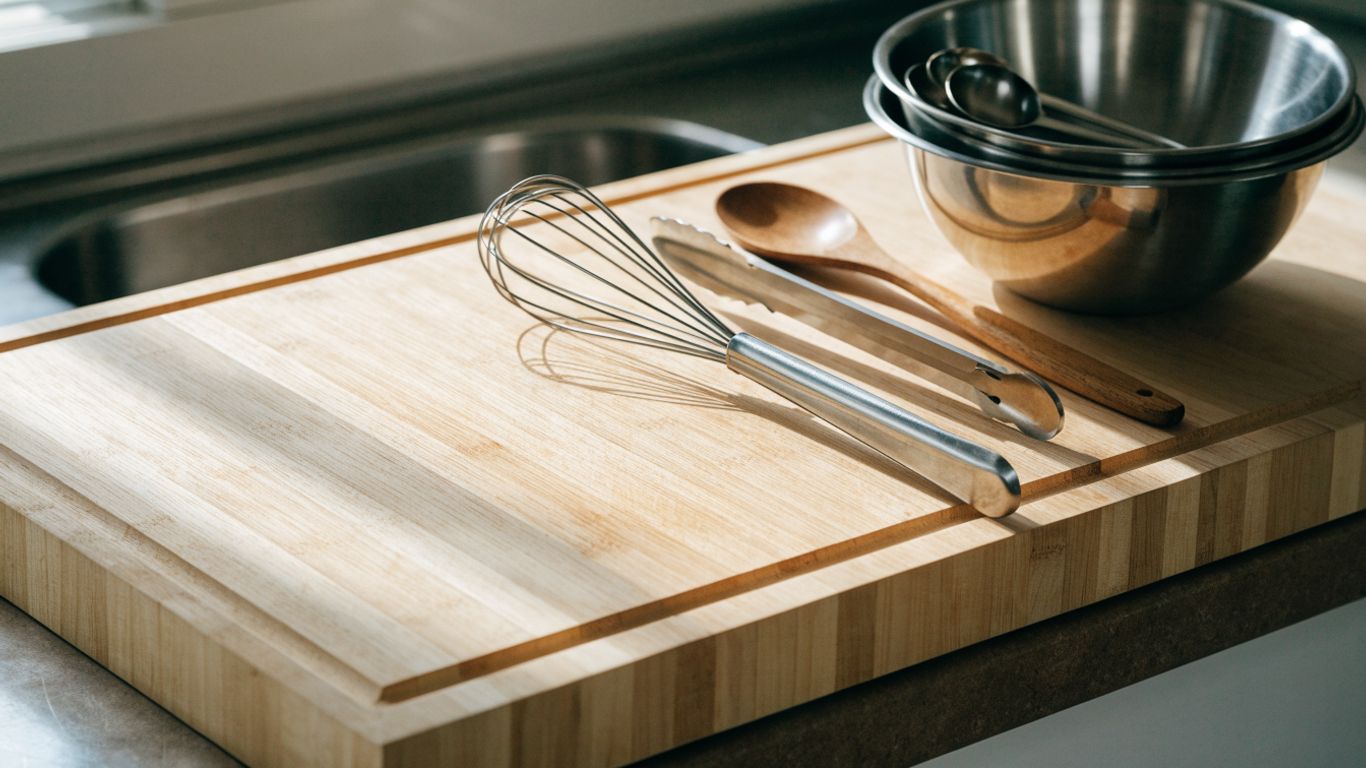
Keep a spatula, tongs, and spoon close at hand
A flexible spatula helps with scraping and turning, tongs are useful for lifting or flipping food, and a sturdy spoon works for stirring and serving. If you cook with nonstick cookware, check that utensils are suitable for its surface and follow the pan maker’s care directions.
You can choose materials according to how you cook and clean. A few dependable utensils, stored where you can reach them, are generally more useful than a large assortment you have to sort through.
Use measuring cups and spoons when accuracy matters
Measuring tools are especially helpful for baking, where proportions affect how a recipe turns out. Dry measuring cups and spoons are convenient for many pantry ingredients, while a liquid measuring cup with clear markings can make pouring easier.
For everyday soups or stir-fries, you may be comfortable estimating some ingredients. Keep the measuring tools accessible for recipes where precision matters, rather than letting them disappear at the back of a drawer.
Choose mixing bowls and a whisk for prep and baking
A set of nesting bowls can save storage space while giving you different sizes for mixing, holding chopped ingredients, or serving. A whisk is useful for combining dressings, eggs, and batters; a fork can stand in for it when you only need to mix a small amount.
YouTube video placeholder:
If your kitchen has little cabinet space, choose a few bowls that stack neatly rather than a large set. The best fit is the one you can reach without rearranging half the cupboard.
Find kitchen tools made in the United States
If you prefer American-made gear, check the origin of each individual tool rather than relying on a brand’s headquarters or a broad label. Manufacturing details can differ between products from the same company, and materials may come from another country. Look for a clear statement about where the item is made and what that claim covers.
Check where each tool is made, not just where a brand is based
A company’s location does not by itself establish where a knife, pan, or utensil was manufactured. Look at the product page, packaging, and markings on the item, and ask the maker when the description leaves room for doubt.
For a cutting board, Bevel & Bond states that its end-grain maple board is made in Oregon, USA, from US-grown hard maple. The distinction matters: an item’s manufacturing location and the origin of its raw material are separate details. This guide to verifying a board’s U.S. origin explains what kinds of claims to examine.
Look for clear details about materials and manufacturing
Specific material and origin statements are more useful than a vague “American” label. Check whether the maker identifies the material, where the item is manufactured, and whether the wording applies to the whole product or only a component.
For a knife, pay attention to wording such as “with imported steel” or “assembled in USA,” rather than assuming every part was made domestically. For cookware and utensils, look for the same kind of product-level detail and consult the maker’s care instructions before buying.
Weigh local production against price, availability, and intended use
A U.S.-made item may cost more or be harder to find in a particular size, so decide what matters most before you shop. Compare the price with the tool’s intended use, how often you expect to reach for it, and any published warranty or return terms.
For the Bevel & Bond end-grain maple board, the listed price is $139.99, with free US shipping, a gift box, 30-day returns, and a five-year warranty. Those terms can help you judge that particular purchase, but they are not a reason to buy a board if its size or upkeep does not suit your kitchen.
Maintain your tools and expand with purpose
Care instructions are part of choosing kitchen tools, not an afterthought. Clean and store items according to their materials, and replace or repair them when wear affects safe, effective use. Add specialty tools only after your regular meals reveal a genuine gap.
Clean and store knives, boards, and cookware correctly
Follow the maker’s instructions for each item, especially for knives and cookware with specific washing or storage guidance. Keep knife edges protected in a block, sheath, or other safe storage, and let washed tools dry before putting them away.
For a wooden board, avoid treating it like a pan or putting it away wet. The cutting board care guides offer more detail on choosing and caring for boards, while the same basic habit applies across the kitchen: follow the material-specific instructions rather than using one cleanup routine for everything.
Replace or repair tools when wear affects safety or performance
A loose handle, cracked utensil, or badly damaged pan can make cooking less safe or less predictable. Check tools from time to time and stop using an item if a damaged part could come into contact with food or fail while you are handling it.
Some tools can be repaired or maintained; others are simpler to replace. Compare the cost and availability of a repair with the price of a suitable replacement, and use the maker’s warranty terms to understand what is covered.
Add specialty tools based on the meals you cook most often
A thermometer, colander, or baking scale can be useful, but only when the food you make gives it a regular job. Cook a few weeks with your starter kit and notice where you lose time or struggle to get consistent results.
Then add one tool that addresses that specific problem. This keeps your kitchen easier to use and helps you spend on equipment you will actually reach for.
Frequently Asked Questions
What kitchen tools should you buy first?
Start with a chef’s knife, cutting board, skillet, saucepan, sheet pan, and a few basic utensils. Add measuring and mixing tools based on the recipes you cook.
Is an 8-inch chef’s knife a good starter size?
It suits many everyday chopping and slicing tasks, but it is not right for every hand or kitchen. If it feels awkward, consider a shorter blade that is easier for you to control.
Do you need both a skillet and a saucepan?
They serve different purposes: a skillet gives food room to brown or cook in a shallow layer, while a saucepan is useful for liquids, grains, and sauces. Many home cooks will find both useful.
Is cast iron cookware a good choice for a starter kitchen?
It can be, if its weight and care requirements suit your routine. Compare it with stainless steel or other cookware that works with your stove and the meals you make.
How do you check whether a kitchen tool is made in the United States?
Read the product-specific origin statement and look for details about materials and manufacturing. A company’s U.S. address alone does not establish where an item was made.
How many utensils do you need in a starter kitchen?
A spatula, tongs, and spoon cover many everyday tasks. Add other utensils when a regular recipe or cooking method calls for them.
How should you decide whether to buy a kitchen tool?
Consider how often you will use it, where you will store it, and whether it fits your cookware and cooking habits. Check the maker’s care instructions and return terms before purchasing.
How this guide was put together
The American Made Cutting Boards team writes and fact-checks every guide on American Made Cutting Boards. Comparisons are based on maker specifications, published standards and food-safety guidance from sources such as the USDA, and each guide is reviewed and updated when specs or prices change. More about us.