BUYING GUIDES
Cast Iron Skillet Sizes: 8, 10, 12 Inch and Beyond
Compare cast iron skillet sizes by cooking surface, portions, burner fit, storage, and everyday use.
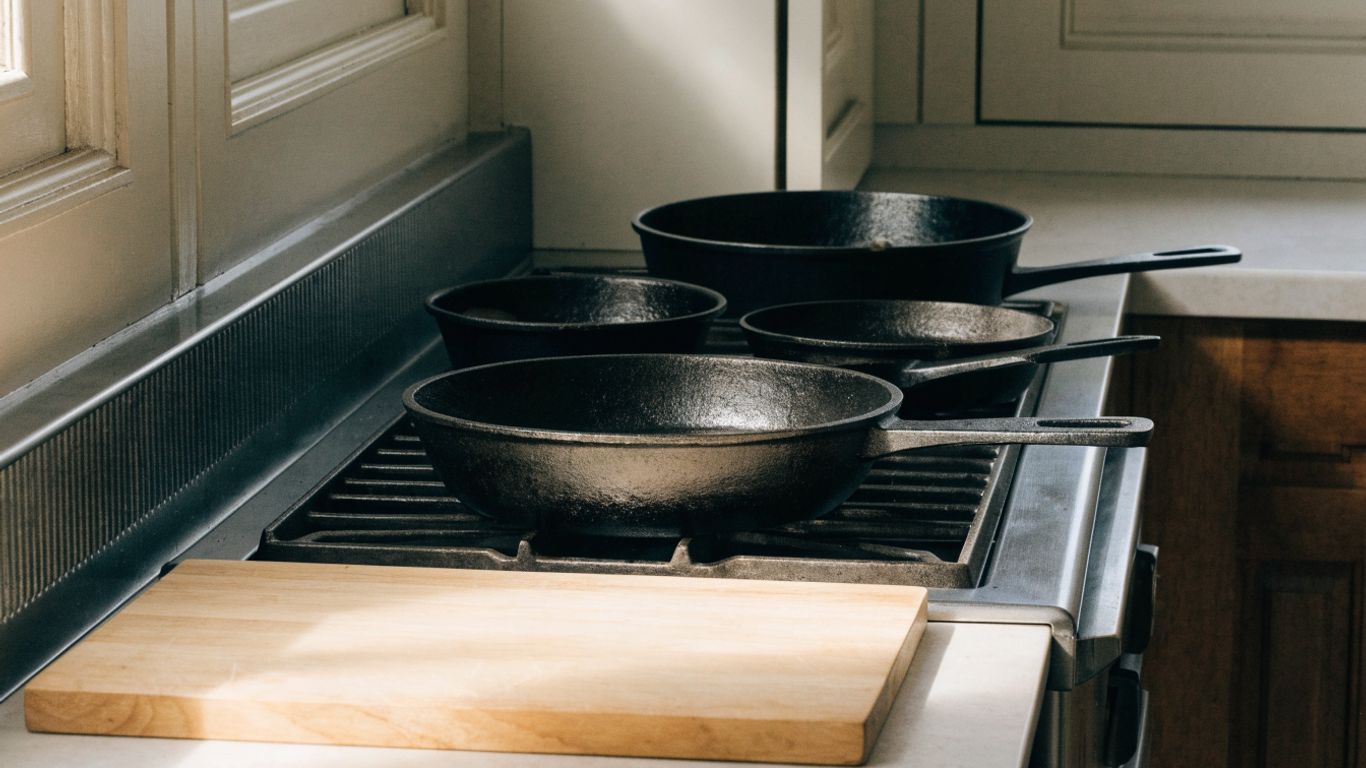
How cast iron skillet sizes are measured
Cast iron skillet sizes usually refer to the pan’s diameter across its top, not the flat area where food sits. If you’re choosing a skillet for your stove and the meals you cook, compare that listed measurement with the cooking surface, depth, and overall footprint. A few inches can change how much food fits and how easy the pan is to store.
What the listed diameter actually measures
The listed size is generally the distance straight across the top rim, measured through the center. A skillet marked 10 inches is therefore a nominal size, not a promise that the cooking surface itself is 10 inches wide. Manufacturers can measure or round dimensions differently, so check the stated measurements for the specific pan you are considering.
Why cooking surface diameter can be smaller
The sides slope up and outward from the flat bottom, so the rim is wider than the area that makes direct contact with food. That difference matters when you’re trying to sear several pieces at once: food needs room to sit flat rather than crowd the sloped sides. A useful comparison is to check both the top diameter and the flat cooking area when a maker provides them.
How depth and capacity affect what fits
Two skillets with the same listed diameter can have different depths and capacities. A deeper pan may hold more liquid or ingredients piled higher, while a wider flat surface is more useful for browning food in a single layer. If you cook dishes that start on the stovetop and finish in the oven, check the full dimensions, including the handle, before choosing.
What to expect from common skillet sizes
An 8-inch skillet suits small portions, a 10-inch model offers a middle ground, and a 12-inch pan gives you more room for larger meals. Those are useful starting points, not exact serving guarantees: the usable surface and depth vary from one design to another. The best fit depends on what you cook and the space available in your kitchen.
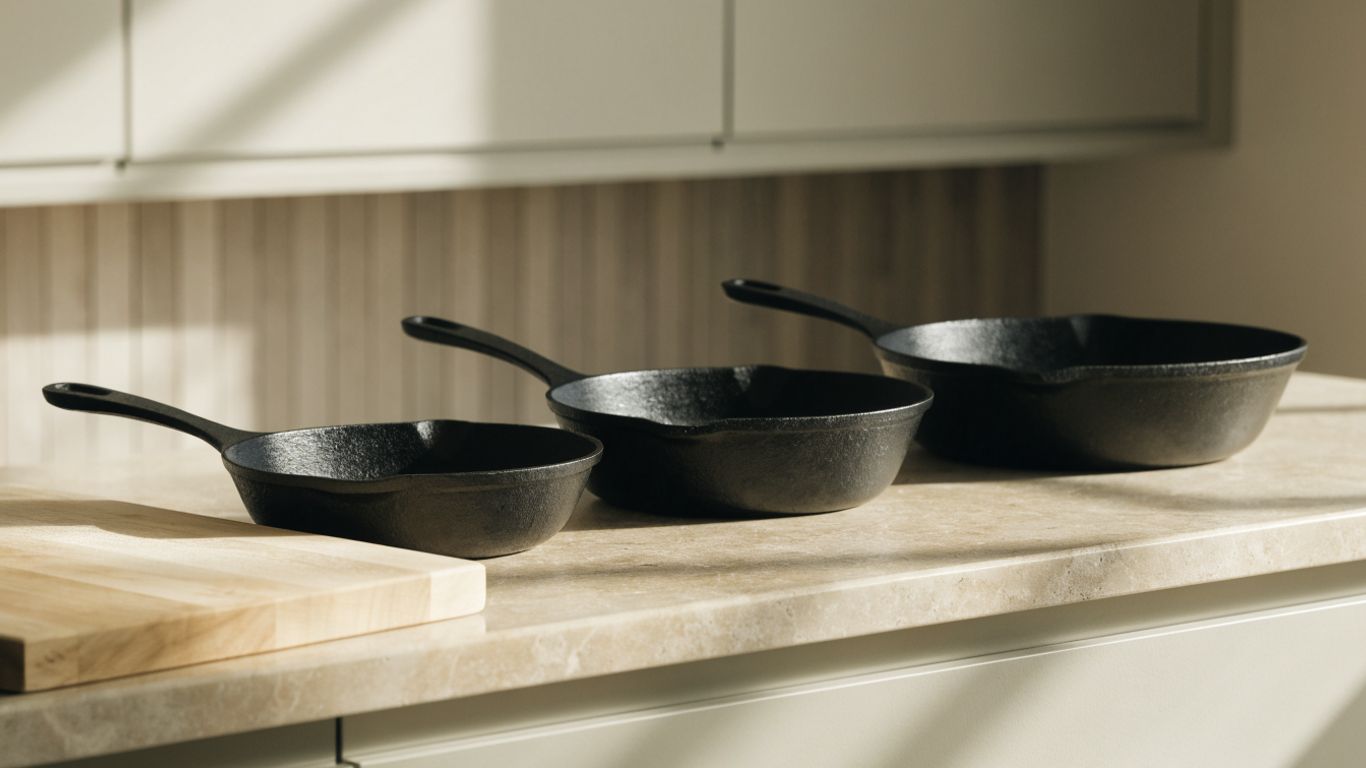
8-inch skillets for small portions and side dishes
An 8-inch skillet is handy for a couple of eggs, a small side dish, or a single portion that doesn’t need much room. It takes up less space than a larger pan, but its limited surface makes it easy to crowd food when you try to cook several pieces at once. Think of it as a focused small pan rather than a substitute for a roomy everyday skillet.
10-inch skillets for everyday cooking
A 10-inch skillet can handle many everyday tasks without taking up as much space as a larger pan. It may suit cooking for one or two people, and it leaves more room to maneuver than a small skillet. To compare common sizes, consider both the pan’s nominal diameter and what each one is likely to accommodate.
| Nominal size | Typical role | Main trade-off |
|---|---|---|
| 8 inches | Small portions and sides | Limited room for multiple pieces |
| 10 inches | Everyday meals for one or two | Less space for large batches |
| 12 inches | Family meals and larger batches | More weight and storage demand |
| 13–15 inches | Extra-wide cooking tasks | Requires a suitably large burner and storage space |
These are broad uses, not guaranteed capacities; the pan’s cooking surface and shape affect what fits. If you’re comparing U.S.-made cast iron from Lodge, Smithey, or Field Company, check the dimensions listed for the particular skillet rather than assuming that a shared nominal size means identical usable space.
12-inch skillets for family meals and larger batches
A 12-inch skillet gives you more room to spread food out, which can help when you’re cooking several portions or browning ingredients in batches. The trade-off is a larger, heavier pan that may be less comfortable to lift and harder to fit on a small burner. Check the measurements before buying, especially if your stove or oven is compact.
When to choose a skillet smaller or larger than 12 inches
A skillet under 12 inches can be easier to handle and store, while a pan above that size can give you more space for wide or larger batches. Neither is automatically more useful; the right choice depends on your burner, storage, and usual portion size. For a tailored starting point, this cast iron skillet size guide weighs household size, cooking habits, and pan weight.
6- to 7-inch skillets for single servings
A 6- or 7-inch skillet is suited to a single serving, a small side, or a task that would feel awkward in a larger pan. It is easy to dedicate to a modest portion, but the cooking surface can be too small for food that needs to sit in a single layer. Consider this size when you already have a larger pan for general cooking or when compact storage is a priority.
13- to 15-inch skillets for extra cooking space
A skillet in the 13- to 15-inch range offers more surface area for wide foods and larger batches, but it needs a burner and storage space to match. If the burner heats only the center, the outer part of a very wide pan may not warm as evenly. Before choosing one, measure your cooking zone and the route from stove to oven or cabinet.
When two smaller pans work better than one oversized pan
Two smaller skillets can be easier to position on the stove, lift, and store than one oversized pan. They also let you cook separate foods at once without forcing everything into a single large surface. That option works best when you have enough burners and prefer handling a pair of manageable pans over one heavy one.
Match skillet size to your meals and household
Your usual meal size is a better guide than the number of people in your household by itself. A couple cooking a large weekend breakfast may need more surface than a family making small portions, and a roomy pan can still be inconvenient if you rarely fill it. Think through your regular meals, then compare the options against the space you actually have.
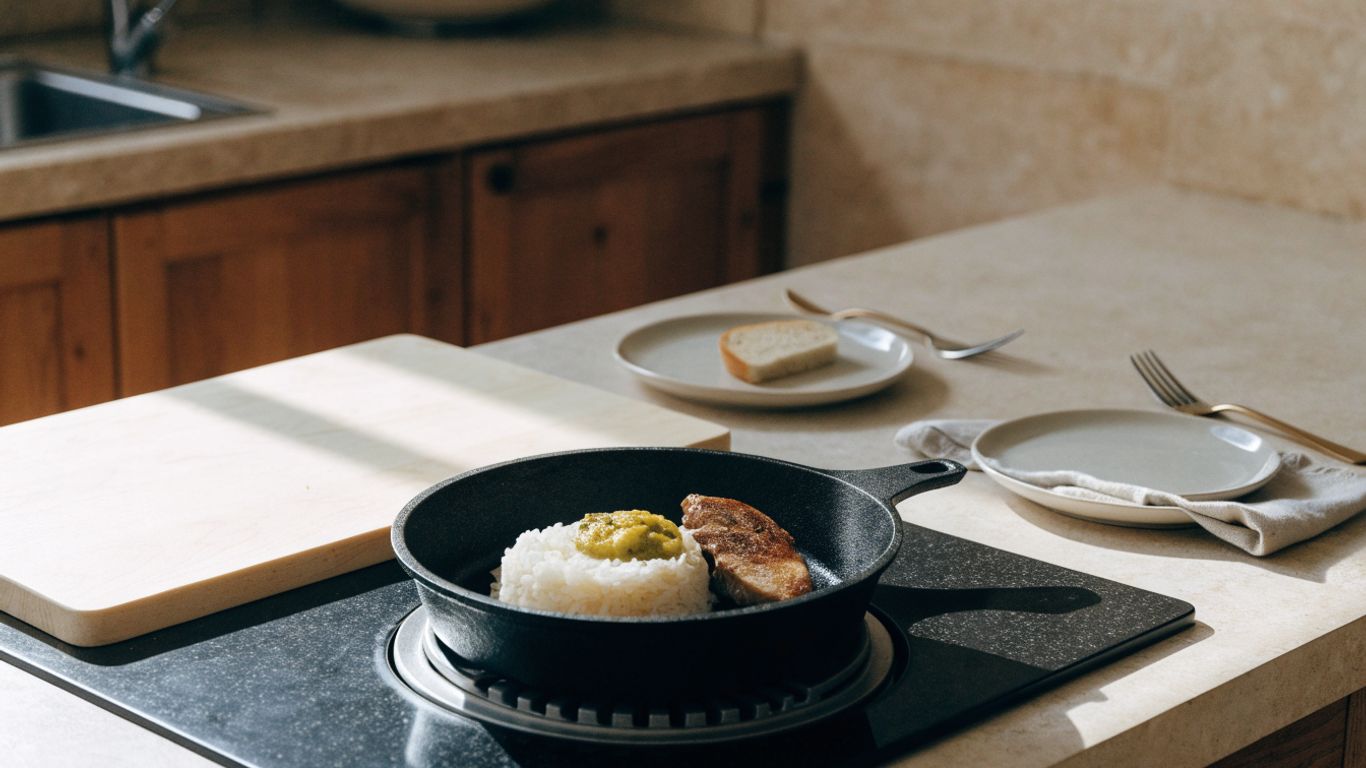
Cooking for one or two people
If you usually cook one or two portions, an 8- or 10-inch pan may be enough for many meals. The smaller option saves room, while the larger one gives you more flexibility for a main dish plus ingredients that need space. Pick based on how often you cook foods that brown better without crowding.
Cooking for a family or meal prepping
For family meals or meal prep, a 12-inch skillet can make it easier to cook a larger amount in one round. It is not a guarantee that everything will fit at once, since the shape and flat surface matter as much as the rim measurement. A larger skillet also takes more room on the stove and may feel heavier during serving or cleanup.
Fitting common foods without crowding the pan
Consider the foods you make most often and how they sit in the pan. A single wide piece of fish, several chicken pieces, or a batch of vegetables may need more flat space than a dish that is stirred as it cooks. You can use this quick check before settling on a size:
- List the foods you cook in a skillet most often.
- Note whether they need to sit in one layer to brown.
- Compare their footprint with the pan’s flat cooking surface, if listed.
- Leave room for turning or stirring without pushing food up the sides.
If the foods you make most often need space, sizing up may reduce crowding; if they’re small portions, a compact pan may be easier to use. The key is to judge the usable surface rather than assuming the rim diameter tells the whole story.
Check whether a skillet will fit your kitchen
A skillet should fit the burner, oven, and storage space you plan to use, not just the recipe. The pan’s full footprint includes its handle, and its weight affects how easily you can move it. A quick measurement before buying can prevent an unwieldy pan from becoming a cabinet resident.
Matching the skillet to your burner
Compare the flat bottom of the skillet with the burner’s heating area. A pan much wider than the burner may not heat evenly across its full surface, while a pan that fits well is easier to position. If you’re considering a very large skillet, make sure your stove can accommodate it without crowding neighboring burners.
Accounting for oven space and cabinet storage
Measure the inside width of your oven and the cabinet or shelf where you plan to keep the pan. Include the handle in those measurements, and account for the pan’s shape if the sides flare outward. A skillet that technically fits may still be awkward to slide into a crowded oven or lift from a high shelf.
Considering weight, handle length, and ease of lifting
Larger skillets generally need more effort to lift and turn, especially when full. Think about whether you’ll move the pan with one hand, serve from it, or carry it between the stove and oven. If weight or storage is a concern, a smaller skillet may be more practical even when you sometimes cook larger meals.
Make the final size decision
Choose a skillet by balancing usable cooking space with weight, burner fit, and storage. No single diameter suits every kitchen, and the largest pan is not automatically the most versatile. A few practical checks can narrow the choice without overthinking it.
Compare the pan’s usable cooking surface
Start with the flat area where food will sit, not only the diameter across the rim. If the maker lists the cooking surface separately, use that measurement to judge whether your regular foods will fit in a single layer. If it is not listed, ask for the dimension or compare the pan’s shape carefully before buying.
Think about the meals you make most often
Let your routine guide the choice: small daily portions call for less space, while frequent larger batches benefit from a wider surface. It can help to picture your most common skillet meal in the pan and leave enough room to move food around. For more than one pan, choose sizes that serve different jobs rather than two that are nearly interchangeable.
Choose a versatile size if you plan to own just one skillet
If you want one skillet for varied cooking, a 10- or 12-inch pan is a practical place to start for many home kitchens. A 10-inch model is easier to fit and handle, while a 12-inch one gives you more space for larger meals. Before deciding, check the listed dimensions and compare them with your burner, oven, and storage.
Frequently Asked Questions
Is a 12-inch cast iron skillet big enough for a family?
It can suit many family meals, but the answer depends on portion size, pan shape, and what you’re cooking. Foods that need to brown in a single layer may require batches even in a 12-inch skillet.
Is a 10-inch skillet large enough for two people?
Often, yes, for everyday meals for two. If you regularly cook wide pieces of food or several portions at once, a larger skillet may be more comfortable.
What does the number on a cast iron skillet mean?
A listed size usually refers to the pan’s approximate diameter across the top rim. It does not necessarily match the width of the flat cooking surface.
Why is the cooking surface smaller than the listed skillet size?
The sides slope upward from the bottom, making the rim wider than the flat area. That flat area is the space available for food to sit and brown.
Is a larger cast iron skillet harder to use?
It can be heavier, take up more burner space, and be harder to store or lift. Check the pan’s weight and full dimensions if handling is a concern.
Can a 12-inch skillet fit on a small burner?
It may fit physically, but the burner may heat only the center of the pan. Compare the burner with the flat bottom and follow the cookware maker’s guidance for heating.
Should you buy two skillets instead of one large one?
Two smaller skillets can be easier to handle and may let you cook separate foods at once. They make sense if you have enough burners and storage for both.
How this guide was put together
The American Made Cutting Boards team writes and fact-checks every guide on American Made Cutting Boards. Comparisons are based on maker specifications, published standards and food-safety guidance from sources such as the USDA, and each guide is reviewed and updated when specs or prices change. More about us.