BUYING GUIDES
Enameled vs Bare Cast Iron
Enameled vs cast iron: compare cooking, cleaning, durability, and which surface suits your kitchen.
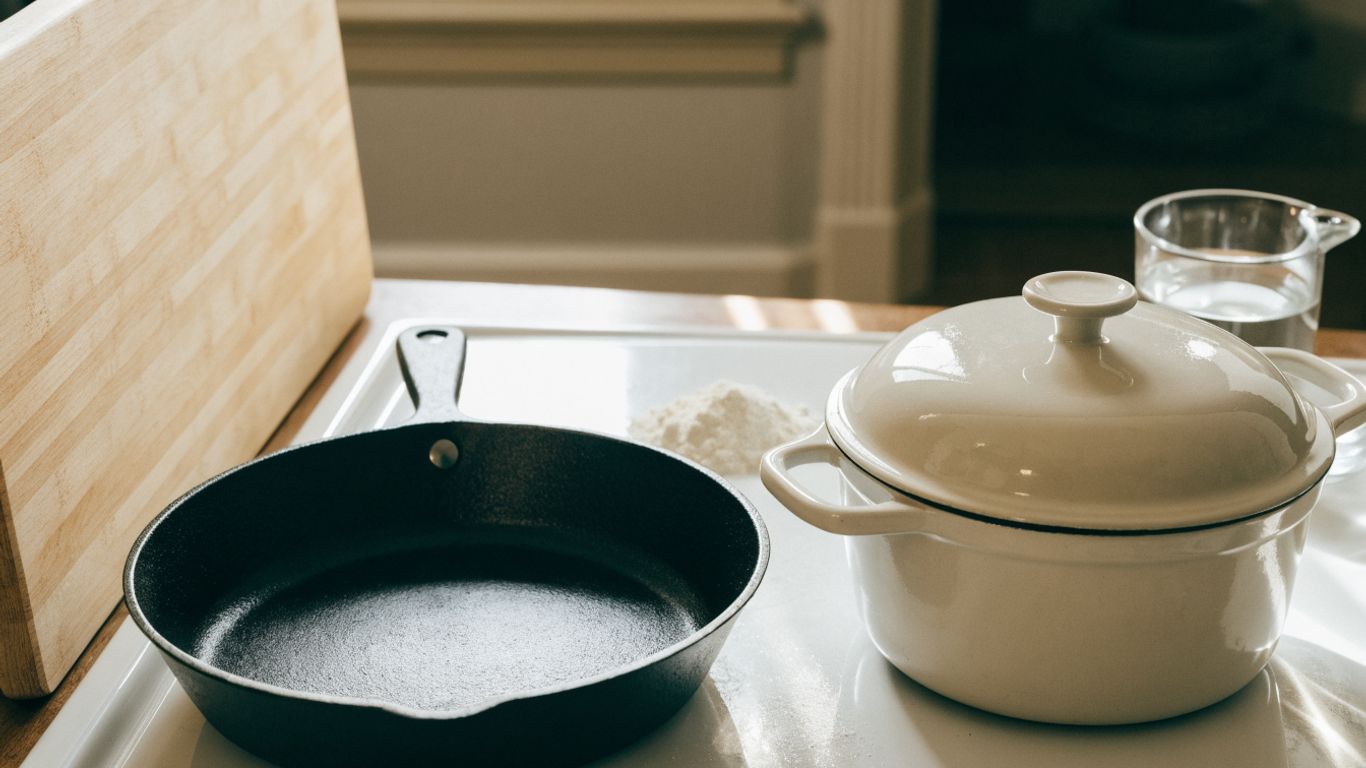
What sets enameled and bare cast iron apart
Enameled cast iron has a glass-like coating over the iron, while bare cast iron cooks on an iron surface maintained with seasoning. Both hold heat well, but the surface changes how you cook and clean. If you are deciding between easy cleanup and seasoning care, start with the kind of food you make most often.
How the enamel coating changes the cooking surface
Enamel covers the iron with a smooth, nonreactive cooking surface. It does not need seasoning, and it can handle acidic ingredients such as tomatoes without the same concern about the food interacting with bare iron. The coating also means you need to avoid rough treatment that could chip or crack it.
What seasoning does on bare cast iron
Seasoning is a thin layer of oil baked onto the iron; it helps protect the pan and improves food release with regular use. It is not a permanent nonstick coating, so results depend on how the pan is cared for and what you cook. If you want the process laid out step by step, see this guide to seasoning a cast iron pan.
How each pan is made and finished
Both types begin with cast iron, but their final surfaces differ: bare iron is left exposed and seasoned, while enameled iron receives a fired enamel coating. Exact finishes and care directions can vary by model, so check the maker's instructions rather than assuming every pan is identical. This distinction is also why a pan's appearance alone cannot tell you how it should be maintained.
Why both types retain heat well
Cast iron's substantial mass helps it hold heat, so either type can stay hot when you add food. That does not mean every pan heats evenly or responds quickly when you change the burner; preheating and managing the flame still matter. The shared heat retention is a starting point, not the whole buying decision.
Cooking performance and everyday use
Enameled and bare cast iron can both sear and brown food, but their surfaces suit different routines. Bare iron rewards a well-preheated pan and regular seasoning, while enamel offers a nonreactive surface for simmering and acidic dishes. Your burner, cooking style, and willingness to handle a heavy pan matter as much as the material.
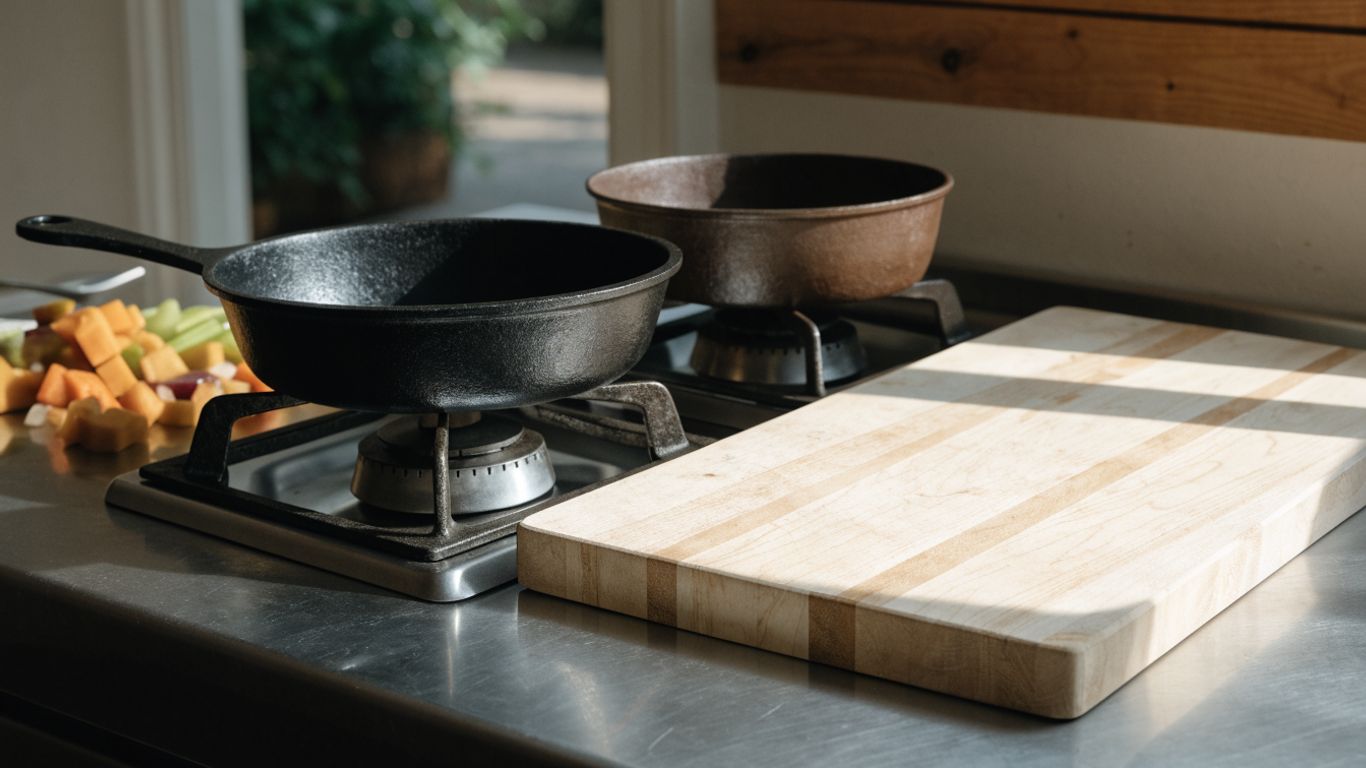
Searing meat and browning vegetables
Either surface can brown food when the pan is properly heated and you avoid overcrowding it. Bare cast iron is often chosen for high-heat searing, including cooking over a live fire, but you still need enough oil and patience to let food release. Enameled cast iron also sears; use the maker's directions for heat limits and avoid heating an empty pan aggressively.
Cooking acidic foods like tomatoes
Enamel is generally the more straightforward choice for tomato sauces, wine-based braises, and other acidic dishes because its surface is nonreactive. With bare iron, long cooking with acidic ingredients can affect seasoning and may give food an iron taste. A brief contact is different from a long simmer, but enamel removes much of that guesswork.
Handling eggs and other delicate foods
Neither type guarantees easy release for eggs. Bare iron needs effective seasoning and careful preheating, while enamel can still make delicate foods stick if the pan is too cool, too hot, or short on fat. If eggs are a frequent part of your routine, choose a pan you are comfortable learning rather than relying on a surface label alone.
Moving from stovetop to oven
Both types are commonly used for stovetop-to-oven cooking, but safe oven temperature depends on the pan's construction and components. Check the limits for the pan, lid, and knob separately, and use dry protection when handling hot iron. A video search for enameled versus bare cast iron cooking can help you see how cooks use each style, but the maker's care instructions take precedence.
Cooking-use comparison
The table below gives a quick way to match common jobs with the surface considerations that matter most. It is a general comparison, not a guarantee for every model.
| Cooking job | Enameled cast iron | Bare cast iron |
|---|---|---|
| High-heat searing | Can sear; follow maker heat guidance | Common choice for high-heat searing |
| Tomato or wine-based simmer | Nonreactive surface | Long acidic cooking may affect seasoning |
| Routine cleanup | No seasoning upkeep | Wash, dry, and protect the seasoning |
Use the table as a prompt to check your own habits. If most of your cooking is slow braises and tomato sauces, enamel may feel simpler; if you often sear at high heat, bare iron may better suit the routine.
Care, cleaning, and maintenance
The main care difference is simple: enamel needs protection from chips, while bare iron needs protection from rust and neglected seasoning. Neither pan requires complicated treatment after every meal, but each benefits from following its maker's instructions. A little consistency saves you from correcting avoidable surface problems later.
Cleaning enameled cast iron after cooking
Let the pan cool enough to handle safely before washing it. Warm water, dish soap, and a nonabrasive sponge are usually a sensible starting point; avoid metal tools or harsh scrubbing that could damage the coating. For stuck-on food, soak the pan rather than attacking the surface with force.
Washing and drying bare cast iron
Wash bare iron after cooking and dry it thoroughly so water does not sit on the surface. A light coat of cooking oil can help protect the pan, especially if it will be stored for a while. For more model-specific pointers, the Lodge cast iron review covers seasoning, care, weight, and everyday cooking trade-offs.
When bare cast iron needs reseasoning
If food begins sticking more than usual, the surface looks dry or patchy, or you notice early rust, it may be time to refresh the seasoning. First clean away residue and dry the pan well; seasoning over food debris can leave a rough or sticky finish. A thin layer of oil is more useful than a heavy coating, which can cure unevenly and feel tacky.
Avoiding chips, rust, and other damage
A few steady habits make the two surfaces easier to live with. The right routine depends on which pan you own, but these three basics cover common mistakes:
- Let hot enamel cool before exposing it to cold water.
- Dry bare cast iron promptly after washing.
- Use utensils and scrubbers suited to the pan's surface.
These steps address the risks each finish faces without making care feel like a separate project. Check the manufacturer's directions if you are unsure whether a cleaner, utensil, or heat level is suitable.
Durability and common drawbacks
Cast iron can last a long time when used and cared for appropriately, but the two finishes have different vulnerabilities. Enamel can chip if struck or handled roughly; bare iron can rust if left wet or lose seasoning through neglect or harsh treatment. Both are heavy, so think about lifting, washing, and storage before you buy.
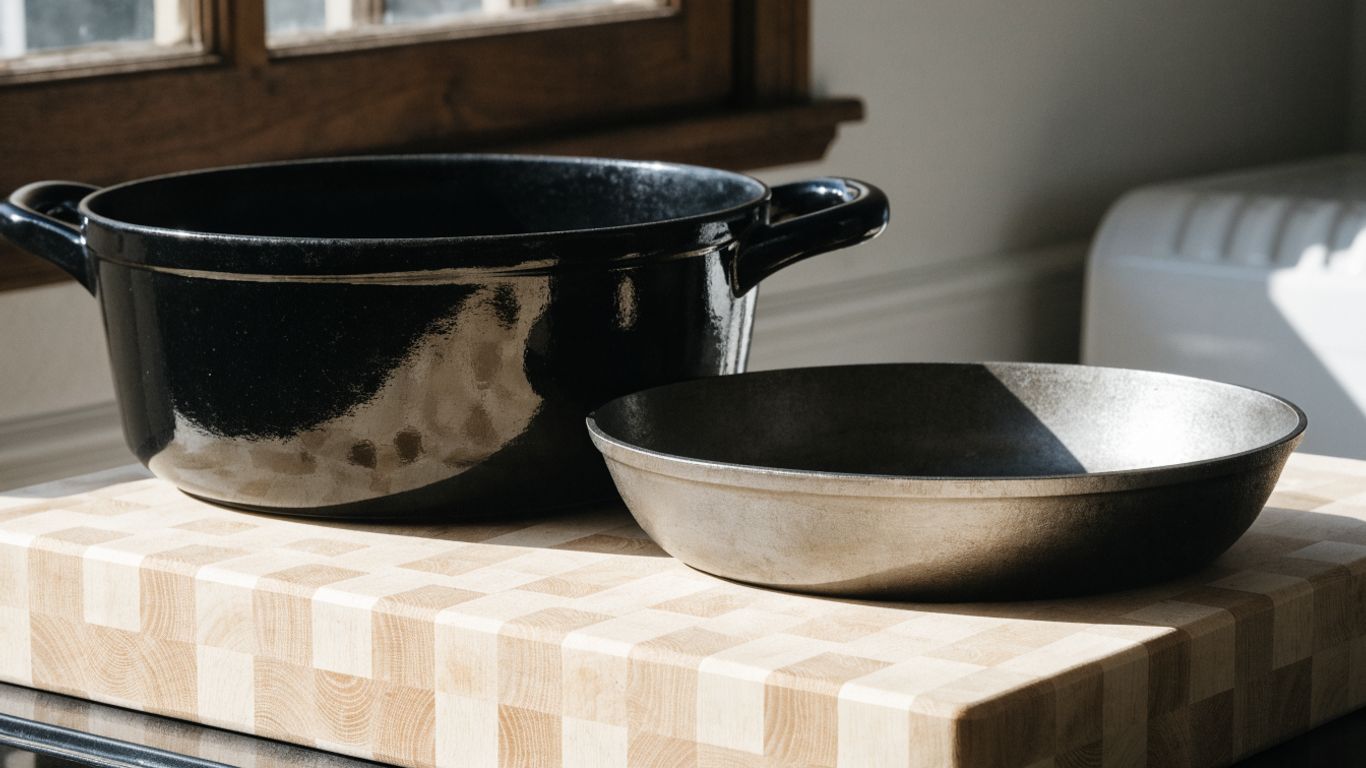
What can damage an enamel coating
A hard impact can chip enamel, and sudden temperature changes can stress the coating. Avoid dropping the pan, banging it against another heavy pot, or using metal tools in a way that scrapes the cooking surface. A small chip does not mean every pan is unusable, but follow the maker's guidance about whether damaged cookware should remain in service.
How bare cast iron can rust or lose seasoning
Rust is most likely when bare iron stays damp or is stored in a humid place without protection. Seasoning can also become uneven or wear down, especially if the pan is cleaned carelessly or left with stuck-on food. These problems are often manageable, but they do call for attention rather than being ignored.
Comparing weight, handling, and storage
Both kinds of cast iron are heavy compared with many other pans, and larger pieces can be awkward to lift with one hand. Enameled cookware may also need careful storage to prevent impacts against other pots. Before buying, compare the actual weight and dimensions of the specific pan with your cabinet space and how you handle hot cookware.
What to expect from each type over time
Enamel does not need seasoning, but its coating is not immune to chips or wear. Bare iron has no enamel layer to chip, though its surface needs drying and occasional seasoning attention. For a broader look at the trade-offs between price, weight, design, and care, consult the site's cast iron skillet review.
Which type fits your cooking habits
There is no universal winner in the enameled vs cast iron choice: the better fit depends on your regular meals and maintenance preferences. Enameled cast iron tends to suit cooks who want a nonreactive surface and simpler cleanup, while bare cast iron appeals to cooks who want a traditional seasoned surface and are willing to maintain it. Either can be a useful pan when its limits match your routine.
Choose enameled cast iron for low-maintenance cooking
Choose enamel if you want to cook acidic foods without managing a seasoning layer or prefer a surface that cleans up with ordinary washing. It can be especially convenient for sauces, soups, and braises that spend a long time on the stove. You still need to protect the coating from chips and check the model's heat guidance.
Choose bare cast iron for high-heat searing and versatility
Bare iron is a practical option if high-heat searing and live-fire cooking are central to your kitchen. You can build and maintain the seasoning through use, but that means drying the pan and keeping its surface in good shape. Cooks who enjoy that small routine may find it worthwhile; cooks who do not may find it a chore.
Consider how often you cook acidic dishes
Think about frequency and duration, not just whether a recipe contains tomatoes or citrus. A quick sauté is different from simmering a tomato sauce for a long stretch, and enamel is the simpler surface for repeated acidic cooking. If those dishes are occasional, bare iron may still fit, provided you are willing to monitor the seasoning.
Decide whether you want to manage seasoning
Seasoning is ordinary upkeep, not a reason to avoid bare iron by itself. But if you want to wash a pan and put it away without drying and protecting the surface, enamel is likely a better match. A cast iron pan sizing guide can also help you compare common 8-, 10-, and 12-inch skillets before settling on a style.
What to check before you buy
Compare the actual pan, not just the words “enameled” and “cast iron” on a label. Size, shape, weight, finish, oven limits, and care instructions vary by model, and those details affect daily use. The site's Lodge cast iron review is one example of a buyer-oriented comparison that considers heat retention, weight, seasoning, and care.
Compare pan size, shape, and weight
Choose a size that fits your burners and the portions you cook, with enough cooking surface to avoid crowding. A skillet's diameter does not tell the whole story, so look at its flat cooking area and overall dimensions. If possible, check the listed weight and consider how it will feel when full of food.
Look for enamel quality and a smooth finish
Inspect the cooking surface and rim for visible chips, cracks, or rough spots, especially when buying in person. On a new pan, check for an even finish and read the maker's instructions for temperature changes, utensils, and cleaning. Also confirm whether the lid and knob have different care or oven limits from the pan itself.
Check bare iron for an even cooking surface
Look for a surface and base that appear even, without obvious defects that would interfere with cooking or stability. If buying online, review the maker's product details and return terms rather than assuming all bare iron has the same texture or finish. The manufacturer's care instructions should explain what seasoning, if any, is included and what upkeep is expected.
Weigh upfront cost against care and longevity
Prices vary with size, construction, and finish, so compare specific models rather than broad categories. The lower-effort surface may be worth paying more for if it better fits the meals you cook, while bare iron can suit you if you accept its upkeep. Check warranty and return terms before purchase, and base the decision on everyday use rather than a promise that any pan will last forever.
Frequently Asked Questions
Is enameled cast iron better than bare cast iron?
Neither is better for every cook. Enamel simplifies acidic cooking and seasoning-free care, while bare iron suits cooks who want a traditional seasoned surface and accept its maintenance.
Can you cook tomatoes in bare cast iron?
You can, but long cooking with acidic ingredients may affect seasoning or give food an iron taste. Enamel is generally the easier choice for long tomato-based simmering.
Does enameled cast iron need seasoning?
No. Its enamel coating covers the iron cooking surface, so it does not need the oil-baked seasoning used on bare cast iron.
Can you sear in enameled cast iron?
Yes, enameled cast iron can be used for searing. Follow the maker's heat guidance and avoid heating an empty pan too aggressively.
Why does food stick to bare cast iron?
Sticking can result from insufficient preheating, too little fat, or seasoning that needs attention. Let food cook until it releases more readily rather than forcing it off the surface.
Can enameled cast iron go in the oven?
Many pieces can, but the safe temperature depends on the specific pan, lid, and knob. Check the manufacturer's published limits before using it in an oven.
How do you keep bare cast iron from rusting?
Wash it, dry it thoroughly, and protect the surface with a light coat of oil when appropriate. Store it somewhere dry and follow the maker's care directions.
How this guide was put together
The American Made Cutting Boards team writes and fact-checks every guide on American Made Cutting Boards. Comparisons are based on maker specifications, published standards and food-safety guidance from sources such as the USDA, and each guide is reviewed and updated when specs or prices change. More about us.